My account
Navigation loading…
Your experience on PreventionWeb

Please help us improve PreventionWeb by taking this brief survey. Your input will allow us to better serve the needs of the DRR community.

See the survey

Published on
19 March 2021
Status
Deliverable update needed
Progress not updated

Contribute to DRR by the Economic Uplifting of Natural Hazards Prone Areas of Pakistan

Expected duration
Mar 2021 - Feb 2026
SFVC commitment ID
20210317_001
Version
5
Author
Muhammad Zarar
Upload your content

Contribute to Disaster Risk Reduction (DRR) by applying state-of-the-art Digital Technologies and Remote Sensing tools to design economic uplifting projects encompassing DRR & utilizing local green natural infrastructure resources.

    Description

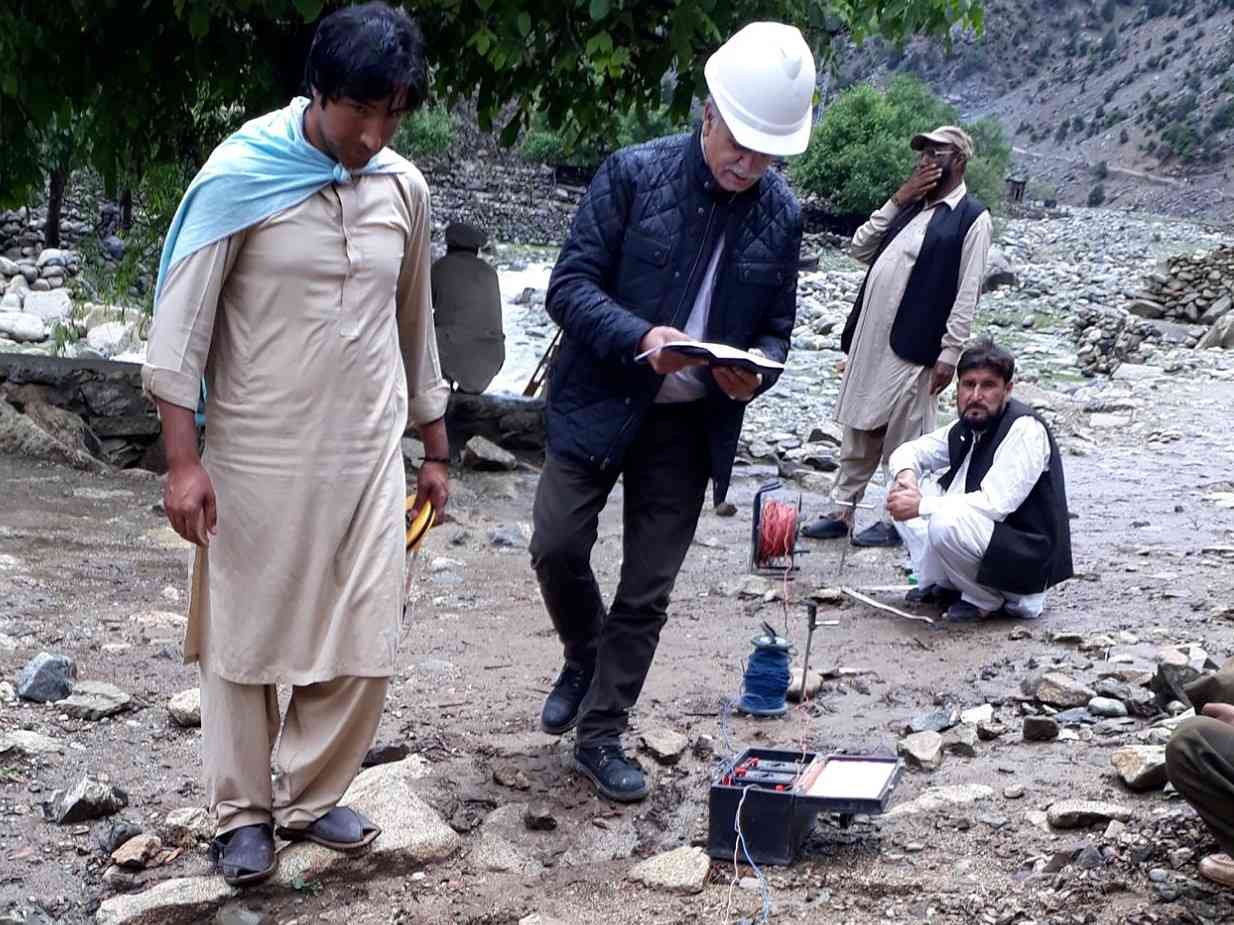
    GCS Pakistan is one of the major privately owned ground investigation contractors in the Pakistan, providing quality data in the construction industry. We have a wealth of experience in geotechnical services such as civil works construction, investigation visit to sites for on-the-site assessment of surroundings, grounding of the most reasonable subsoil investigation programs, laboratory testing, assessment of field data and lab test results together with static and dynamic soil/design parameters. Our commitment is to make our services, using state-of-the-art digital technologies and remote sensing tools, available for embarking on projects related to DRR and the use of local green natural infrastructure resources with the goal of supporting the economic uplifting of disaster prone areas in Pakistan

    People in disaster prone areas are typically poor and unable to tap their available natural resources. Here, Governments and other development stakeholders have an important role to intervene and find out ways to help vulnerable populations using planning & development tools to uplift their economic status and livelihood. Understanding the importance of DRR and nature-based solution, GCS Pakistan is ready to partner with Governments and other development stakeholders to strengthen the resilience of vulnerable populations.

    Our projects implement a versatile approach and depends upon the area of intervention as well as financial & political support from the Governments and other stakeholders. As part of our deliverables, we plan to produce specific projects/programs. The role of GCS Pakistan will be specifically to aid the design of projects according to the available natural resources with the help of digital and remote sensing tools and guiding the stakeholders during its implementation

    Did the Sendai Framework change or contribute to changes in your activities/organization? If so, how?

    The Sendai Framework for Disaster Risk Reduction 2015-2030 is the global plan for reducing disaster losses. It has several connections with the 2030 Agenda for Sustainable Development. A strong point of agreement is that the resilience of communities is a necessary condition to enable their sustainable economic development. These documents update and strengthen the knowledge of stakeholders interested in DRR as a tool for poverty alleviation. In particular, our commitment is aligned with the Sendai Framework call for governments, private sector, civil society organizations, and other stakeholders to work more closely together and to create opportunities for collaboration, and for businesses to integrate disaster risk into their practices.

    What led you to make this commitment/initiative?

    What was your position before making this Voluntary Commitment / prior to the Sendai Framework?

    GCS Pakistan was already finding some ways to help the poor who are more vulnerable to natural disasters which also deteriorate their economic conditions. The Sendai Framework Voluntary Commitments platform allowed us to structure and aligned our ideas to be more effectively aligned with the Sendai Framework. We are also motivated by the support to stakeholders to promote their activities and encourage the formation of partnerships to establish, disseminate and share good practices.

    Deliverables and Progress report

    Deliverables

    Deliverables are the end-products of the initiative/commitment, which can include issuance of publications or knowledge products, outcomes of workshops, training programs, videos, links, photographs, etc.

    DRR through Poverty Alleviation in Pakistan
    Intended date of delivery
    30 June 2023

    The projects would be discussed with PPAF stakeholders and program would be finalized.

    Porgress report

    Progress date
    1 October 2021
    Summary

    The following two NGOs, one from Khyber Pakhtunkhwa and another from Sindh were provided guidance for the implementation of the commitment:
    1. "Rural Infrastructure & Human Resources Development Organization" Sarai Naurang, KPK, Pakistan.
    2. "Women & Youth Development Organization" Jamshoro, Sindh, Pakistan.
    Under the guidelines these were able to improve the economic status of the people of there areas and make their livelihood more secure and sustainable.

    Achievements at a glance

    Rural Infrastructure & Human Resource Development Organization successfully launched their COVID-19 SOPs campaign to protect the people from this pandemic at a large scale by organizing workshops, online events and participating in world over virtual events. See website:-
    https://web.facebook.com/Rural-Infrastructure-Human-Resource-Development-Organization-456187241258293
    Women & Youth Development Organization started to promote the socio-economic status, gender equity, equality and empowerment of Women, Youth and community at large by creating enabling environment, capacity building, advocacy, provide entrepreneurship skills, social services and social mobilization, develop mechanisms to enhance protection of vulnerable groups.
    https://web.facebook.com/wydojamshoro.org
    Organizations and focal points

    Implementing Organization(s)

    • Geo-Tech Consultancy Services

    Focal points

    Main focal point
    Muhammad Zarar (CEO, Geo-Tech Consultancy Services)

    Explore further

    Sendai priorities
    Priority 1Understanding disaster risk
    Priority 3Investing in disaster risk reduction for resilience
    Sendai targets and indicators
    A-1 (Compound)Number of deaths and missing persons attributed to disasters, per 100,000 population
    B-1 (Compound)Number of directly affected people attributed to disasters, per 100,000 population
    C-1 (Compound)Direct economic loss attributed to disasters in relation to global gross domestic product
    D-1 (Compound)Damage to critical infrastructure attributed to disasters
    D-5 (Compound)Number of disruptions to basic services attributed to disasters (compound indicator)
    E-2 (Compound)Percentage of local governments that have adopted and implemented local disaster risk reduction strategies in line with national strategies
    F-2Total official international support (ODA plus other official flows) for national disaster risk reduction actions provided by multilateral agencies
    G-1 (Compound)Number of countries that have multi-hazard early warning systems
    Hazards Avalanche Cold Wave Cyclone, Hurricane and Typhoon Drought and Desertification Earthquake Epidemic and Pandemic Flood Heatwave and Extreme Heat Landslide NBC - Nuclear, Biological, Chemical Storm surge Technological hazard Tornado Tsunami Volcano Wildfire and Bushfire
    Themes Capacity development Climate change Community-based DRR Critical infrastructure Cultural heritage Preparedness Early warning Financing DRR Education and school safety Environment and ecosystems Food security and agriculture Fragility and conflict Gender GIS and mapping Governance Health and health facilities Human mobility Traditional and Indigenous knowledges Data and information management Insurance and risk transfer Private sector Recovery Risk identification and assessment Science-policy-practice interface Social impacts and social resilience Earth Observation (EO) Structural safety Urban risk and planning Water
    Country and region Asia Pakistan
    Sustainable Development Goals SDG1: No poverty SDG10: Reduced inequalitities SDG11: Sustainable cities and communities SDG13: Climate action SDG17: Partnerships for the goals
    Scope
    Regional - Asia, Pakistan
    Secured budget size
    0%
    X (Twitter)
    https://twitter.com/gcs_zarar
    Related links
    Linkedin Profile

    Is this page useful?

    Yes No
    Report an issue on this page

    Thank you. If you have 2 minutes, we would benefit from additional feedback (link opens in a new window).

    PreventionWeb is the global knowledge sharing platform for disaster risk reduction (DRR) and resilience.

    • Newsletter
    • Submit your content
    • Blog pitches
    • Submission and publishing policy
    • About PreventionWeb
    • Contact us

    Hazards

    • Avalanche
    • Cold Wave
    • Cyclone, Hurricane and Typhoon
    • Drought and Desertification
    • Earthquake
    • Epidemic and pandemic
    • Flood
    • Heatwave, extreme heat and heat stress
    • Insect infestation
    • Land subsidence
    • Landslide
    • Nuclear, biological, chemical (NBC)
    • Sea level rise
    • Technological hazard
    • Thunderstorm
    • Tornado
    • Tsunami
    • Volcano
    • Wildfire

    Regions

    • Africa
    • Americas
    • Asia
    • Europe
    • Oceania

    Themes

    Understanding & managing risk

    • Preparedness
    • Early warning
    • GIS and mapping
    • Data and information management
    • Risk identification and assessment
    • Small Island Developing States
    • Earth Observation

    Natural environment

    • Climate change
    • Environment and ecosystems
    • Food security and agriculture
    • Water

    Cross-cutting

    • Systemic risk
    • Recovery

    Human development

    • Capacity development
    • Children and youth
    • Civil society / NGOs
    • Community-based DRR
    • Cultural heritage
    • Gender
    • Human mobility
    • Inclusion
    • Social impacts and resilience

    Science, knowledge & advocacy

    • Disaster risk communication
    • Traditional and Indigenous knowledges
    • Science-policy-practice interface

    State, governance & economy

    • Financing DRR
    • Fragility and conflict
    • Governance
    • Insurance and risk transfer
    • Private sector

    Infrastructure & critical services

    • Critical infrastructure
    • Education and school safety
    • Health and health facilities
    • Structural safety
    • Urban risk and planning
    Loading