1. Home
  2. Knowledge Base | PreventionWeb
  3. Themes

Early warning

An integrated system of hazard monitoring, forecasting and prediction, disaster risk assessment, communication and preparedness activities systems and processes that enables individuals, communities, governments, businesses and others to take timely action to reduce disaster risks in advance of hazardous events. Early warning systems are a key component of disaster risk management activities.

Early Warnings for All is a groundbreaking initiative to ensure that everyone on Earth is protected from hazardous weather, water, or climate events through life-saving early warning systems by the end of 2027. Stay informed about the groundbreaking "Early Warnings for All" initiative.

In Mozambique, experience from past disasters has helped shape a powerful national system for disaster risk reduction.

Latest Early warning additions in the Knowledge Base

Update
Flood resilience in Indonesia

Between 2010 and 2025 floods in Indonesia claimed more than 1,700 lives and caused an estimated USD 5.8 billion in losses. ADB-backed forecasting systems now warn communities up to nine hours ahead, alongside livelihood support for affected households.

Asian Development Bank (ADB)
Update
When El Niño hits home

Households absorb much of the cost of disasters: Post-Disaster Needs Assessments from 20 countries in Asia and the Pacific put about 40 per cent of impacts in social and productive sectors. ESCAP sets out three government interventions.

United Nations Economic and Social Commission for Asia and the Pacific (UN-ESCAP)
Motorcyclists navigate through a flooded street in Kolkata, India.
Research briefs
India: Study finds air pollution levels could improve flood forecasts

An Indian Institute of Technology Madras (IIT Madras)-led international study has found that atmospheric air pollution could play a critical role in improving the forecasting of rainfall and urban floods.

Indian Institute of Technology Madras
Update
AI cameras on California wildfire watch

A roving crew installs cameras on California’s highest, craggiest ridgelines to catch wildfires early. Since 2023 artificial intelligence has scanned the network’s footage, and it now spots 51 per cent of the state’s wildfires first.

New York Times, the
Update
Mosque loudspeakers as quake alarms

The Indonesian government is working with Japan to broadcast earthquake early warnings through mosque loudspeakers, with trials planned in Jakarta and other regions by 2030 before nationwide rollout.

Guardian, the (UK)
Update
Drones, AI and robots in wildfire response

Federal agencies in the United States already use drones to map wildfires and detect hotspots. The Forest Service is now testing ground robots, and researchers are training machine-learning models on drone imagery to predict how fast a fire will spread.

Bulletin of the Atomic Scientists, The
Update
Record Pacific warmth as El Niño strengthens

WMO’s Global Seasonal Climate Update forecasts the Niño 3.4 anomaly reaching about +3.7°C in October–December, the highest since observations began, with a near-100 per cent likelihood that El Niño persists through February 2027.

World Meteorological Organization (WMO)
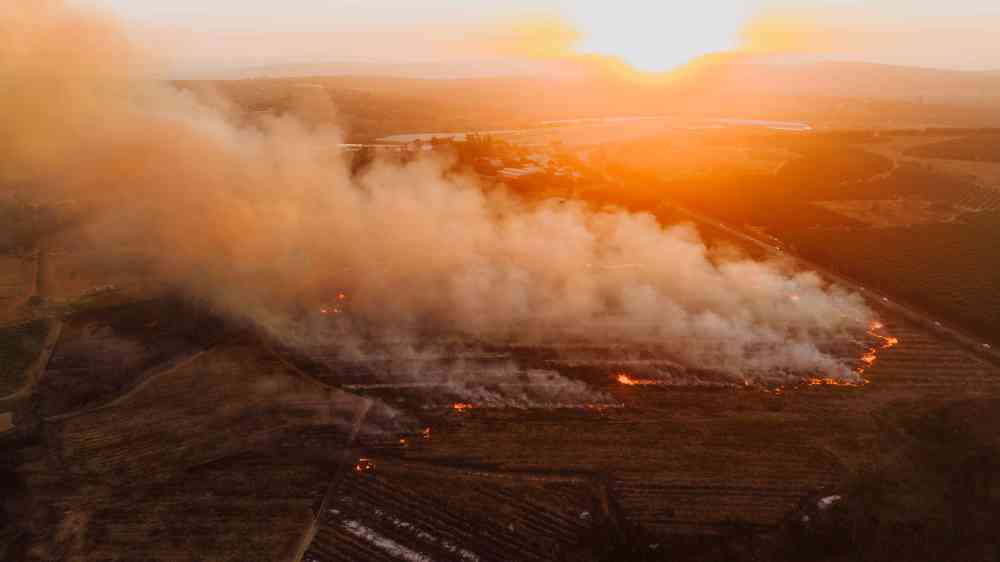
Aerial shot of a wildfire near White River, South Africa, creating dramatic sunset scenery over the landscape.
Update
Measuring wildfire plumes

Firefighter and researcher Marc Castellnou sends weather balloons into towering wildfire plumes to measure temperature, wind and humidity, opening a new way to anticipate when a fire turns extreme – and why some keep burning fiercely at night.

Wageningen University and Research Centre
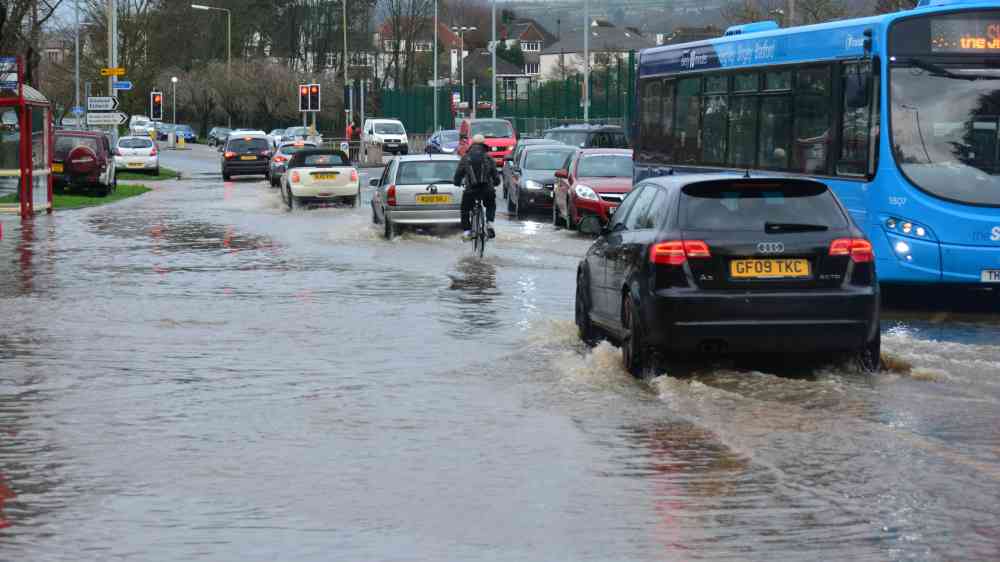
A flooded road with vehicles
Research briefs
Australia: AI improves long-term flood forecasting

Researchers developed advanced deep learning models incorporating attention mechanisms to identify important patterns in rainfall and river flow data, then combined the models’ predictions using a fusion approach to improve flood forecasting accuracy.

University of Technology Sydney
In Viet Nam, sun and seawater shape salt ponds that have sustained livelihoods for generations.
Feature
The early warning to action gap requires building resilience at home

When disasters are imminent, timely warnings can be the difference between life and death. However, warnings are only effective when they are received, understood, and acted on.

United Nations Office for Disaster Risk Reduction (UNDRR)
Launch ceremony of the inclusive early warning initiative in Lao PDR
Update
Lao PDR launches competition to make early warnings reach everyone

The Government of Lao PDR, supported by the United Nations, NGOs and CSOs, launch an inclusive risk communication initiative and a video competition on the International Day for Disaster Risk Reduction to improve early warnings.

United Nations Office for Disaster Risk Reduction - Regional Office for Asia and Pacific
Lao People's Democratic Republic - government
speakers
Last updated 12 Oct 2026
Stay informed about the groundbreaking "Early Warnings for All" initiative, aiming to provide life-saving early warning systems to everyone on the planet by 2027. Check for the latest updates and developments.
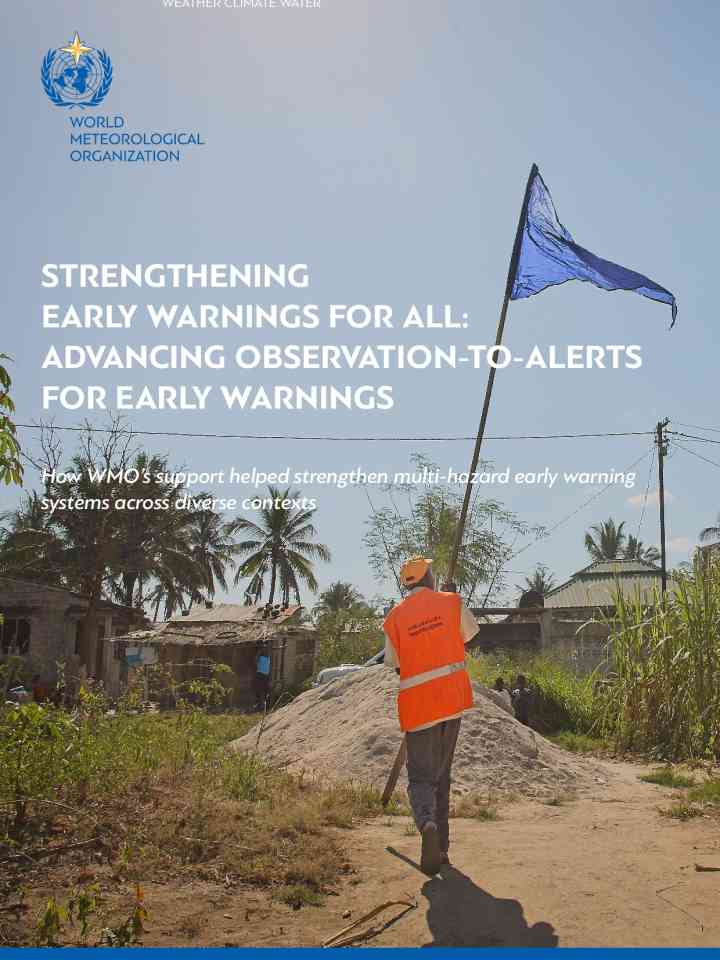
Strengthening Early Warnings for All: Advancing observation-to-alerts for early warnings thumbnail
Documents and publications

This publication highlights the progress made in five countries in advancing the EW4All initiative through targeted investments and technical assistance funded by the Government of Sweden via the United Nations Office for Disaster Risk Reduction (UNDRR).

World Meteorological Organization (WMO)
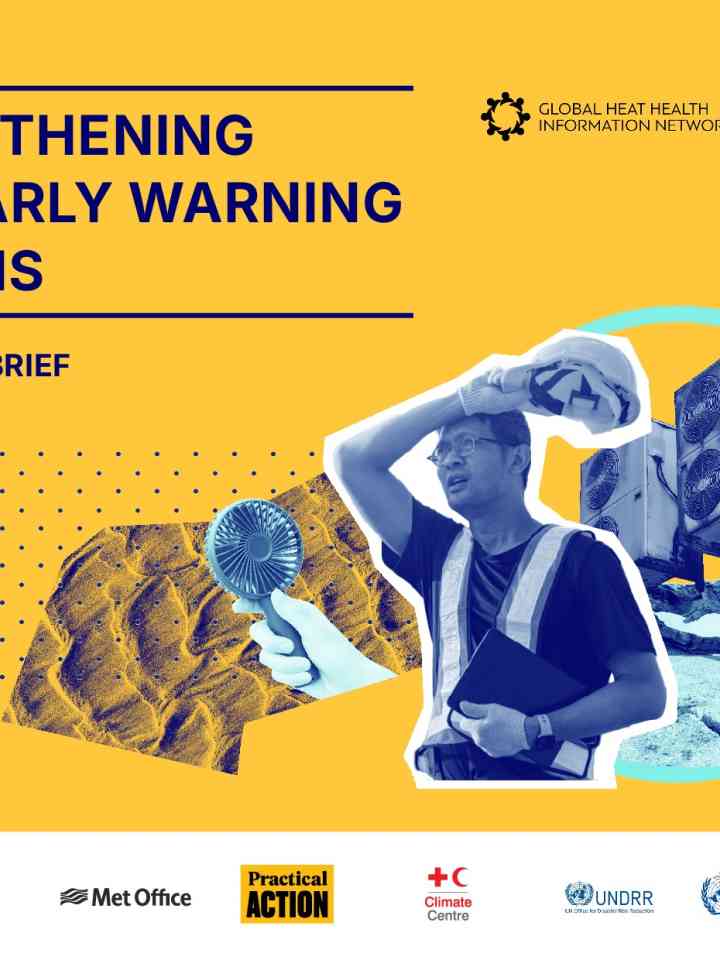
Strengthening heat early warning systems policy brief thumbnail
Documents and publications

This policy brief presents recommendations on extreme heat early warning. Heat is an escalating global threat, contributing to nearly half a million deaths annually and impacting multiple sectors including health, agriculture, and livelihoods.

Risk-informed Early Action Partnership (REAP)
Lots of people and boats and the school at the village of Boca De Valeria on the Amazon River, Amazonas State, Brazil.
Research briefs
El Niño could offer early warning of extreme heat in the Amazon

El Niño and warming in the tropical Atlantic could help provide advance warning of extreme heat in the Amazon, with some signals appearing as much as seven months earlier, research has found.

ARC Centre of Excellence for Coral Reef Studies
Research briefs
The techniques AI uses to create images can help predict floods

To produce predictions, generative AI models must be primed with existing information called training data, making predictions based on patterns observed in previous data sets.

Pennsylvania State University
Update
WMO’s support helped strengthen multi-hazard early warning systems

A publication highlights how WMO’s support is helping Bangladesh, Haiti, Liberia, Mozambique and Somalia strengthen observation, forecasting and early warning capacities as part of the Early Warnings for All initiative.

World Meteorological Organization (WMO)
Aerial view of the Three Brothers rock formation in Kamchatka, rising from the Pacific Ocean bay at Russian Far East.
Last updated 6 Oct 2026
On the 29th of July, at 23:24:52 UTC, a magnitude 8.8 earthquake struck off the coast of Russia's Kamchatka Peninsula in the country's far east.
Research briefs
The 2025 Kamchatka tsunami's rhythm could help early warnings

Seventy-three years after the magnitude 9.0 earthquake of 1952 in the same region, Kamchatka has reminded us that it is one of the most efficient tsunami sources in the Pacific.

PhysOrg, Omicron Technology Ltd
Heat early warning system in Nepal: Current status and recommendations thumbnail
Documents and publications

This case study examines the current status of Nepal’s heat early warning system (HEWS), focusing on risk knowledge, monitoring, warning dissemination, and preparedness

International Federation of Red Cross and Red Crescent Societies (IFRC)
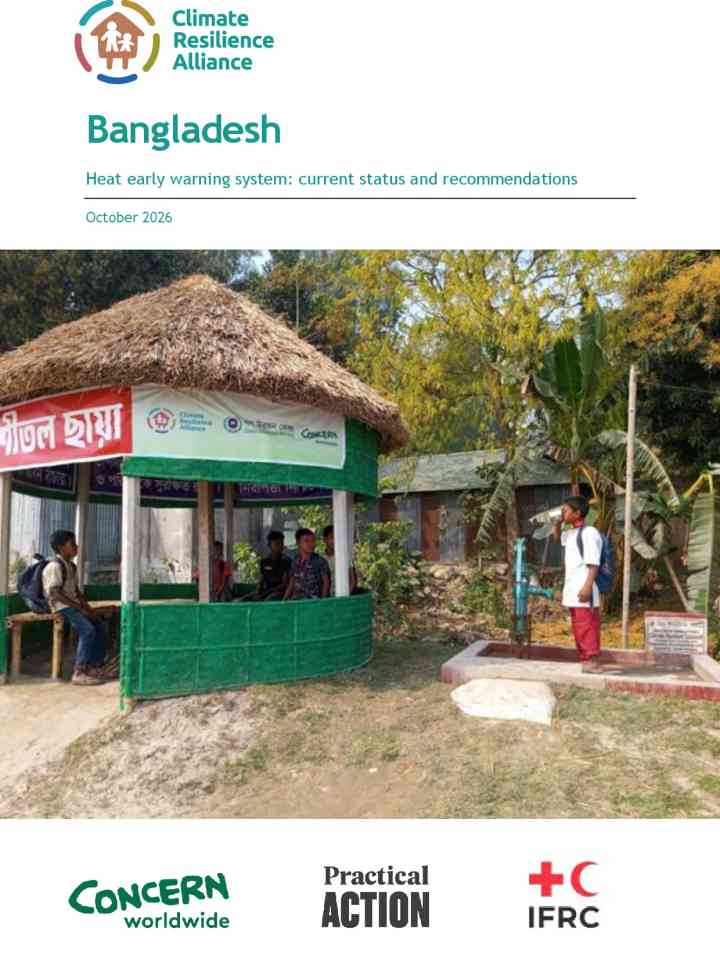
 Heat early warning system in Bangladesh: Current status and recommendations thumbnail
Documents and publications

This case study examines the current status of Bangladesh’s heat early warning system, outlining how heat risk is understood, monitored, and communicated, and how warnings prompt actions across institutions.

International Federation of Red Cross and Red Crescent Societies (IFRC)
Update
Post-alert messages should confirm safety first

Research on post-alert messaging finds that after a false alert people need two things: assurance the threat is over, and a plain statement that they are safe. Attribution comes later.

The Warn Room
Case study
Location: Malawi Zambia
This case study examines anticipatory drought insurance in Malawi and Zambia, using risk modelling, early payouts and operational planning to support preparedness, strengthen coping capacity and shift from reactive relief to proactive risk reduction.
  • Intra Africa, Caribbean and Pacific (ACP) Disaster Risk Reduction Programme (DRRP)
Case study
Location: Madagascar Mozambique
This case study examines efforts to strengthen risk governance and preparedness across Southern Africa through the DRMSS Project, supporting people-centred multi-hazard early warning systems, preparedness capacities and regional emergency coordination.
  • Intra Africa, Caribbean and Pacific (ACP) Disaster Risk Reduction Programme (DRRP)
Case study
Location: Togo
This case study examines how Togo is establishing a connected national situation room, integrating disaster risk information, strengthening early warning and improving interoperability with ECOWAS and African Union systems.
  • Intra Africa, Caribbean and Pacific (ACP) Disaster Risk Reduction Programme (DRRP)
Case study
Location: Ethiopia Kenya
Case study on strengthening impact-based early warning in the IGAD region by integrating exposure and vulnerability data into flood and drought forecasting to support inclusive early action.
  • Intra Africa, Caribbean and Pacific (ACP) Disaster Risk Reduction Programme (DRRP)
Case study
Location: Africa
This case study outlines Africa's Continental Civilian Capacity Mechanism for Disaster Preparedness and Response, adopted in 2025 to strengthen preparedness, emergency coordination, early warning integration and rapid disaster response.
  • Intra Africa, Caribbean and Pacific (ACP) Disaster Risk Reduction Programme (DRRP)
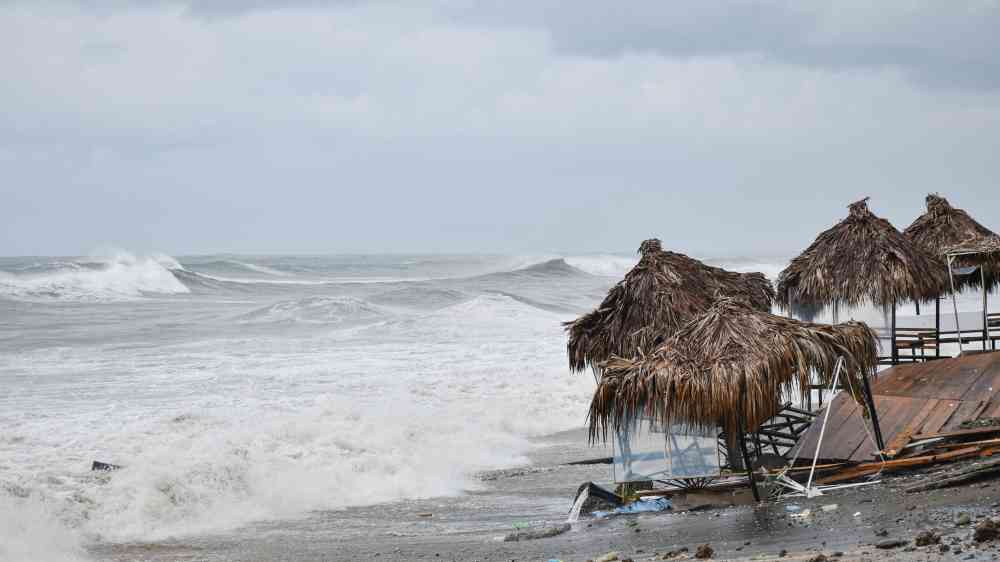
Dramatic waves crash on a Batumi beach with rustic huts under overcast skies.
Update
Cabo Verde: EW4LL roadmap validation after Tropical Storm Gonzalo

Days after Tropical Storm Gonzalo flooded parts of Sal, Cabo Verde, institutions and stakeholders from across the early warning chain came together in Praia on 29 September 2026 to validate the country’s national Early Warnings for All roadmap.

World Meteorological Organization (WMO)
Flooded streets of the neighborhood, drowned cars. Houston, Texas, US. Consequences of the Hurricane Harvey
Update
Researcher develops smart local flood warning system

Researchers at The University of Texas at San Antonio have developed a self-sustaining, artificial intelligence-powered flood warning system designed to spot dangerous water accumulation at the street level.

The University of Texas at San Antonio
Update
USA: Experts warn of a deadly ‘tsunami from the sky’

The recent disaster in Nepal may be a warning of what's to come for the rest of the world. While scientists are getting better at identifying where the danger lies, knowing exactly when the next mountainside will collapse is a much harder problem.

British Broadcasting Corporation (BBC)
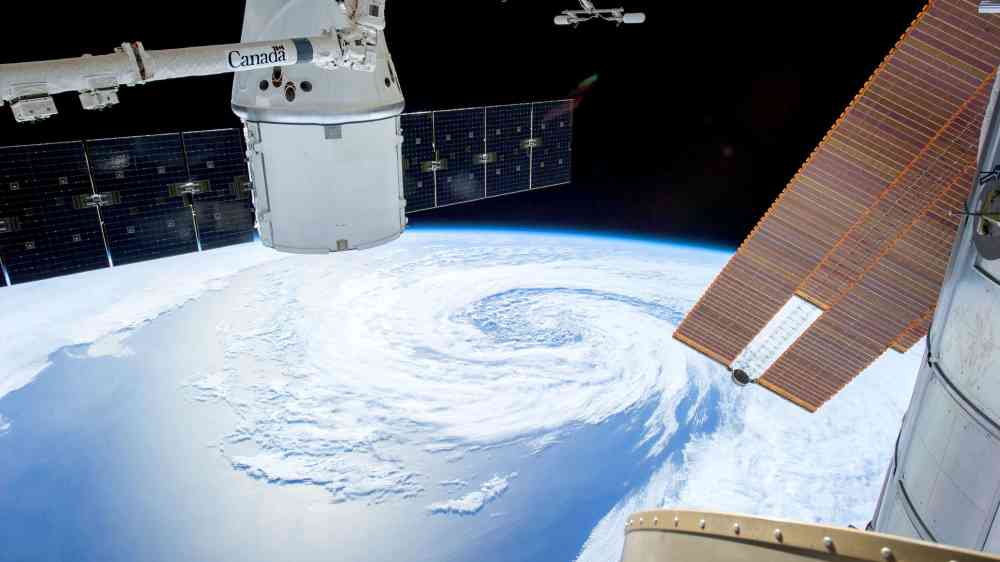
View of a hurricane on Earth as seen from a space station with solar panels and satellite modules
Update
EUMETSAT at 40: Turning satellite data into time-critical warnings

An interview with Sarah Jones, President of DWD, partnership and what EUMETSAT’s new generation satellites will bring and how Germany's national weather service applies EUMETSAT data and services in essential weather forecasts and climate monitoring.

European Organization for the Exploitation of Meteorological Satellites
Stakeholder perspectives on extreme hot and cold weather alerts in England and the proposed move towards an impact-based approach thumbnail
Documents and publications

This paper evaluates the effectiveness of the current alerting systems for hot and cold weather used in England to notify the health and social care sector of upcoming extreme weather events.

Environmental Science and Policy (Elsevier)
Update
Africa: Strengthening disaster telecommunications resilience

National Emergency Telecommunication Plans help governments, operators and responders maintain communications before, during and after disasters, strengthening preparedness, early warning, response and recovery while building resilience.

International Telecommunication Union (ITU)
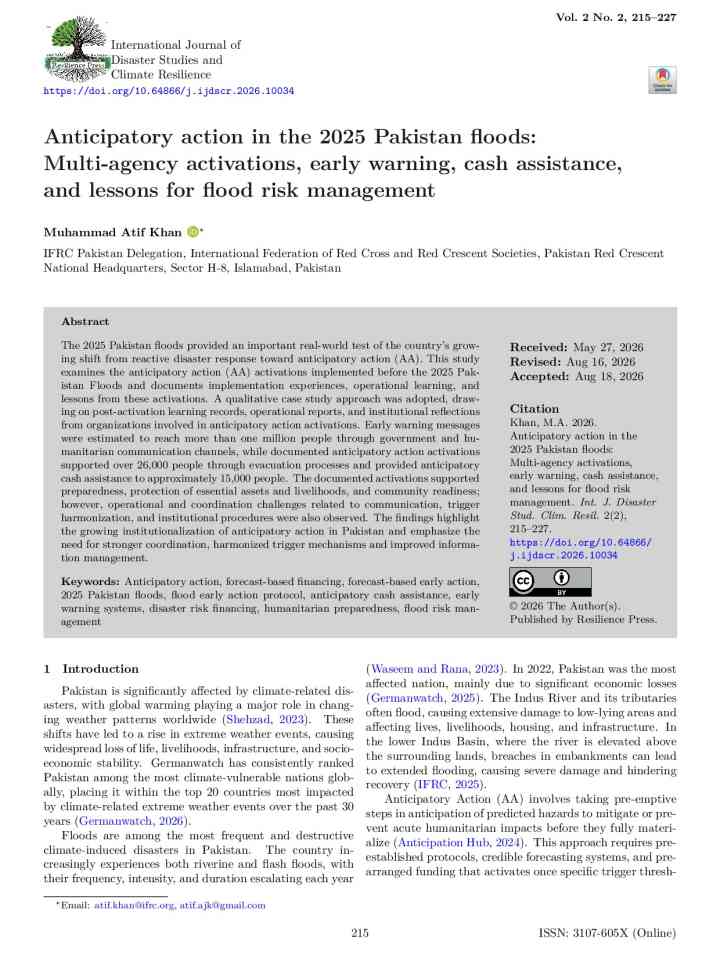
Anticipatory action in the 2025 Pakistan floods: Multi-agency activations, early warning, cash assistance, and lessons for flood risk management thumbnail
Documents and publications

This study examines the anticipatory action (AA) activations implemented before the 2025 Pakistan Floods and documents implementation experiences, operational learning, and lessons from these activations.

International Journal of Disaster Studies and Climate Resilience (IJDSCR)
Research briefs
Real-time rainfall detection for urban flood forecasts

The Korea Institute of Civil Engineering and Building Technology (KICT) announced that it will apply its early detection technology for quasi-stationary linear rainbands and sudden localized torrential rainfall to the Urban Flood Forecasting Platform.

Phys.org
Suriname builds resilience through early warning
Update
Impact-based warnings for first responders

An EU project is building a multi-risk early warning system that forecasts who and what a hazard will affect, not just where it will strike.

Community Research and Development Information Service
Research briefs
Who do you trust in emergency? We asked people hit by extreme weather

This article shows that it is vital to focus on who delivers the early warning messages. Messengers commanding high levels of trust need to be actively engaged to ensure information reaches people frequently and widely.

Conversation Media Group, the
Research briefs
Local-scale wind forecasting for tropical cyclone early warnings

Hurricane agency forecasts warn at the country-scale and not for one site. This paper introduces LiveCyc, a probabilistic forecasting system that takes any agency forecast and works out the wind distribution at the 1-km scale of a single neighborhood.

National Oceanic and Atmospheric Administration
Update
Bangladesh’s Early Warnings for All National Roadmap

Bangladesh has achieved a milestone in the country’s two-year journey towards an effective and resilient early warning system: the launch of its Early Warnings for All (EW4All) National Roadmap.

International Telecommunication Union (ITU)
Update
NASA uses machine learning to enhance flash flood warnings

A NASA, UCSD and NOAA collaboration uses machine learning on satellite navigation data to detect sudden atmospheric moisture spikes, flagging likely flash floods for forecasters in as little as fifteen minutes.

National Aeronautics and Space Administration (NASA)
Hand on a keyboard with images of an AI-powered programme
Update
Can Chinese AI weather systems help Pakistan adapt to climate change?

China’s AI-powered weather system deployed in Pakistan to support multi-hazard early warning and disaster risk reduction. Experts welcome its potential but stress that forecast accuracy depends on data quality, local validation and preparedness systems.

Dialogue Earth
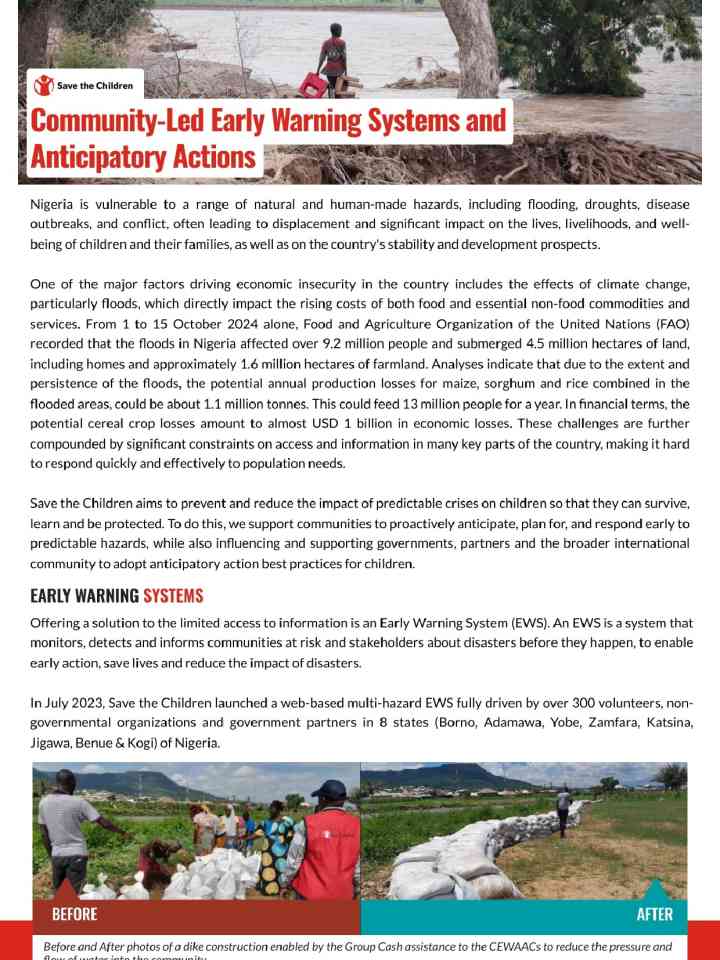
Community-led early warning systems and anticipatory action in Nigeria thumbnail
Documents and publications

This brief highlights Save the Children Nigeria’s Community-Led Early Warning Systems (EWS) and Anticipatory Action approach, which helps communities prepare for and respond to predictable hazards before they escalate into crises.

Save the Children International
Update
The Alerting Authority Podcast: The seconds that could save your life

Jeannette Sutton and Eddie Bertola break down USGS ShakeAlert, earthquake early warnings, Wireless Emergency Alerts, and the technology that can warn people before strong shaking arrives.

The Alerting Authority
Meetings and conferences
Online
Hamilton Bean is a Professor of Communication at the University of Colorado Denver and an internationally recognized expert on disaster warning systems and public alerting.
Assessing the riverine flood forecast skill of GloFAS and Google Flood Hub with impact data and discharge observations to support early actions in Mali thumbnail
Documents and publications

This study evaluates opportunities to enhance the Mali Red Cross Early Action Protocol (EAP) for riverine flooding by comparing global flood forecasting systems against the country's current trigger model.

Journal of Flood Risk Management (Wiley)
Update
Nepal can't stop the floods. It can stop them from becoming disasters

The interplay of water, infrastructure, and danger drives home the central lesson of disaster risk reduction: there is no such thing as a ‘natural’ disaster. A natural hazard becomes a disaster only when people are placed in its path.

Time Magazine Inc.
Breathtaking view of Mendenhall Glacier in Juneau, reflecting serene natural beauty.
Update
USA: Juneau can’t stop floods, but it’s learning to see them coming

Recurrent floods have forced Juneau to confront a problem that communities around the world are increasingly facing: How do you prepare for a natural disaster when you know it will come back?

Grist Magazine
Vacancy
Closing date
UNDRR issues a grant aimed at strengthening inclusive early warning systems in Southeast Asia to ensure women, girls, persons with disabilities, and other vulnerable groups receive and act on disaster warnings.
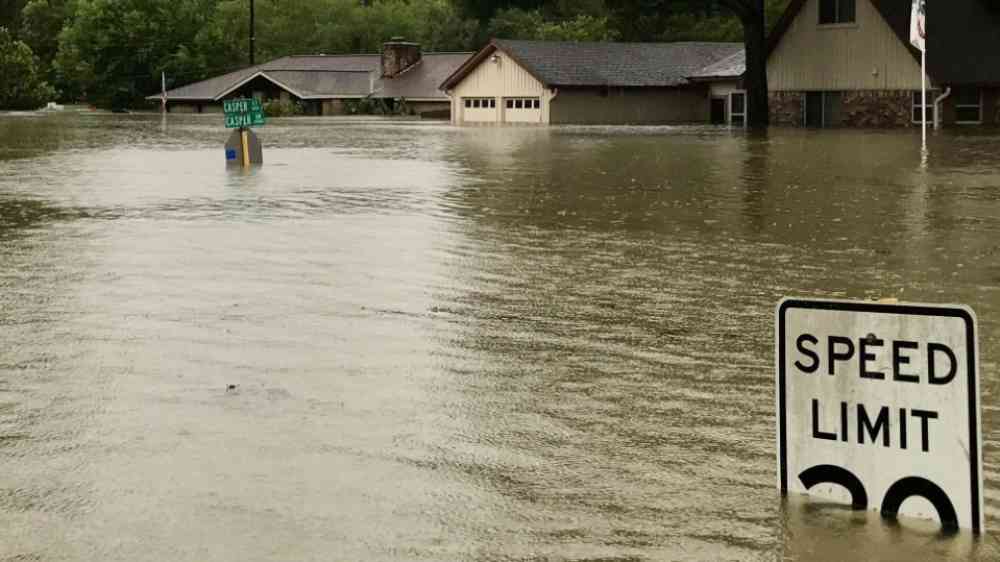
Speed limit sign almost completely submerged by a flood caused by Hurricane Harvey in 2017.
Last updated 17 Sep 2026
In July 2025, destructive and deadly flooding took place in the Texas Hill Country, particularly in Kerr County, in the U.S. state of Texas.
Research briefs
Studying data from 2025 floods to prepare for rainfall events

The devastating floods that swept through San Antonio and the Texas Hill Country in 2025 left researchers with an urgent question: What can be learned from these events to better prepare communities for the next catastrophic flood?

The University of Texas at San Antonio