1. Home
  2. Knowledge Base | PreventionWeb
  3. Themes

Preparedness

The knowledge and capacities developed by governments, response and recovery organizations, communities and individuals to effectively anticipate, respond to and recover from the impacts of likely, imminent or current disasters.

Preparedness action is carried out within the context of disaster risk management and aims to build the capacities needed to efficiently manage all types of emergencies.

This theme covers aspects related to preparedness, contingency planning, disaster response plans, prevention, anticipatory action.

What’s the difference between disaster risk reduction (DRR) and disaster risk management (DRM)?

Latest Preparedness additions in the Knowledge Base

After the fire: Three years on — what the Maui wildfire reveals about emergency management policy for island communitiesDocuments and publications
After the fire: Three years on — what the Maui wildfire reveals about emergency management policy for island communities
Island Security Policy Institute Maui wildfire emergency management reform: Three years after Lahaina — An independent assessment of framework reform progress and remaining gapsDocuments and publications
Maui wildfire emergency management reform: Three years after Lahaina — An independent assessment of framework reform progress and remaining gaps
Island Security Policy Institute When the ocean comes inland: Tsunami preparedness policy for Pacific island and Hawaii coastal communities — What the warning systems missDocuments and publications
When the ocean comes inland: Tsunami preparedness policy for Pacific island and Hawaii coastal communities — What the warning systems miss
Island Security Policy Institute Hazard impact information has the greatest effect on how people respond to alertsResearch briefsWhy alerts need hazard impact informationThe Warn Room
Community-based flood management in Djibouti: A practical manual for local preparedness and respons thumbnail
Documents and publications

This manual provides practical guidance for strengthening community-based flood risk management in Djibouti. It aims to help local communities reduce their vulnerability to flooding and strengthen their capacity to prepare, respond and recover from flood.

The Climate Risk & Early Warning Systems Initiative (CREWS)
Vacancy
Closing date
The consultant will be Samuel Hall's technical lead on anticipatory action and PSP/ITK in the programme's final year.
Sweden disaster risk data system assessment and roadmapDocuments and publications
Sweden disaster risk data system assessment and roadmap
Global Facility for Disaster Reduction and Recovery, the (GFDRR)
Update
Australia: App puts bushfire preparedness into action

Most natural-hazard apps tell people what is happening during an emergency. Fewer than one in five help them prepare beforehand.

University of Tasmania
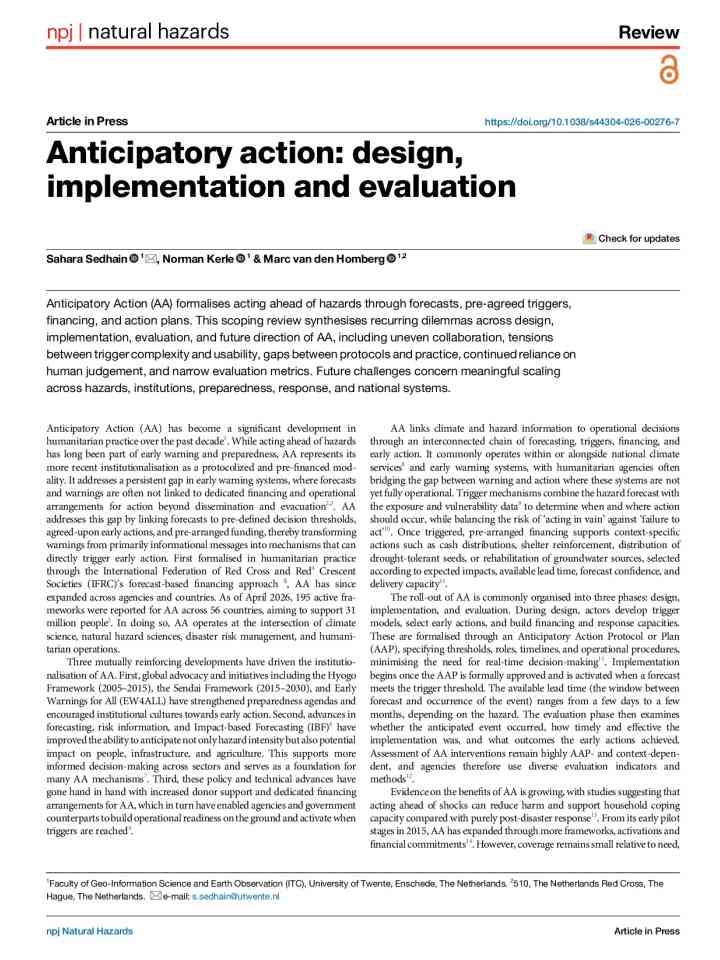
Anticipatory action: design, implementation and evaluation thumbnail
Documents and publications

This scoping review synthesises recurring dilemmas across design, implementation, evaluation, and future direction of anticipatory action (AA)

npj Natural Hazards (Nature)
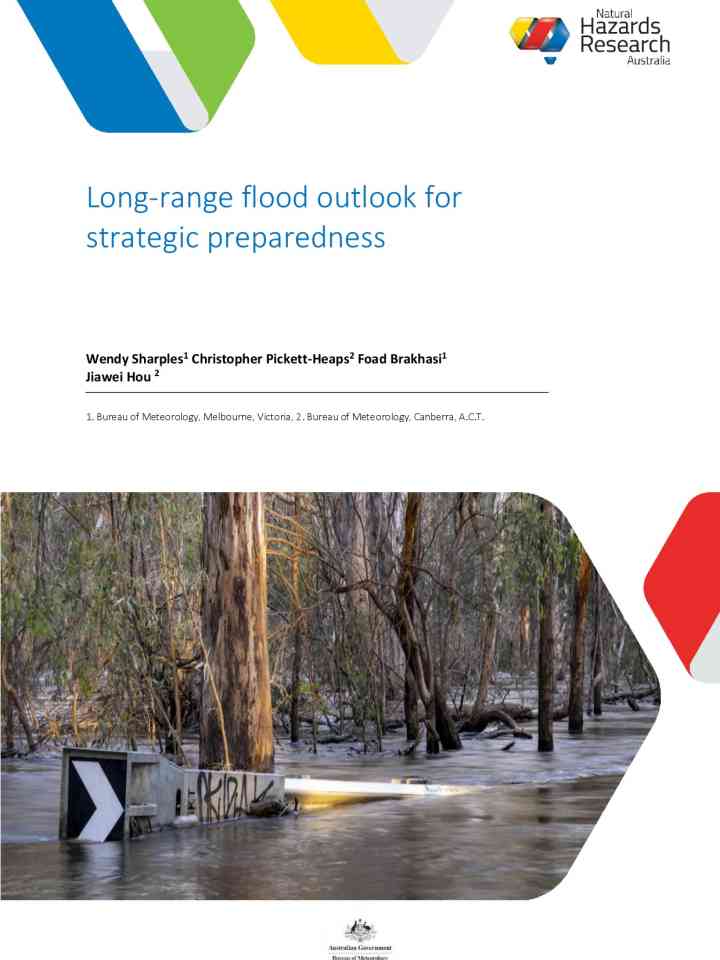
Long-range flood outlook for strategic preparedness  thumbnail
Documents and publications

This report assesses feasibility of long-range flood outlooks for Australia using co-design with end users and BJP model to quantify and map flood likelihood, finding S2S forecasts enhance preparedness by identifying elevated risk weeks to months ahead.

Natural Hazards Research Australia
Man holding a loud speaker for early warning in Bangladesh.
Update
Bangladesh: Rethinking how we use forecast

Better forecasts alone will not deliver early action. Local organizations need actionable risk information, stronger decision-support systems and strengthened capacity to act before disaster strikes.

Start Network
Hospital hallway with doctors, nurses and specialists in hospital. Female and male physicians, surgeons, healthcare officials walk together in corridor with their back to camera
Vaitsis Koutsipetsidis
Author finds Greek hospital staff lack access to and training on disaster plans. The article calls for regular practical drills, dedicated preparedness officers, hospital vulnerability assessments and measurable readiness to strengthen emergency response.
Resilience starts at home. But what if home isn't safe? The consequences of conventional household assumptions for inclusive DRR thumbnail
Documents and publications

This report explores how disaster risk reduction policies that center on "home" can overlook marginalized groups, urging inclusive approaches that recognize diverse living situations to ensure effective support and protection for all communities.

DRR Dynamics Ltd
Explore the historic neoclassical facade of the Hockey Hall of Fame in Toronto's bustling cityscape.
Update
Adaptation policies must be built around the local communities

Municipalities control levers like land-use planning, permitting and local infrastructure. But the adaptive capacity of municipalities is shaped by fiscal, regulatory and policy frameworks established by federal, provincial or territorial governments.

Conversation Media Group, the
A firefighter surveys wildfire damage in Queensland, Australia
Update
3 things we need to get right ahead of bushfire risk this summer

This summer, Australia could face some of its most extreme bushfire conditions ever, due to the severity of an ever-strengthening El Niño. And for many Australians, memories of catastrophic natural disasters are still painfully fresh.

Conversation Media Group, the
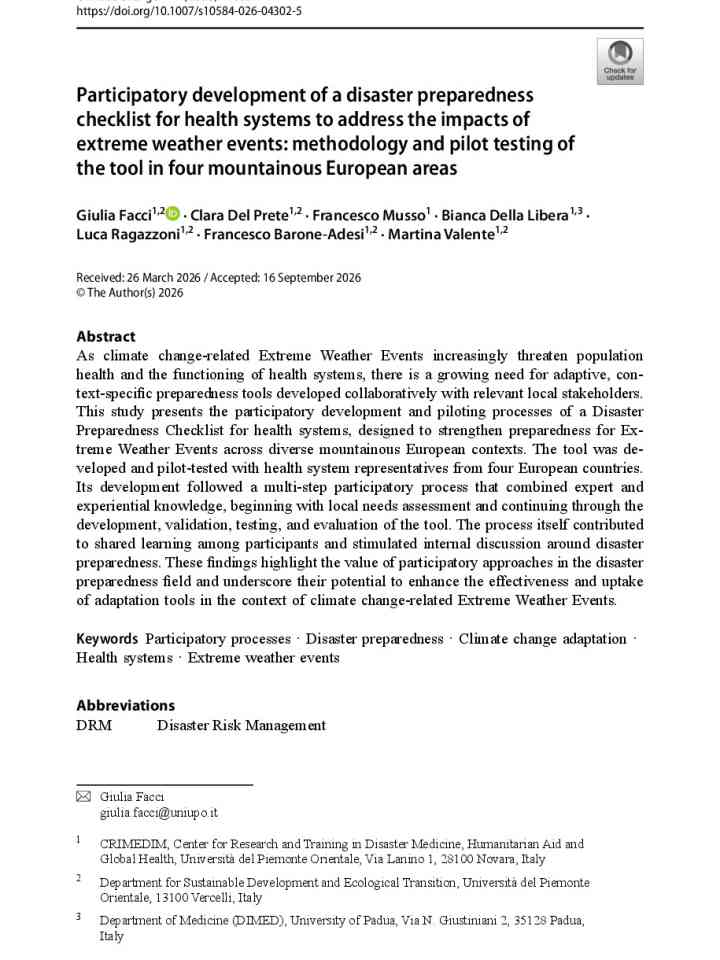
s10584-026-04302-5-4.pdf thumbnail
Documents and publications

This study presents the participatory development and piloting processes of a Disaster Preparedness Checklist for health systems, designed to strengthen preparedness for Extreme Weather Events across diverse mountainous European contexts.

Springer
Meetings and conferences
Geneva
Online
The event will bring together operational experience and research evidence to identify practical solutions and develop recommendations for strengthening NCD preparedness and continuity of care.
Update
Malawi: village is holding back floods

After repeated flooding, villagers in southern Malawi planted trees and built a dyke. Their local approach is now helping to protect their homes from rising water – and it is becoming a role model for disaster preparedness throughout the country.

D+C Development and Cooperation
Meetings and conferences
-
Online
The Sendai Stakeholder Engagement Mechanism (SEM) is convening online consultations to gather input from non-State actors representing diverse regions and constituencies ahead of the negotiations on the Protection of Persons in the Event of Disasters.
Update
Advancing community wildfire adaptation

Community wildfire adaption activities may not work as well as hoped because they downplay the importance of local contexts and local input.

Wildfire Today
Update
Flood resilience in Indonesia

Between 2010 and 2025 floods in Indonesia claimed more than 1,700 lives and caused an estimated USD 5.8 billion in losses. ADB-backed forecasting systems now warn communities up to nine hours ahead, alongside livelihood support for affected households.

Asian Development Bank (ADB)
Update
Thailand: Historic floods exposed cracks in Bangkok’s disaster defense

Experts say that without major upgrades to flood defenses, the city will fall deeper into an annual pattern of chaos and paralysis as climate change takes hold.

Thai Public Broadcasting System World
Update
Japan: 2026 Kumamoto earthquake – Accessibility, not resource shortage

In the aftermath of a disaster, affected areas are trapped in a severe information vacuum. When roads are damaged and communications fail, entering the disaster zone and conducting onsite surveys doesn't give an tell what help is necessary and where.

Research Institute of Economy, Trade and Industry (RIETI) 独立行政法人経済産業研究所
Perceiving protection: Public interpretation of institutions in managed flood settings thumbnail
Documents and publications

This paper reviews 35 studies on public interpretations of institutional presence in flood-prone areas, finding that perceptions of risk, trust, and preparedness are shaped by how communities experience flood management and governance visibility.

Journal of Flood Risk Management (Wiley)
Meetings and conferences
Kurayoshi
Online
Kurayoshi, Tottori, Japan, and online, 17 October 2026, 16:30–18:00 JST. A workshop at Bousai Kokutai 2026 uses a disaster-prevention song and a short film to teach shelter resilience, mutual aid and risk reduction through urban planning.
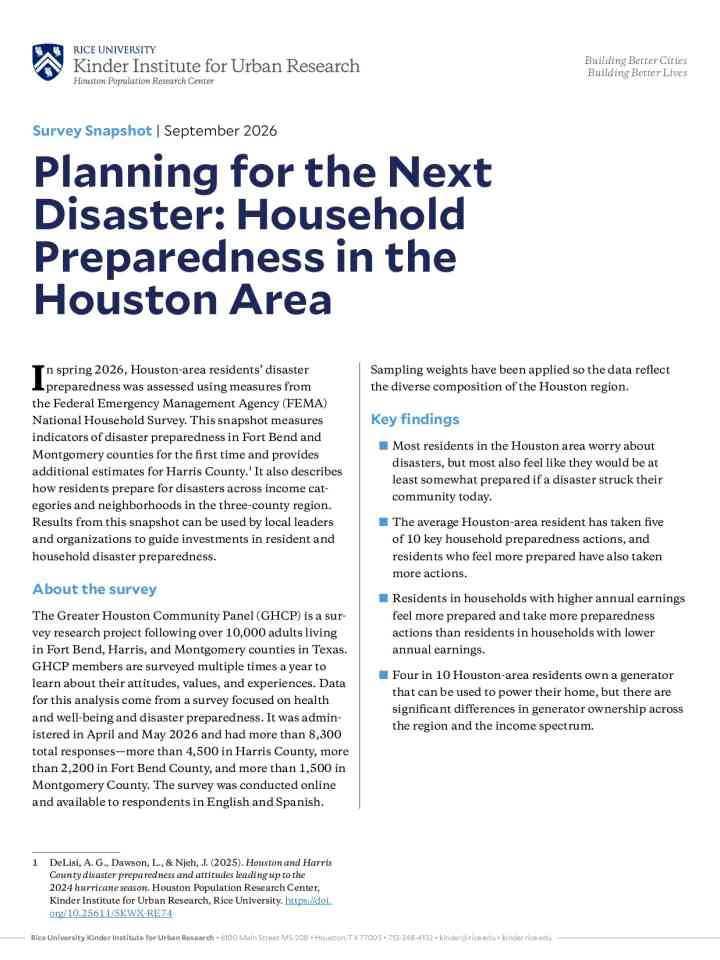
Planning for the NextDisaster: HouseholdPreparedness in theHouston Area thumbnail
Documents and publications

This survey assesses disaster preparedness among Houston-area households, finding most residents feel somewhat prepared but with disparities by income and location. Insights aim to guide leaders in addressing gaps and promoting equitable resilience.

Kinder Institute for Urban Research (Rice University)
Update
AI cameras on California wildfire watch

A roving crew installs cameras on California’s highest, craggiest ridgelines to catch wildfires early. Since 2023 artificial intelligence has scanned the network’s footage, and it now spots 51 per cent of the state’s wildfires first.

New York Times, the
Update
Romanians’ earthquake preparedness gap

A survey by IRES for the Romanian insurers’ association UNSAR finds that 88 per cent of Romanians say they know how to react in an earthquake, but only 44 per cent have agreed a family plan and 40 per cent keep a first-aid kit.

Romania Journal
Update
Mosque loudspeakers as quake alarms

The Indonesian government is working with Japan to broadcast earthquake early warnings through mosque loudspeakers, with trials planned in Jakarta and other regions by 2030 before nationwide rollout.

Guardian, the (UK)
Illustration concept representing big data
Last updated 14 Oct 2026
Discover artificial intelligence and machine learning applications ranging from early warning systems to evacuation models, as well as other intriguing disaster risk reduction innovations.
Update
Drones, AI and robots in wildfire response

Federal agencies in the United States already use drones to map wildfires and detect hotspots. The Forest Service is now testing ground robots, and researchers are training machine-learning models on drone imagery to predict how fast a fire will spread.

Bulletin of the Atomic Scientists, The
Update
Record Pacific warmth as El Niño strengthens

WMO’s Global Seasonal Climate Update forecasts the Niño 3.4 anomaly reaching about +3.7°C in October–December, the highest since observations began, with a near-100 per cent likelihood that El Niño persists through February 2027.

World Meteorological Organization (WMO)
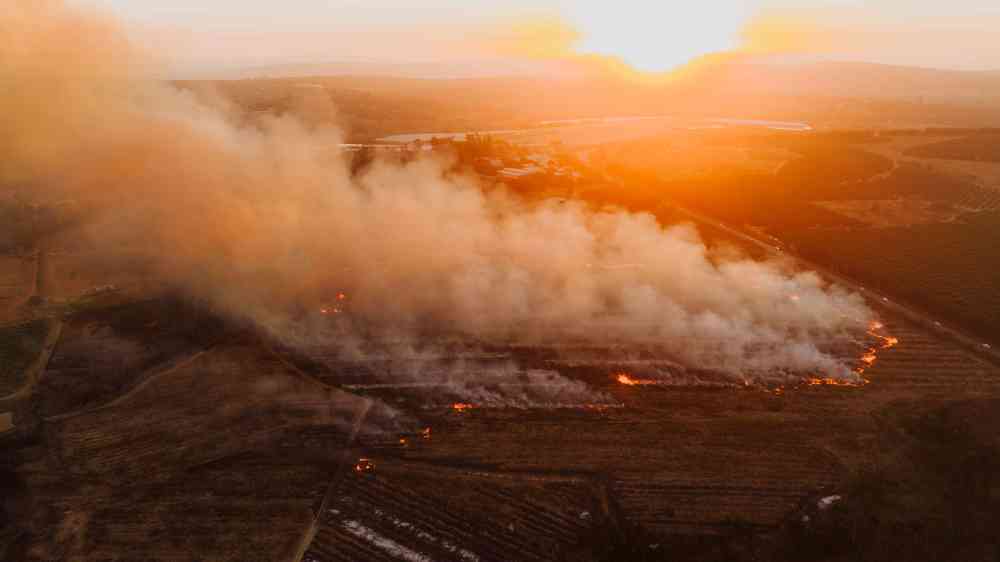
Aerial shot of a wildfire near White River, South Africa, creating dramatic sunset scenery over the landscape.
Update
Measuring wildfire plumes

Firefighter and researcher Marc Castellnou sends weather balloons into towering wildfire plumes to measure temperature, wind and humidity, opening a new way to anticipate when a fire turns extreme – and why some keep burning fiercely at night.

Wageningen University and Research Centre
Update
The relevance of redundancy during severe weather

Municipalities can prevent system failures through redundancy – intentional duplication of critical functions that increases reliability – and keep mission-critical communications functioning so public safety professionals can serve the community.

Domestic Preparedness
Update
IDDRR: GSCF launches disaster preparedness game

This free online game, inspired by the book "Tout peut changer en une minute", teaches the right reflexes before, during and after a disaster or emergency. Players face concrete situations and receive an immediate explanation of the right action.

Groupe de Secours Catastrophe Français
Watercolour of houses, Ethiopia
Op Ed
Kamal Kishore: Resilience starts at home, and travels outwards

On International Day for Disaster Risk Reduction, SRSG Kamal Kishore reflects on how everyday decisions about our homes shape disaster risk, how public policy can expand people’s capacity to act, and why recovery works best when households shape it.

United Nations Office for Disaster Risk Reduction (UNDRR)
 traditional old yellow houses Vietnam
Op Ed
Let us start with where and how homes are built

When policy, finance and implementation work together to protect where people live, resilience takes root – strengthening communities today and expanding opportunity for generations to come.

United Nations Office for Disaster Risk Reduction (UNDRR)
United Nations Development Programme (UNDP)
In Viet Nam, sun and seawater shape salt ponds that have sustained livelihoods for generations.
Feature
The early warning to action gap requires building resilience at home

When disasters are imminent, timely warnings can be the difference between life and death. However, warnings are only effective when they are received, understood, and acted on.

United Nations Office for Disaster Risk Reduction (UNDRR)
Aerial drone view of concrete pier on turquoise water at the Black Sea.
Last updated 12 Oct 2026
This web-based collection shares local and regional experiences for the benefit of the wider DRR community and OACP countries, produced in the context of the Intra-ACP Disaster Risk Reduction (DRR) Programme.
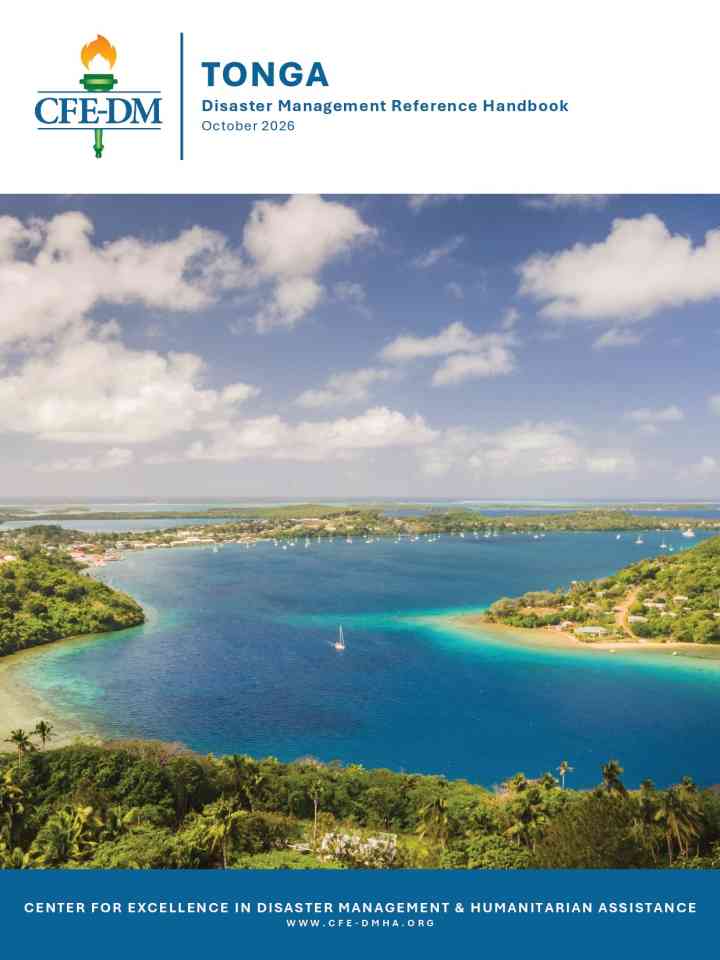
Tonga: Disaster management reference handbook thumbnail
Documents and publications

This Disaster Management Reference Handbook provides a comprehensive overview of Tonga’s disaster risk environment, institutional structures, and operational mechanisms.

Center for Excellence in Disaster Management & Humanitarian Assistance (CFE-DMHA)
Meetings and conferences
Online
Ilan Kelman provides a centuries-long journey through humanity’s past, aiming to learn from it to create fewer disasters tomorrow. A UCL Lunch Hour Lecture, held online on 12 January 2027.
Meetings and conferences
Online
The IAVCEI ECR-Net and the EGU Working Group on Geoethics host an online panel on the ethical challenges of volcanic disaster risk management – decision-making under uncertainty, risk communication and engagement with affected communities.
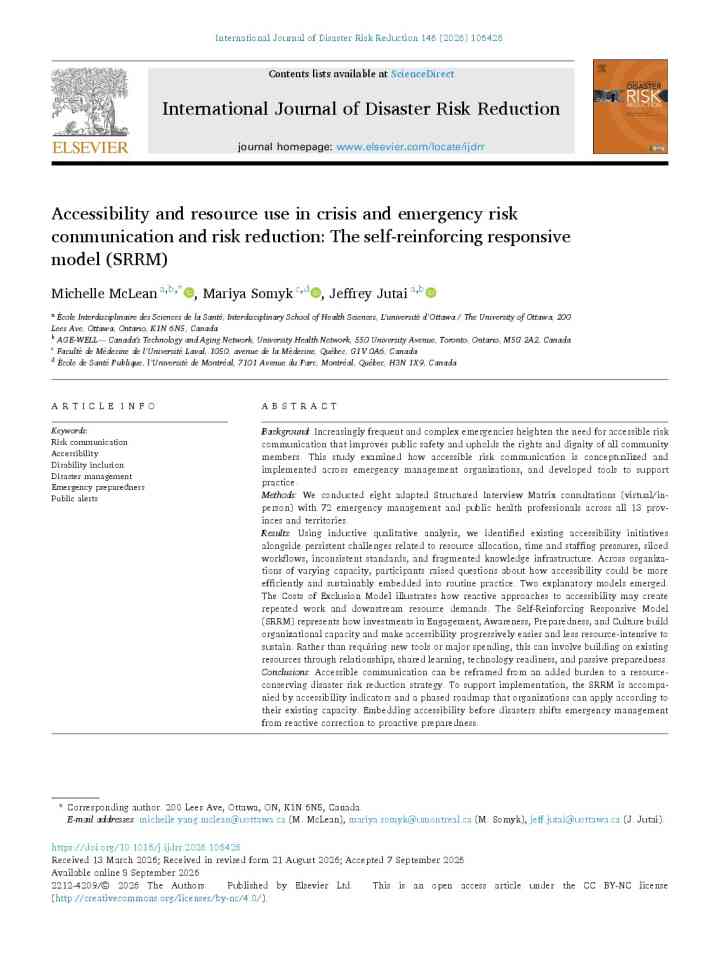
Accessibility and resource use in crisis and emergency risk communication and risk reduction: The self-reinforcing responsive model (SRRM) thumbnail
Documents and publications

This study examines how Canadian emergency management organizations conceptualize and implement accessible risk communication

International Journal of Disaster Risk Reduction (Elsevier)
Smartphone displaying a flash flood warning alert screen, held by a person standing near rising floodwaters. Concept for emergency notification, natural disaster preparedness, and weather alerts
Pramod Dabrase
This blog's author suggests moving from early warning to early action requires connecting authoritative risk intelligence with people's current location, capabilities and ability to act.
IDDRR - innovation starts at home
Update
IDDRR: Five innovative ways to bring resilience home

When confronted by disaster, home is the first thing we fight to protect, and the first line of defence too. Resilience is innovated at the household level – through smarter design, better data and nature being put to work. 🌿

United Nations Office for Disaster Risk Reduction (UNDRR)
Update
Playful preparedness: Prefigurative design in disaster anticipation

Playful preparedness uses games, improvisation and creative activities to help communities anticipate disasters, build practical skills and imagine more inclusive, resilient ways of responding to future crises.

e-fllux
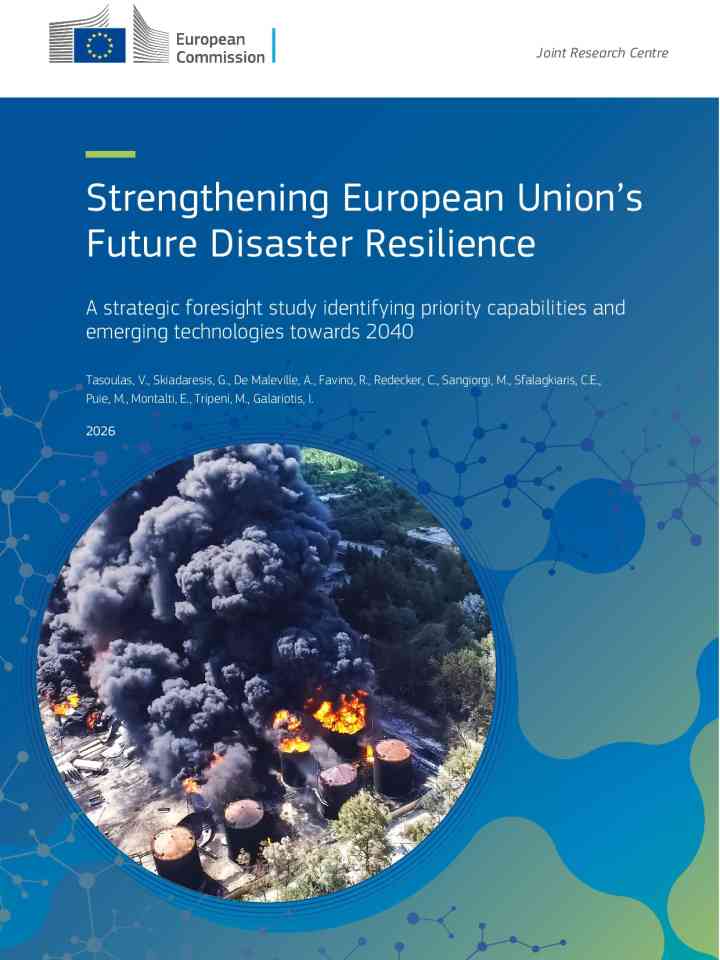
Strengthening the EU’s future disaster resilience: A strategic foresight study identifying priority capabilities and emerging technologies towards 2040  thumbnail
Documents and publications

This report identifies 12 priority capabilities and 12 emerging technologies to strengthen EU disaster and infrastructure resilience towards 2040, using a strategic foresight process combining literature review, horizon scanning and expert consultation.

European Union
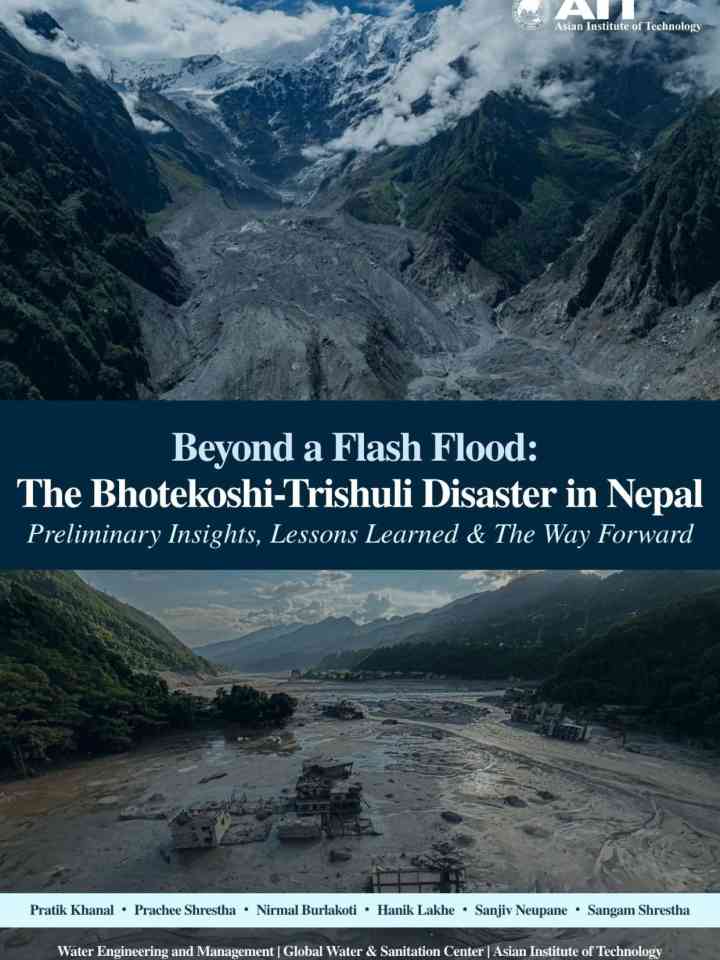
Beyond a flash flood: The Bhotekoshi - Trishuli disaster in Nepal - Preliminary insights, lessons learned and the way forward thumbnail
Documents and publications

This report analyzes the 2026 flash flood in Nepal, finding a massive rock-ice avalanche—not rainfall—triggered the disaster. It advocates multi-hazard monitoring, early warning systems, and transboundary risk management to build Himalayan resilience.

Asian Institute of Technology - Disaster Preparedness, Mitigation and Management Program
People collecting relief supplies in a community outdoor setting in Africa.
Update
How Guinea-Bissau is strengthening emergency preparedness

When disasters strike in Guinea-Bissau, their effects can linger long after the immediate danger has passed. How quickly the government responds can shape how well lives are protected and how soon services, livelihoods, and communities recover.

Global Facility for Disaster Reduction and Recovery, the (GFDRR)
Prevention and management of heat-related illness at mass gatherings: Considerations for implementation thumbnail
Documents and publications

This study provides guidance for public health authorities and event organizers to prevent and manage heat-related illness at mass gatherings, offering risk assessment tools and practical measures for safer, climate-resilient events in diverse contexts.

World Health Organization (WHO)