1. Home
  2. Knowledge Base | PreventionWeb
  3. Themes

Human mobility

Reducing, preparing for and responding to disaster displacement. Integrating disaster displacement and other related forms of human mobility into regional, national, sub-national and local DRR strategies.

Explore specific resources on:

Latest Human mobility additions in the Knowledge Base
Last updated 25 Aug 2026
Evacuation route planning is a key part of disaster risk management with the primary aim of reducing risk to life in the face of hazards.
Emotional responses and perceptions of false alarms in flood warnings and their impact on evacuation action: an empirical analysis of the Kyushu Region, Japan thumbnail
Documents and publications

This study shows that perceived false flood alarms can reduce evacuation behaviour, while positive emotional responses to false alarms may help maintain protective action during future warnings.

Journal of the Meteorological Society of Japan (Springer Nature)
Unequal access to emergency facilities for older adults: a spatial analysis in Shanghai, China thumbnail
Documents and publications

This study evaluates whether the spatial accessibility of these facilities aligns with the distribution of older residents in core and non-core areas of Pudong New Area, Shanghai Municipality.

International Journal of Disaster Risk Science
A life-year approach for measuring the human cost of disaster displacement thumbnail
Documents and publications

The study shows new methodology to estimate human costs of internal displacement using a life-year approach. Developed for researchers and practitioners, it gives a framework to quantify impacts of displacement to inform policies and investment decisions.

Internal Displacement Monitoring Centre (IDMC)
Update

The Island Innovation newsletter of 4 June 2026 referred to "the Falepili Mobility Visa, the world's first climate-linked migration pathway." The text of the 2023 Australia-Tuvalu Falepili Union treaty is clear that the visa offer is different.

Island Innovation
Research briefs

Researchers developed a new approach integrating human mobility dynamics into flood emergency planning. Results show ~43% cities experience severe spatial mismatches between evacuation demand and shelter resources under a once-in-a-century flood scenario.

Peking University
Spanish Civil Guard vehicle assisting at a summer wildfire near a roadside.
Update

This region is no stranger to fire, analysis shows these wildfires are off the charts. A very hot summer primed many areas for fire. When they ignited, they spread ferociously. The area of land burned in France is 40% larger than the previous record year.

Conversation Media Group, the
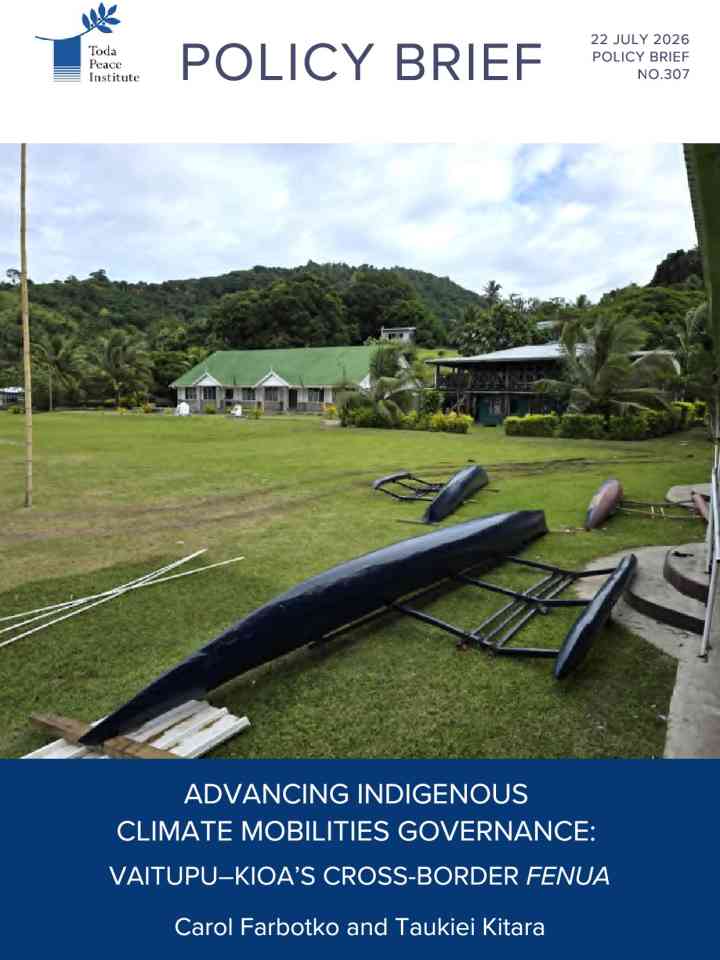
 Advancing indigenous climate mobilities governance: Vaitupu–Kioa’s cross-border Fenua  thumbnail
Documents and publications

This policy brief presents a case study of Indigenous climate mobility governance, through which communities exercise authority to make decisions on how their land or other resources might or might not become available to support groups wanting to move
Toda Peace Institute
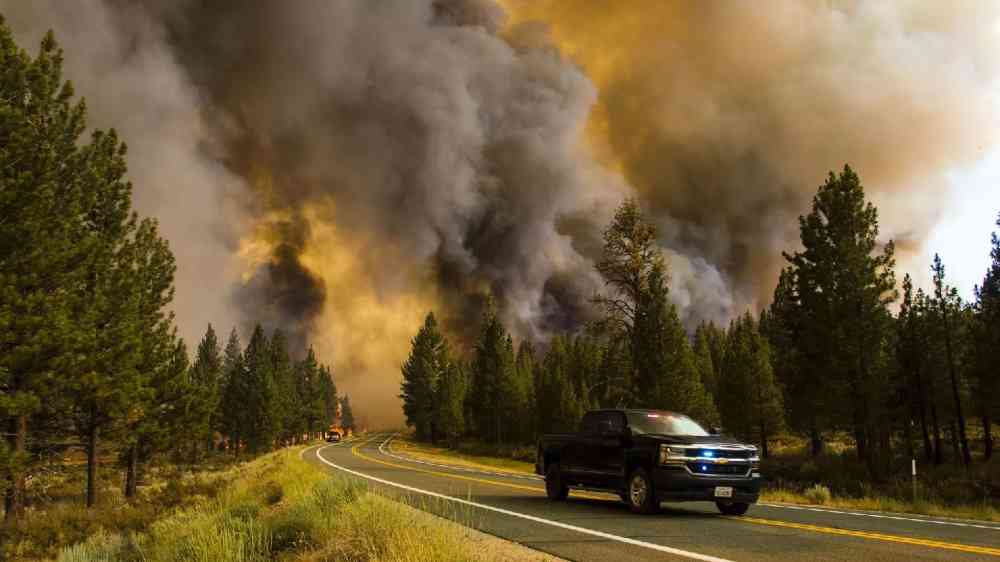
California wildfires, July 2021
Update

The impacts of climate change are escalating, compounded by urban expansion into fire-prone areas. Eight cutting-edge technologies have the potential to revolutionize wildfire risk reduction strategies.

United Nations Office for Disaster Risk Reduction (UNDRR)
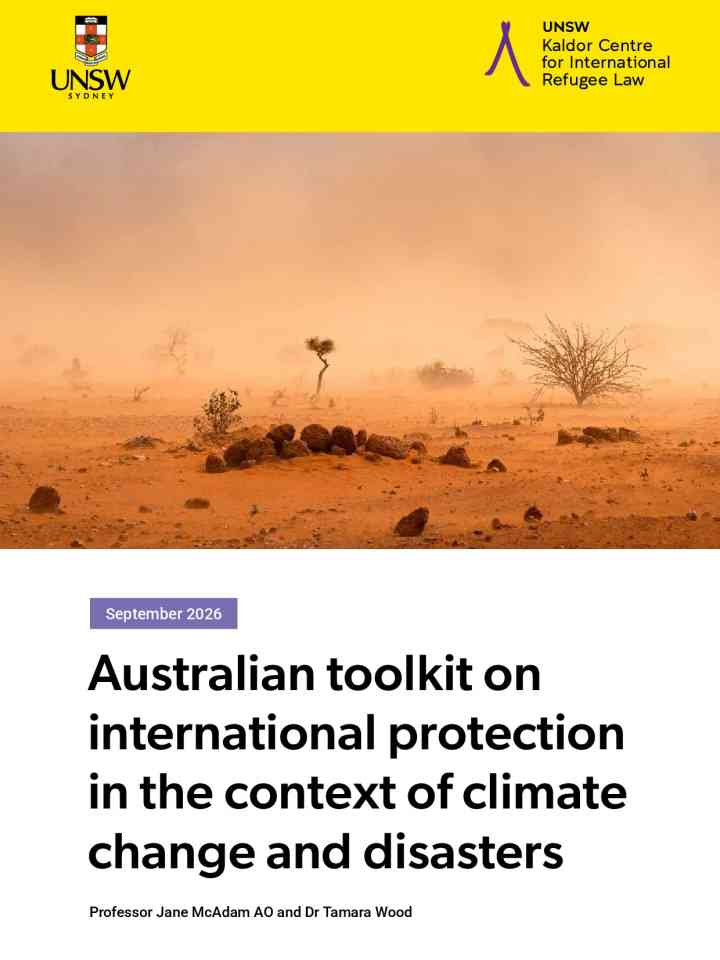
2026-07-mcadam-pped-treaty-update-displacement-evacuations.pdf thumbnail
Documents and publications

This Power Presentation presents updates regarding the incorporation of displacement related issues into the Treaty for the Protection of Persons in the event of Disasters.

UNSW Kaldor Centre for International Refugee Law
2025-05-policy-brief-foregrounding-displacement-treaty.pdf thumbnail
Documents and publications

This policy brief examines the increasing challenge of disaster-related displacement and argues that the proposed Treaty on the Protection of Persons in the Event of Disasters (PPED Treaty) should explicitly address the protection of displaced people.

UNSW Kaldor Centre for International Refugee Law
2026-03-summary-report-technical-briefing-on-treaty-protection-persons-event-disasters-displacement.pdf thumbnail
Documents and publications

This summary report presents the key insights from the technical briefing and a summary of the presentations and exchange among participants.

UNSW Kaldor Centre for International Refugee Law
Platform on Disaster Displacement
International Federation of Red Cross and Red Crescent Societies (IFRC)
2026-05-incorporating-displacement-into-pped-treaty-1.pdf thumbnail
Documents and publications

This two-pages resource brief provides concrete recommendations and entry points to incorporate displacement into the Treaty on the Protection of Persons in the event of Disasters.

UNSW Kaldor Centre for International Refugee Law
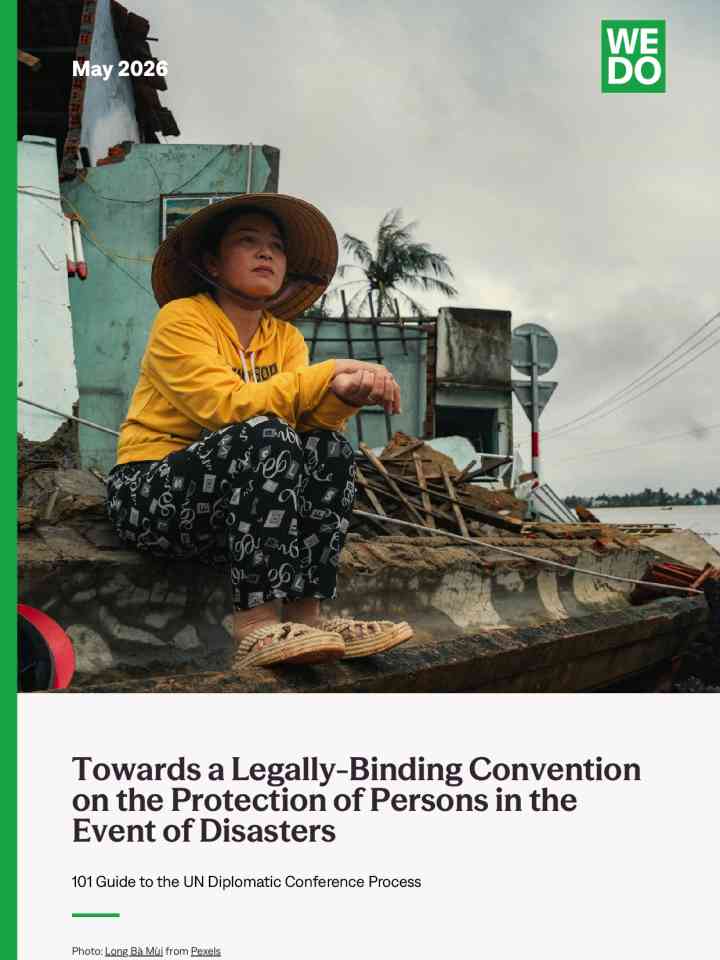
Towards a legally-binding convention on the protection of persons in the event of disasters thumbnail
Documents and publications

This guide introduces the ongoing process to develop a legally binding convention on the protection of persons in the event of disasters (PPED) and explains why feminist and gender-justice advocates need to be paying attention.

Women's Environment and Development Organization (WEDO)
Landing
Wildfires can force people to leave their homes with little notice, leading to both short-term evacuations and longer-term displacement.
Early warning systems for mobile populations: Operational guidance thumbnail
Documents and publications

This operational guidance provides direction for designing and implementing people-centred, inclusive multi-hazard early warning systems that effectively reach and protect mobile populations and other groups affected by changing locations or circumstances

United Nations Office for Disaster Risk Reduction (UNDRR)
World Meteorological Organization (WMO)
International Federation of Red Cross and Red Crescent Societies (IFRC)
International Telecommunication Union (ITU)
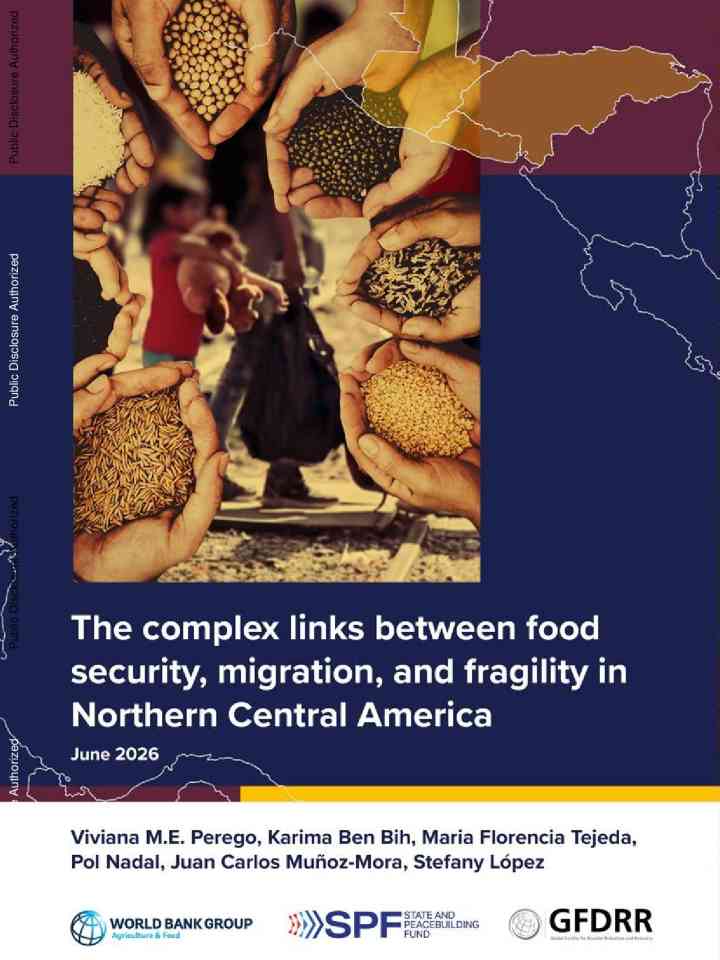
The complex links between food security, migration, and fragility in Northern Central America thumbnail
Documents and publications

This report examines the interlinked dynamics of fragility, food insecurity, shocks, and migration in the Northern Central America (NCA) region, composed of El Salvador, Guatemala, and Honduras.

World Bank, the
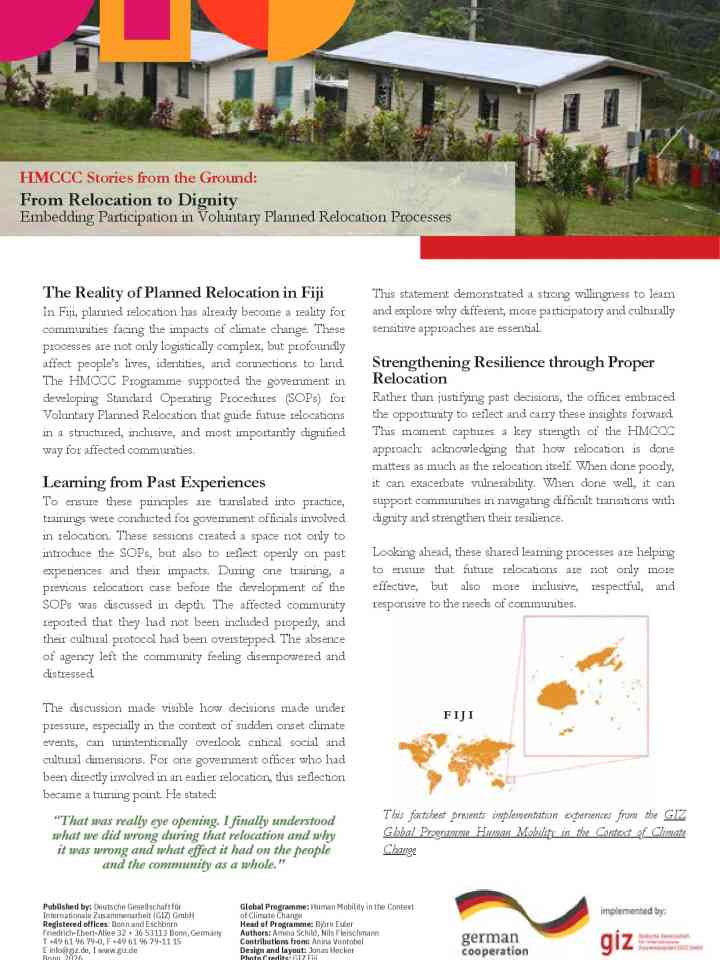
Planned relocation policies and practices: lessons from Fiji, Bangladesh, and Peru  thumbnail
Documents and publications

This brief examines key components of government-led planned relocation frameworks in Fiji, Bangladesh, and Peru, including their impacts on communities and lessons for policymakers developing and implementing similar plans.

Natural Resources Defense Council
Mapping hazard-access mismatches in wildfire evacuation systems: a multi-facility accessibility framework thumbnail
Documents and publications

This study proposes a Wildfire Evacuation Resource Index (WERI) quantifies census-tract accessibility to emergency shelters, hospitals, lodging, gas stations, and EV charging stations within a three-step floating catchment area framework.

npj Natural Hazards (Nature)
A disaster risk and resilience analysis framework provides insights for modelling natural hazard-induced human mobility thumbnail
Documents and publications

This research presents a conceptual disaster risk and resilience framework for modelling natural hazard-induced human mobility, centring on household objective well-being as the key determinant of voluntary, involuntary, and planned movement outcomes.

Communications Earth & Environment (Nature)
Update

Depopulation in the state’s coastal communities has been significant since Hurricane Katrina, an extremely powerful and destructive storm that hit the state in August 2005. It was responsible for 1833 deaths and approximately $108 billion in damage.

Climate Adaptation Platform (CAP)
Advancing gender-transformative action in human mobility in the context of climate change thumbnail
Documents and publications

This publication explores how climate mobility programmes can move beyond gender-responsive approaches towards more gender-transformative change.

Deutsche Gesellschaft für Internationale Zusammenarbeit (GIZ)
Update

Millions of Afghans forced back across the border are returning to a country where conflict, climate and hardship make rebuilding fragile from the start.

Dialogue Earth
Update

Some have migrated from the Valparaíso region, but others have organised to remain in the face of advancing forest fires

Dialogue Earth
Research briefs

With climate change likely to accelerate extreme weather in Australia, planned or managed retreat – moving people and infrastructure away from these areas – will grow only more important.

Conversation Media Group, the
Update

The researchers find that, while migration in Bhutan is primarily done for economic, professional and aspirational reasons, climate change is a “background stressor” that drives migration by making rural livelihoods increasingly precarious.

University of Exeter
Climate-Induced Internal Migration for Domestic Work in India: Gendered risks and policy responses thumbnail
Documents and publications

This issue brief examines how climate change is reshaping internal migration patterns in India, particularly among women and adolescent girls entering informal domestic work in urban centres.

Social Policy Research Foundation (SPRF)
2026 Global report on internal displacement thumbnail
Documents and publications

The Global Report on Internal Displacement 2026, published by the Internal Displacement Monitoring Centre (IDMC), examines displacement trends across 146 countries and territories affected by conflict, violence and disasters.

Internal Displacement Monitoring Centre (IDMC)
Case study
Location: Uganda
This case study examines how Kampala, Uganda's capital, is integrating city-centric approaches into national policy to manage climate-related human mobility
  • Deutsche Gesellschaft für Internationale Zusammenarbeit (GIZ)
Emergency preparedness, disaster displacement and climate migration thumbnail
Documents and publications

This brief explores how emergency preparedness shapes climate-related displacement and migration. As climate hazards intensify, preparedness determines whether movement is chaotic or safe and planned.

European Commission Joint Research Centre
NASA Earth Observatory image from 2014 shows the Mississippi River wending toward the Louisiana coastline. (Image from earthobservatory.nasa.gov)
Research briefs

Louisiana is losing its coast faster than anywhere else in the U.S. What happens next could become a blueprint — or a warning — for vulnerable communities around the globe.

Yale School of the Environment
Research briefs

Louisiana is in a unique position to build expertise and infrastructure that will be the foundation for coming generations. Transition planning offers economic opportunities, from land-building strategies to renewable energy and new housing development

Tulane University
Research briefs

Rising temperatures across the United States are often assumed to be a major force driving people to relocate. But new research from Florida Atlantic University shows a more nuanced reality: climate alone is not a primary driver of migration patterns.

Florida Atlantic University (FAU)
Disaster displacement risk in Kenya: An overview of the risk of future displacement thumbnail
Documents and publications

This report and accompanying short risk profile are designed to help governments and their partners to reduce risk, strengthen resilience and minimise the impacts of disasters, including internal displacement.

Internal Displacement Monitoring Centre (IDMC)
Moving with dignity: Women leading Fiji’s climate adaptation journey thumbnail
Documents and publications

This publication brings together voices from the ground and highlights why human mobility in the context of climate change is inherently gendered: social norms and unequal access to resources shape who participates in decision-making.

Deutsche Gesellschaft für Internationale Zusammenarbeit (GIZ)
Voluntary and dignified planned relocation in Somaliland thumbnail
Documents and publications

This factsheet presents the Daami’s Dignified Relocation project in Hargeisa, Somaliland, which supported the voluntary relocation of households living in a highly flood-prone displacement camp.

Deutsche Gesellschaft für Internationale Zusammenarbeit (GIZ)
Migration data management in the Philippines thumbnail
Documents and publications

This factsheet presents migration data management in the Philippines, where digitalization and training of local authorities help streamline the collection, review, and analysis of migration data.

Deutsche Gesellschaft für Internationale Zusammenarbeit (GIZ)
Disaster displacement planning in Kenya thumbnail
Documents and publications

This factsheet presents how Kenyan cities and counties are integrating disaster displacement into disaster risk reduction planning. How can local authorities prepare for disaster displacement?

Deutsche Gesellschaft für Internationale Zusammenarbeit (GIZ)
early warning system station
Update

The article examines how gaps in tsunami early warning systems and urban evacuation planning—especially for non-seismic tsunamis—can significantly increase risk and fatalities despite existing disaster preparedness measures.

Carleton University
Pacific regional framework on climate mobility implementation plan 2025-2030 thumbnail
Policies and plans
Policy type
Regional policies and plans

The Pacific Regional Framework on Climate Mobility (PRFCM) serves as a guide for Pacific Islands Forum (Forum) governments, communities, non-state actors and partners in ensuring rights-based and people-centred movement in the context of climate change.

The Pacific Island Forum
Efficacy of prompt evacuation and route selection for tsunamis considering building collapse: A case study of the 2024 Noto Peninsula Earthquake thumbnail
Documents and publications

Focusing on tsunami evacuation resilience under compound disaster conditions, this study simulates tsunami evacuation behavior in the Ukai and Kasugano districts of Suzu City, Ishikawa Prefecture, during the 2024 Noto Peninsula Earthquake.

International Journal of Disaster Risk Reduction (Elsevier)
Update

Waikōloa Village has a higher risk of wildfire than Lahaina and conditions that would challenge residents' escape in case of emergency

Hawaiʻi Community Journal
Where do evacuees go? Understanding evacuation destinations in Georgia during Hurricane Milton thumbnail
Documents and publications

This study proposes a methodological framework to analyze spatial and temporal patterns of Florida residents' evacuation to Georgia during Hurricane Milton, focusing on changes in Points-of-Interest (POIs) visitor share within Georgia census tracts.

International Journal of Disaster Risk Reduction (Elsevier)
Influence of modeling assumptions on pedestrian evacuation success for non-eruptive lahar hazards at Mount Rainier, Washington thumbnail
Documents and publications

This case study examines the role of time in lahar evacuations by quantifying population exposure and evacuation potential for non-eruptive lahar hazards associated with Mount Rainier, Washington.

International Journal of Disaster Risk Reduction (Elsevier)
Thin cows walking on dry cracked earth looking for fresh water due lack of rain.
Update

Local solutions are needed to address migration and boost resilience, agreed researchers and policymakers at a conference in Ethiopia

Dialogue Earth
Migrants walk towards Türkiye’s Pazarkule border crossing with Greece’s Kastanies, Edirne, Türkiye
Update

Climate change, migration and health are tightly connected: climate impacts shape mobility, and both moving and being unable to move create physical and mental health risks.

United Nations University - Institute for Environment and Human Security (UNU-EHS)
A person standing outdoors launches a small drone into the sky during a field mapping activity for disaster preparedness in Bali.
Update

The End-to-end mapping solution strengthens strengthens local capacity in Bali to map evacuation routes and improve volcanic disaster preparedness around Mount Agung.

Humanitarian OpenStreetMap Team
From flood risk to resilience: Practical flood adaptation strategies for refugee settlements in Ethiopia and South Sudan thumbnail
Documents and publications

This report outlines practical, evidence-based flood risk reduction strategies for two displacement settings in East Africa: Kule Refugee Camp in Ethiopia and Renk Transit Centre in South Sudan.

United Nations High Commissioner for Refugees (UNHCR)
Deltares
Update

Research shows that delaying evacuation during wildfires increases risk, with driving conditions and social behavior making late evacuation particularly dangerous.

Wildfire Today
Disaster displacement risk in Guatemala: An overview of the risk of future displacement thumbnail
Documents and publications

This report is designed to help governments and their partners to reduce risk, strengthen resilience and minimise the impacts of disasters, including internal displacement.

Internal Displacement Monitoring Centre (IDMC)
Planned relocation
Planned relocation
These resources analyse how well-planned relocations can help to increase resilience and reduce disaster risk.