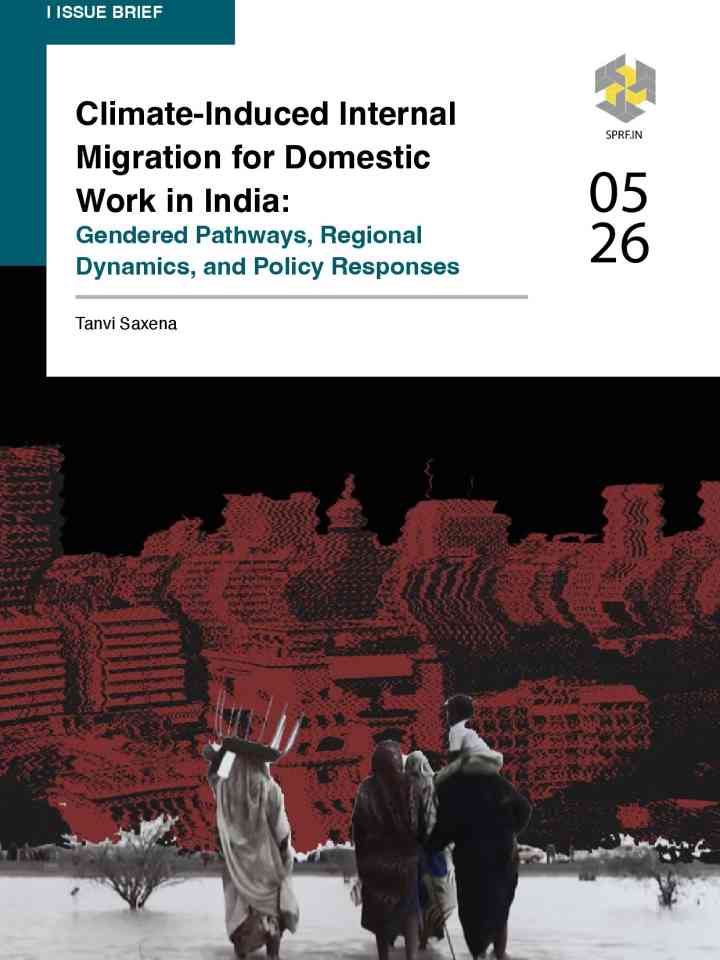
Climate-induced internal migration for domestic work in India: Gendered risks and policy responses
This paper traces how climate change, agrarian distress, and gendered labour markets intersect to push women from vulnerable rural regions into urban domestic work in a structural, ongoing pattern. Environmental shocks and slow degradation undermine rural livelihoods, especially for landless, Dalit, and Adivasi women, while cities continue to generate demand for low-paid, flexible care labour. Migration into domestic work thus emerges as a survival strategy that is both necessary and exploitative.
Evidence from regions such as the Sundarbans, Bundelkhand, Jharkhand, and coastal Odisha shows that climate stress does not simply push women out of rural areas but channels them into highly segmented urban labour markets. Caste, gender, and origin also determine access to work and conditions of employment. Domestic work is often one of the few socially acceptable and accessible options, yet it remains informal, poorly paid, and lacking in basic protections, reflecting deeper policy failures across both rural development and urban labour systems.
Explore further