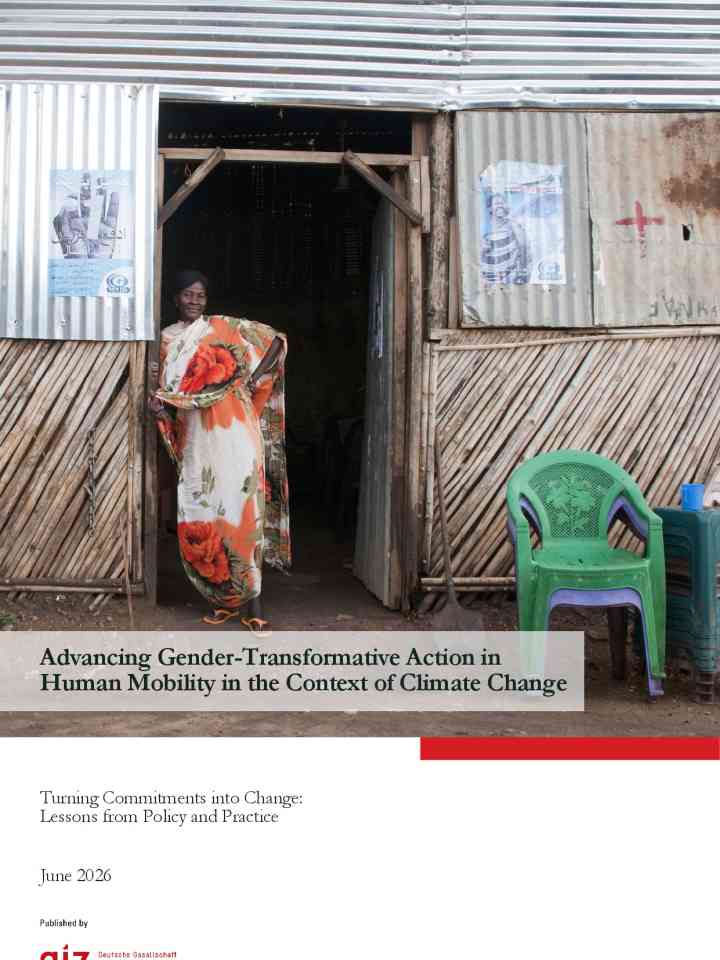
Advancing gender-transformative action in human mobility in the context of climate change
This publication explores how climate mobility programmes can move beyond gender-responsive approaches towards more gender-transformative change. It highlights key lessons on strengthening women’s influence in decision-making, using mobility data to inform policy and planning, translating policy commitments into implementation, and addressing the structural inequalities that shape mobility outcomes.
Human mobility in the context of climate change (HMCCC) is not gender-neutral. Existing inequalities shape who can move safely, who remains exposed to climate risks, and who benefits from adaptation and recovery efforts. Women and other marginalised groups often face barriers related to unequal access to land, livelihoods, finance, political representation, and social protection, which influence their mobility options and adaptive capacity. This publication provides practical recommendations for policymakers, development partners, and practitioners seeking to advance more equitable and inclusive climate mobility governance.
Explore further