
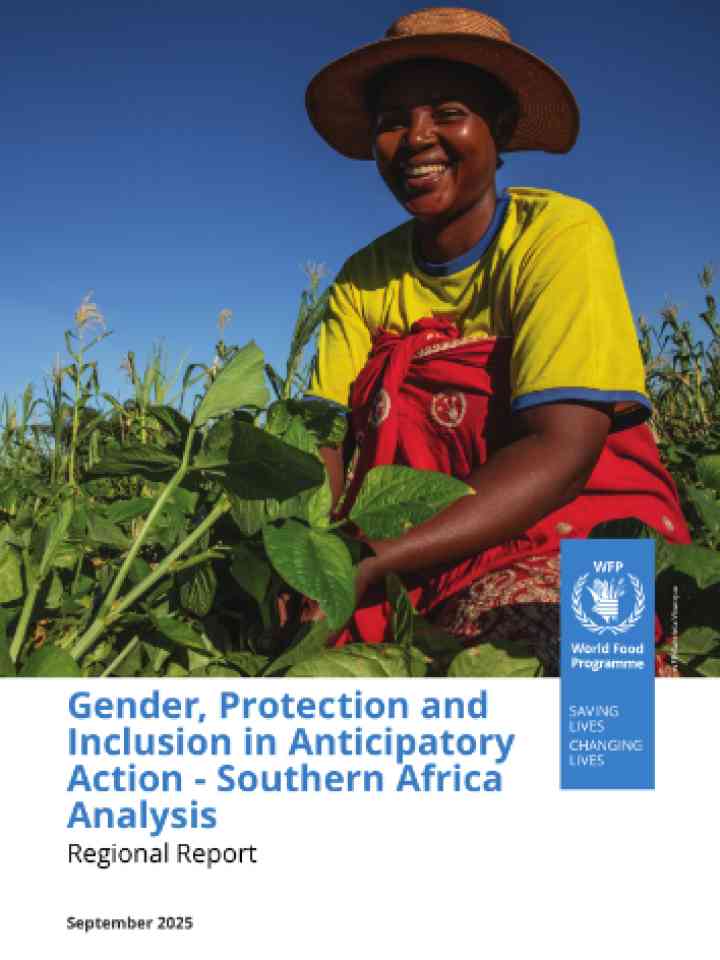
Gender, protection and inclusion in anticipatory action: Analyses from southern african countries
Source
The research aims to influence future anticipatory action programming in Southern and West Africa, ensuring that AA programming is designed to mitigate gender, protection and inclusion risks, including actions tailored to the strategic interests of the people identified as particularly vulnerable to climate shocks in each country context.
Some of the key findings in the report include:
- Exposure to climate shocks is seen to be increasing by all groups across the 4 countries.
- Participation in climate decision-making structures, and disaster management committees and plans do not adequately include women or people with disabilities from local to national levels, and exclude them as leaders.
- Access to early warning messages and information, on shocks, aid, climate data and weather forecasts is disproportionately limited for women and people with disabilities, especially in rural areas. For instance, in Tanzania, 66.2% of women reported not receiving any information, compared to 33.8% of men.
- Climate shocks exacerbate child protection risks: removal from school or closures, child labour, poor nutrition, gendered implications for labour (e.g. water/firewood collection by girls).
- Shocks increase exposure to violence, including sexual exploitation of women and adolescent girls. This is linked to a crisis in masculinities, and the unequal position of women.
Explore further
Country and region
Madagascar
Malawi
Tanzania, United Rep of
Zimbabwe
ISBN/ISSN/DOI
10.71958/wfp131030 (DOI)
Number of pages
56
Publication year
2025