1. Home
  2. Knowledge Base | PreventionWeb
  3. Themes

Inclusion

Ensuring an all-of-society engagement and partnership for DRR through empowerment and inclusive, accessible and non-discriminatory participation, paying special attention to people disproportionately affected by disasters, especially the poorest.

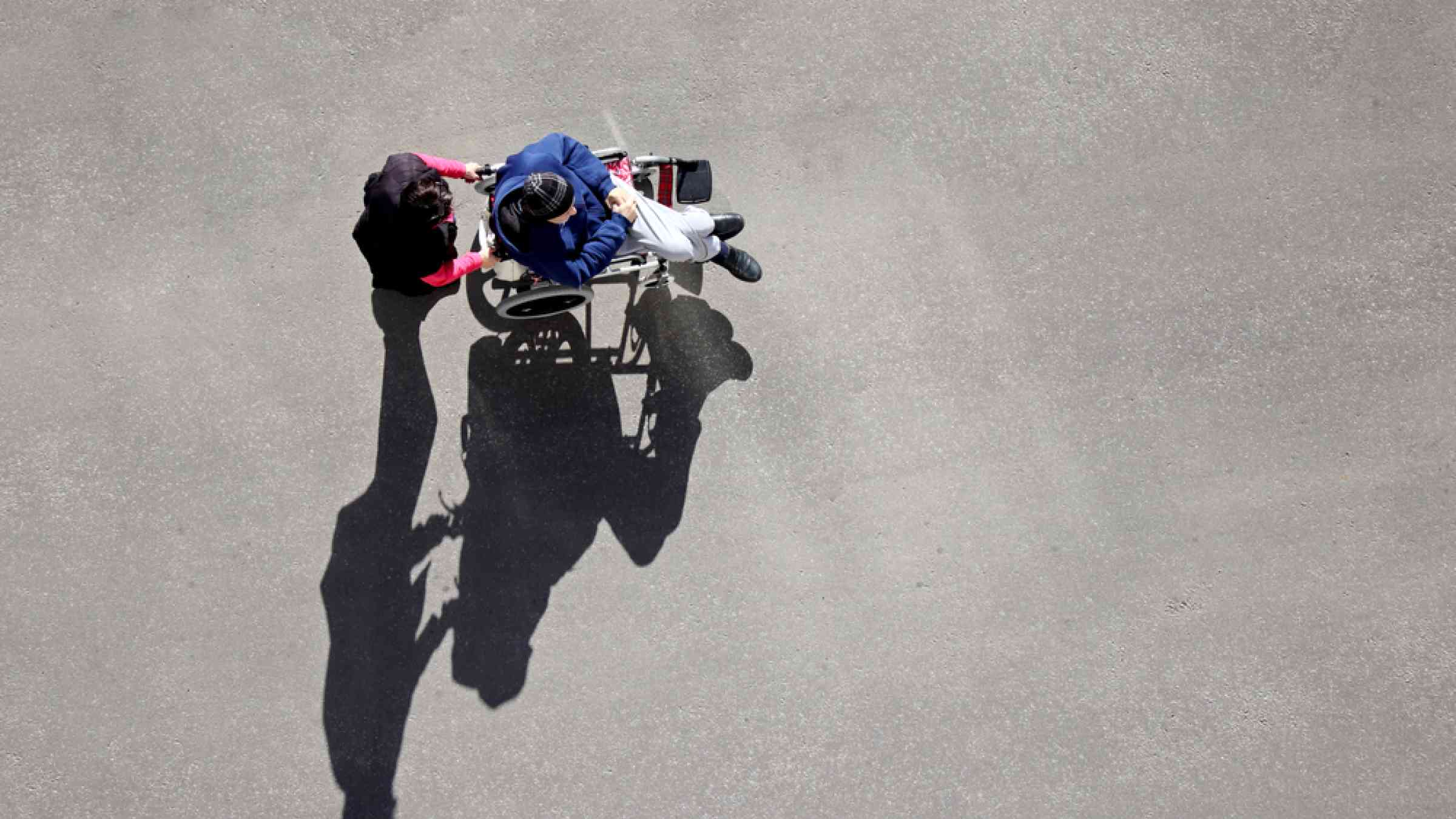
Here are five ways countries ensure persons with disabilities are not left behind when the next disaster strikes.

Latest Inclusion additions in the Knowledge Base

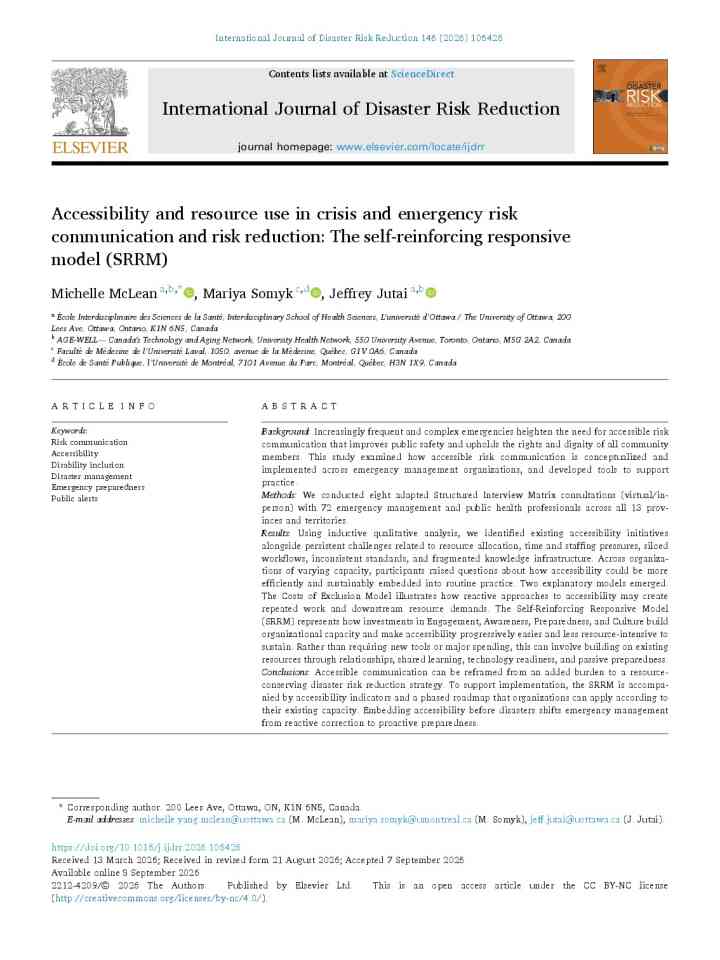
Risk Management Alert
Eliot Christian
Public emergency alerting has traditionally been associated with regulated communications infrastructures. Now, official emergency alerts worldwide are increasingly published in the freely available machine-readable Common Alerting Protocol format.
Update

Bosai is a Japanese concept that encompasses all stages of disaster management. In a country where natural hazards are a frequent threat, understanding bosai is one of the most practical ways for individuals to protect themselves and those around them.

Japan Times Ltd., the
Illustration concept representing big data
Last updated 31 Aug 2026
Discover artificial intelligence and machine learning applications ranging from early warning systems to evacuation models, as well as other intriguing disaster risk reduction innovations.
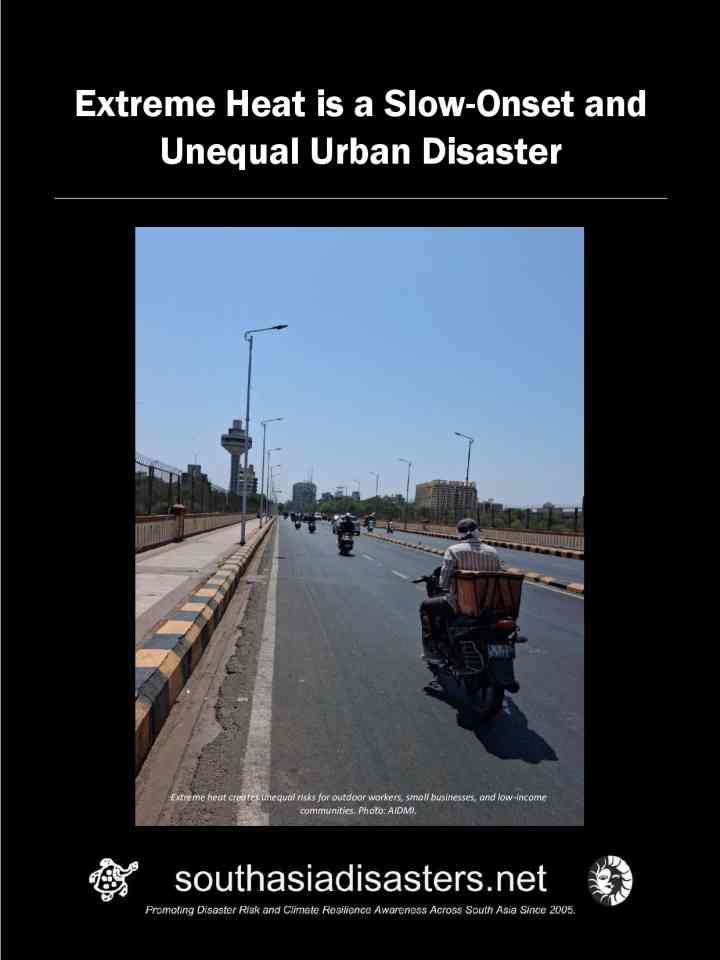
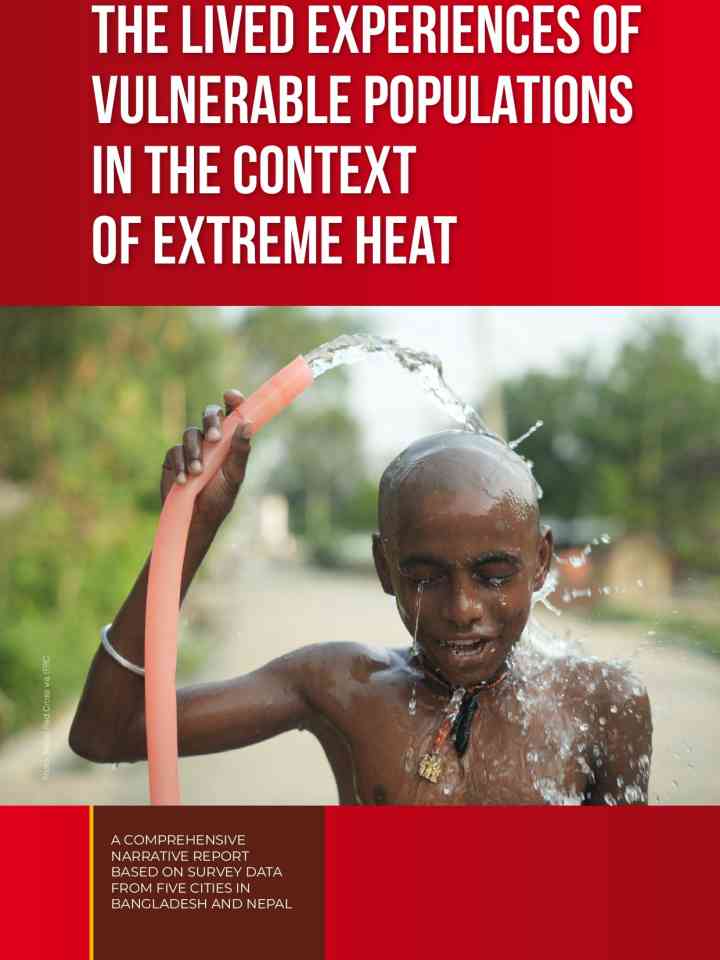
The lived experiences of vulnerable populations in the context of extreme heat thumbnail
Documents and publications

The survey of over 2000 respondents in Nepal and Bangladesh confirms extreme heat is a pervasive and escalating risk, significantly degrading public health, livelihoods and well-being and provides evidence for increasing investment in heat interventions

Red Cross / Red Crescent Climate Centre
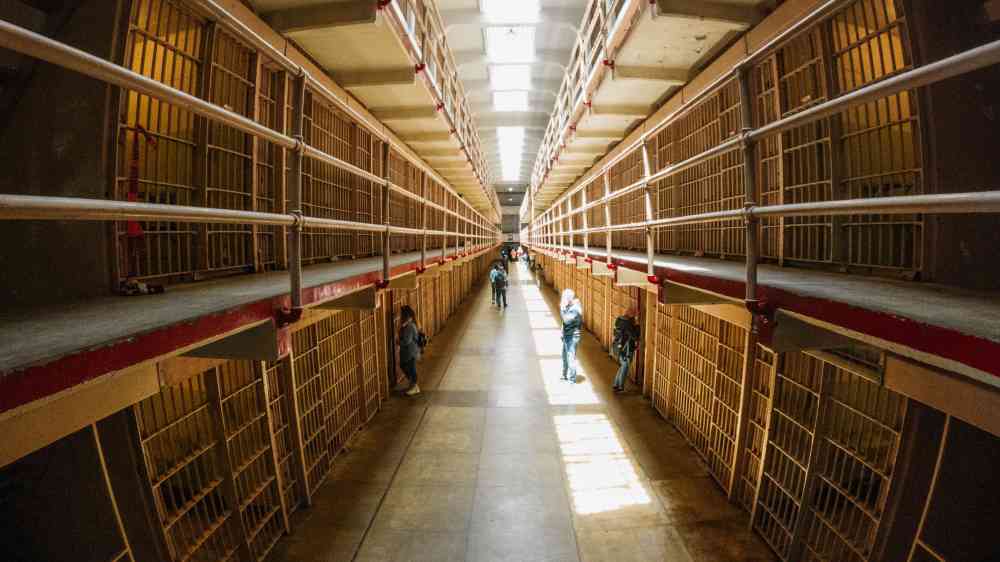
Inside view of Alcatraz prison corridor filled with visitors exploring the historic site.
Update

As heat waves intensify, advocates are pushing for protections for incarcerated people, who have little ability to escape dangerous temperatures.

Yale Climate Connections
Last updated 24 Aug 2026
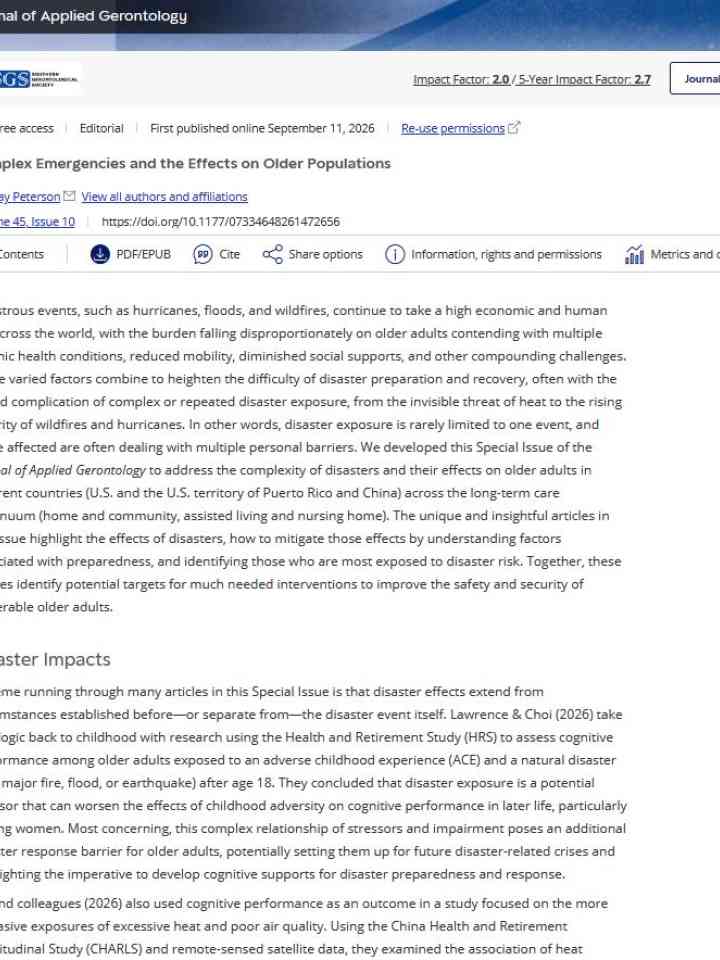
Case studies, challenges and best practices to ensure the full participation of elderly people in disaster risk reduction.
Update

Led in part by SFU, COPE project aims to help older adults prepare for and respond to extreme heat. The project is part of SFU Climate Innovation , a critical research priority that supports a community-centred response to the impacts of climate change.

Simon Fraser University
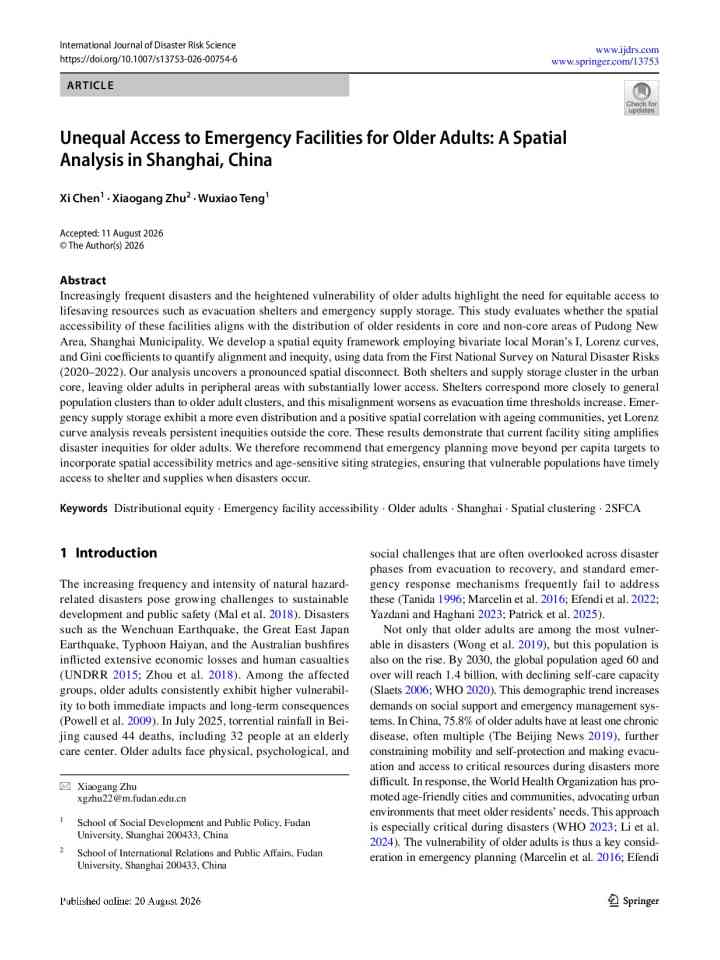
Unequal access to emergency facilities for older adults: a spatial analysis in Shanghai, China thumbnail
Documents and publications

This study evaluates whether the spatial accessibility of these facilities aligns with the distribution of older residents in core and non-core areas of Pudong New Area, Shanghai Municipality.

International Journal of Disaster Risk Science
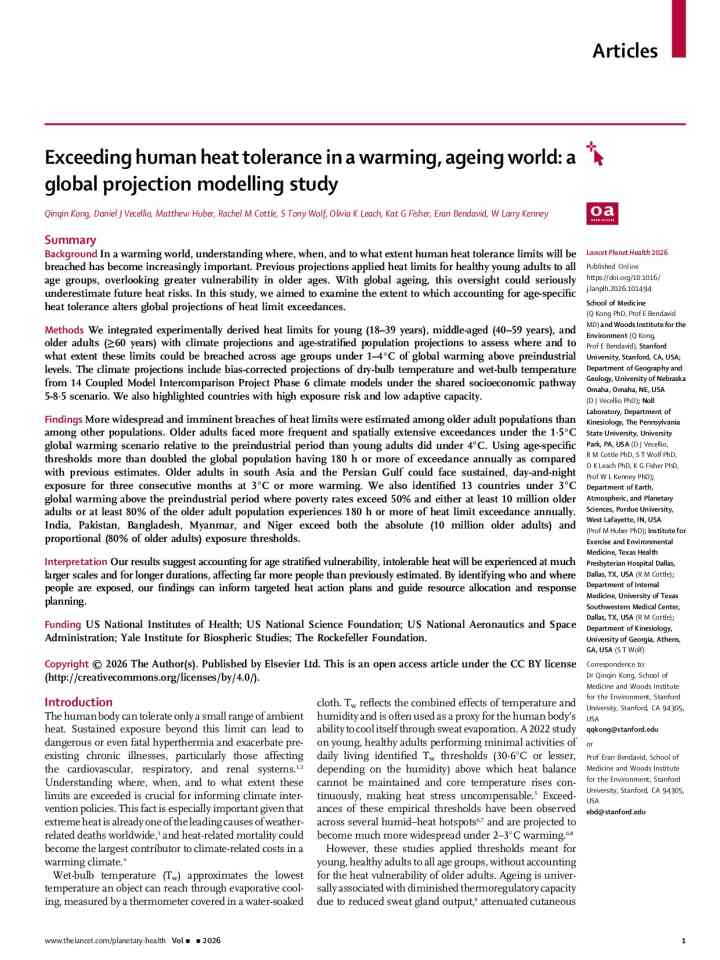
Exceeding human heat tolerance in a warming, ageing world: a global projection modelling study thumbnail
Documents and publications

This study finds that age-specific heat tolerance thresholds dramatically increase estimates of future heat exposure, with older adults facing severe risks under global warming.

The Lancet Planetary Health
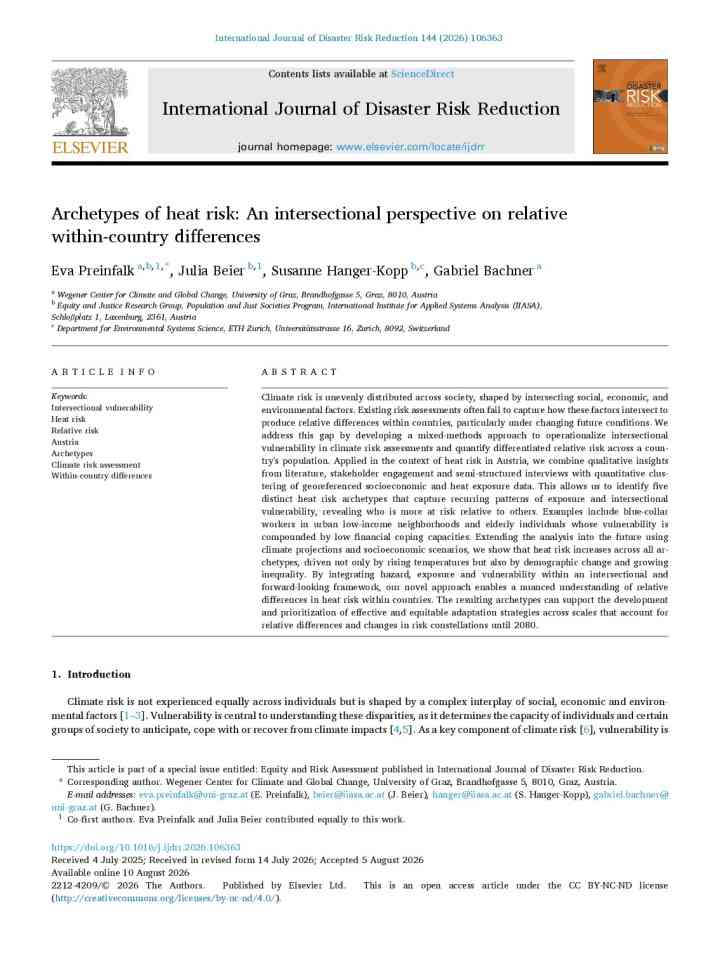
Archetypes of heat risk: An intersectional perspective on relative within-country differences thumbnail
Documents and publications

A mixed-methods study identifies five heat risk archetypes in Austria, revealing how social inequalities, ageing and climate change interact to shape vulnerability through 2080.

International Journal of Disaster Risk Reduction (Elsevier)
Research briefs

A Stanford Medicine-developed app shows that older adults’ geographic movements — also known as their life-space mobility — shrink in extreme heat that makes leaving the house difficult.

Stanford University
Putting children at the heart of climate change adaptation policies via Allyship, Bias Recognition and Child Centeredness: A global qualitative interview study thumbnail
Documents and publications

The study finds facilitators for inclusion of child health in adaptation policies by interviewing researchers and policymakers and provides a framework to guide efforts to include children’s health needs into responsive climate change adaptation policies.

PLOS Climate
Update

Homes had burned. Photographs, memorabilia, and Salish baskets had disappeared with them. More than 30 band members had lost their homes, naspəpʕásəs Dan Wilson said, along with around 200 homes and other structures belonging to non-band members.

Grist Magazine
Update

Scarred by the devastating 2025 floods, people with HIV are increasingly vulnerable

Dialogue Earth
Update

Climate adaptation can reduce risk while deepening inequality. This post examines how land rights, gender, wealth and local power shape who benefits; and why locally led approaches are essential to making adaptation effective, inclusive and sustainable.

Consultative Group on International Agricultural Research (CGIAR)
Climate in common: a communications toolkit for working class engagement thumbnail
Documents and publications

Climate in Common is a communications toolkit that will help groups connect with working class people. It gives campaigners, civil society organizations and policymakers ten practical tools for building working class engagement with climate policy.

Working Class Climate Alliance (WCCA)
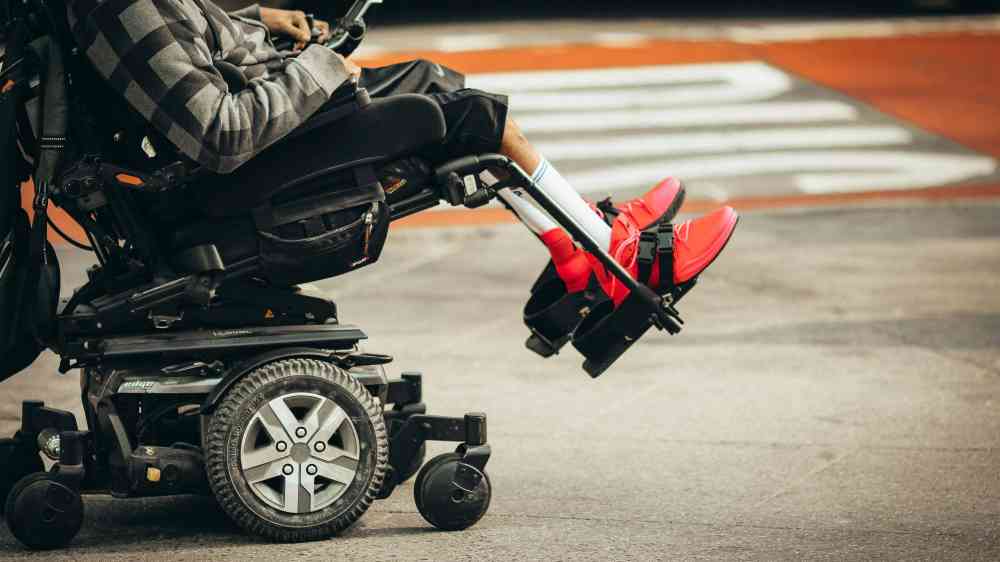
Hand holding the wheel of a wheel chair
Last updated 6 Aug 2026
This resource guide includes case studies, challenges and best practices to ensure the full participation of persons with disabilities in disaster risk reduction.
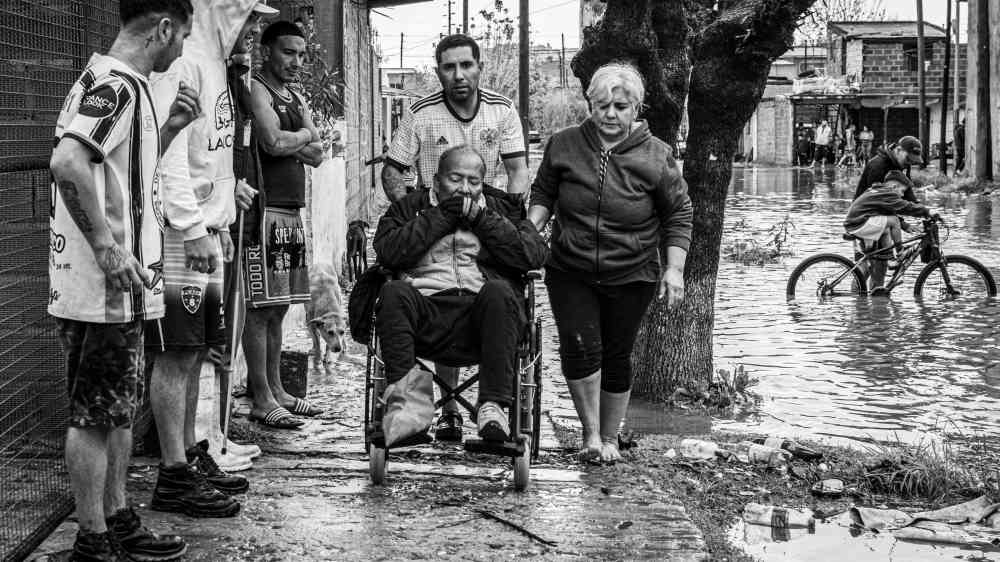
Residents assist an elderly man in a wheelchair through flooded streets in Buenos Aires, Argentina.
Research briefs

A range of disproportionate impacts on disabled people were cited in New Zealand’s latest national climate change risk assessment. Disabled people want to be heard, as well as play a leading role in guiding how New Zealand adapts to a changing climate.

Conversation Media Group, the
Update

Americans with disabilities are at greater risk from the health impacts of climate change. Extreme weather events are especially dangerous for people with health issues and limited mobility, and emergency plans are often insufficient to ensure safety.

Yale Program on Climate Change Communication
Update

Chiefs in Ontario say they were left to self-evacuate before homes burned to ground, after being told there was no imminent threat.

Guardian, the (UK)
Man outdoors checking weather forecast on his mobile phone
Update

Millions of people in Australia are about to feel their phones buzz with a message and hear a loud, siren-like warning. It’s a preview of how the country plans to warn its population when the next bushfire, flood or cyclone comes down.

Conversation Media Group, the
taslu_cca-drrm_policy-brief_iii_2026.pdf thumbnail
Documents and publications

The main objective of this policy brief is to offer evidence-based and concise findings, and policy recommendations to strengthen coherence between CCA and DRRM at the Provincial Level in Nepal.

Department for International Development
Satellite view of the wildfires in a field
Update

More than 900 wildfires are burning throughout Canada, with devastating impacts for First Nations. Thirteen Nations remain under evacuation orders that have forced 2,182 people from their homes.

Grist Magazine
Update

As El Niño intensifies, evidence from across the Amazon basin shows why Amazon wildfire prevention depends on Indigenous knowledge and fire governance built from the territories up.

Forest news
Colorful collage of smiling multiethnic people in vertical panels.
Katherine Sotomayor Tanjir Hossain
Launched in 2018, SEM was created in response to a simple realisation: disaster risk reduction cannot succeed, and the targets of the Sendai Framework cannot be achieved, without the meaningful and structured inclusion of all-of-society actors.
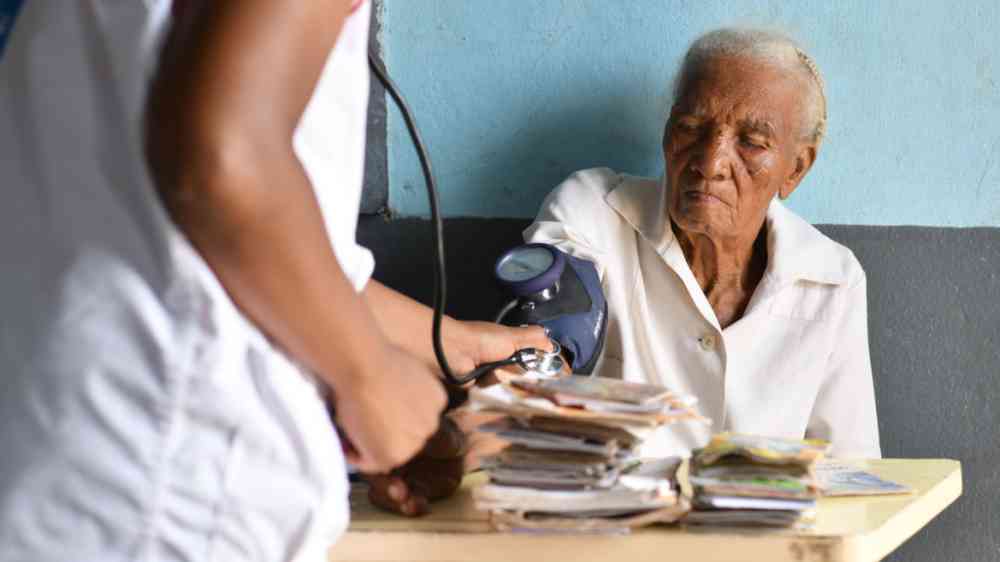
A health worker checks the blood pressure of a patient at the mobile clinic in Ankatafana, Madagascar
Update

Five years ago, British Columbia’s heat dome became one of the deadliest weather disasters in Canadian history.

Conversation Media Group, the
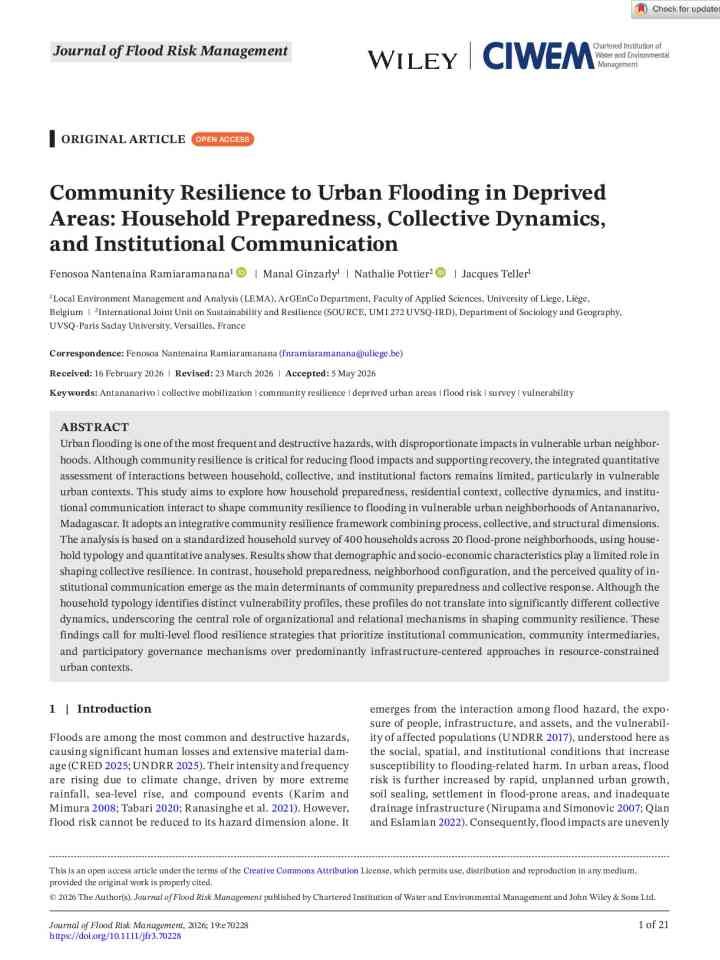
Community Resilience to Urban Flooding in DeprivedAreas: Household Preparedness, Collective Dynamics,and Institutional Communication thumbnail
Documents and publications

This study examines community resilience to urban flooding in deprived areas, highlighting how household preparedness, collective action and institutional communication shape protective behavior and flood risk management.

Journal of Flood Risk Management (Wiley)
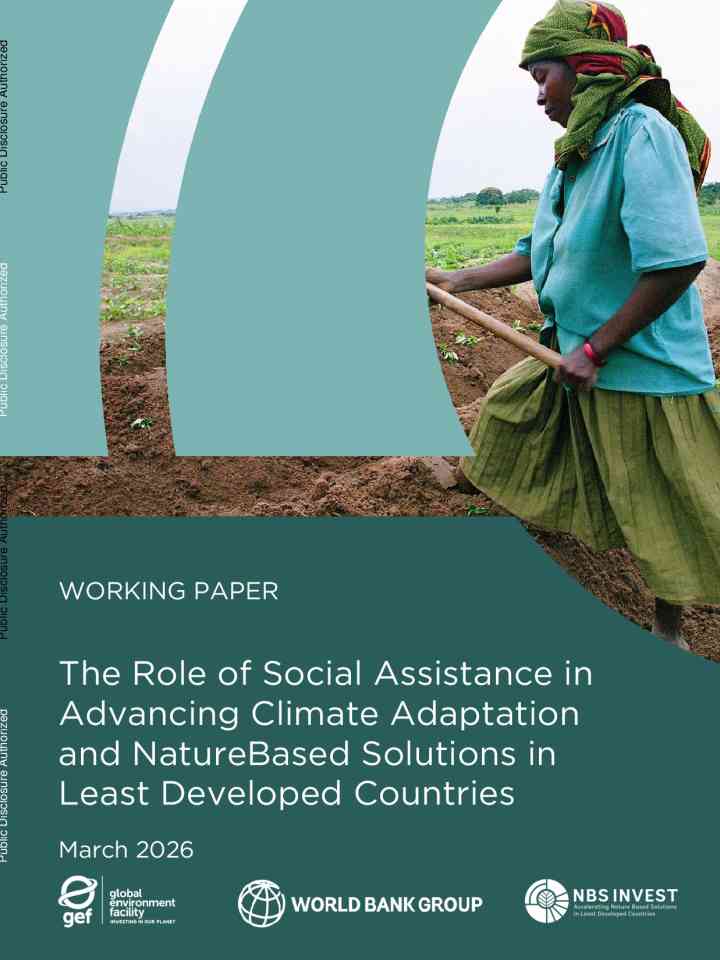
The role of social assistance in advancing climate adaptation and nature based solutions in least developed countries thumbnail
Documents and publications

This working paper examines how social assistance programs can support climate adaptation and nature-based solutions (NbS) in least developed countries (LDCs).

World Bank, the
Guy on wheelchair
Update

Imagine a global political summit that shapes the future of our planet where one of the most populated countries in the world does not have a voice?

Conversation Media Group, the
First Nations women in fire: a vital opportunity to boost the workforce and increase community safety thumbnail
Documents and publications

The report draws attention to Australia’s workforce of First Nations women in fire and land management, and highlights the profound positive impacts that culturally responsive professional development programs can have on this cohort.

Natural Hazards Research Australia
Indigenous Australians women during ceremonial dance in Laura Quinkan Dance Festival Cape York, Australia
Research briefs

In remote communities, many homes trap heat. This is because houses are not typically designed for local climate conditions. Frequent power shortages and a lack of repair services leave these communities even more exposed.

Conversation Media Group, the
People are evacuated from the burning building
Dr Sofia Karma
PreventionWeb spoke with Dr Karma, Director of the European Centre for Forest Fires (ECFF), about her career path, ECFF’s work and her perspective on growing wildfire risks and related challenges.
Update

Research links water-related disasters to heightened disease risk among older adults. Yet, disaster planning continues to ignore them.

Down To Earth
Assessing climate-driven storm impacts on geographically isolated communities and underserved vulnerable populations thumbnail
Documents and publications

This research examined emerging risks posed by increased storm frequency and intensity to high-latitude vulnerable communities previously unaccustomed to extratropical cyclonic events.

International Journal of Disaster Risk Reduction (Elsevier)
Understanding the experiences of persons with disabilities in disasters and emergencies in Tonga (December 2025) thumbnail
Documents and publications

This report examines the experiences of persons with disabilities in Tonga during disasters and emergencies, focusing on emergency preparedness, access to early warning information, evacuation, food security, social protection, & use of cash assistance.

World Food Programme (WFP)
Tonga - government
Update

More than 1 billion people worldwide live in such areas.

Yale Climate Connections
Update

Gap between principle and practice risks widening if the country does not more fully include Indigenous people in its climate action plan.

Dialogue Earth
Portrait of children in Kenya, Africa.
Update

Reaching every individual before the next flood, drought or economic shock requires collaboration across financial institutions, policy-makers, development organizations and the private sector.

World Economic Forum (WEF)
Extreme flood events as a neglected natural hazard for marginalized Roma communities of Slovakia thumbnail
Documents and publications

Marginalized Roma communities (MRCs) located in flood prone areas represent a highly pressing research challenge.

Natural Hazards (Springer)
Amadora city
Marta Curado Carlos Rocha Luís Carvalho
Building resilience for people with disabilities requires ensuring that their needs are fully recognised and integrated into disaster risk reduction (DRR) planning.
WIN DRR Awards finalists 2025
Opportunities

The nominations for the 2026 Women’s International Network for Disaster Risk Reduction (WIN DRR) Leadership Awards are now open.

United Nations Office for Disaster Risk Reduction - Regional Office for Asia and Pacific
AI Learning and Artificial Intelligence Concept.
Kevin Blanchard
Artificial intelligence (AI) is becoming part of disaster risk reduction (DRR). It is already being used to forecast hazards , map exposure and guide decisions about where assistance may be needed.
Update

By improving their weather data, bolstering emergency response, and sharing resources, counties in Southwest Virginia can efficiently prepare for future floods.

Climate Central
At the edge of (un)inhabitability? Spatial diversity of demographic vulnerability to increasing heat exposure across remote towns of Northern Australia thumbnail
Documents and publications

The study provides a spatially detailed picture of the diversity in demographic vulnerability to increasing heat which is projected from climate change models for remote towns in Northern Australia, in both the immediate and long-term.

International Journal of Disaster Risk Reduction (Elsevier)
Targeting green space accessibility gaps to mitigate urban heat island risk in rapidly urbanizing megacities thumbnail
Documents and publications

This study integrates urban heat island (UHI) risk assessment with green space accessibility analysis to locate mismatches between heat risk mitigation need and green provision, and identifies the most vulnerable populations.

International Journal of Disaster Risk Reduction (Elsevier)
Training event
Bangkok
-
In person
ADPC will deliver the 7th Training Course on Gender Equality, Disability and Social Inclusion in Disaster Risk Reduction (GEDRR-7) to equip policymakers and practitioners with practical tools to mainstream GESI into DRR and climate adaptation efforts.
Bridging the gaps: vulnerability profiles to strengthen impactbased early warning and early action for floods and droughts in Kenya thumbnail
Documents and publications

This report addresses a critical gap in disaster preparedness in Kenya: early warning systems for floods and droughts that are tailored to the specific needs of the most vulnerable population groups.

United Nations University (UNU)
Meetings and conferences
Online
PIRAC – French Red Cross invites you to a webinar dedicated to decoding laws and policies related to PGI in disaster risk management in the Caribbean, led by Marjorie Thimon, PGI Officer.
Including persons with disabilities in emergency preparedness and response thumbnail
Documents and publications

The report presents a regional diagnostic of disability-inclusive emergency preparedness and response across 38 countries.

World Bank, the
Update

When the rains finally came to Nairobi at the beginning of March, many residents were grateful. But then the nightly showers turned torrential, and residents across the city’s informal settlements began to worry.

The New Humanitarian