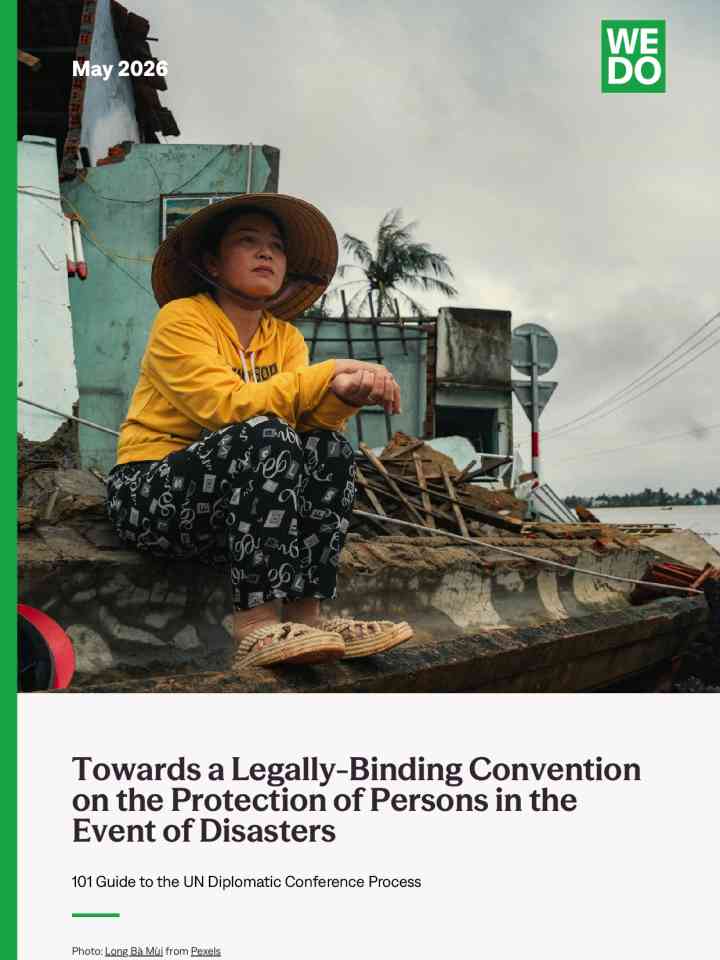
Towards a legally-binding convention on the protection of persons in the event of disasters
This guide explains the development of the proposed Convention on the Protection of Persons in the Event of Disasters (PPED) and highlights why it is important for feminist and gender justice advocates to engage in the negotiation process. It outlines the treaty's purpose, timeline, and key milestones leading to its expected adoption in 2027, while emphasising that the convention will establish the first legally binding international framework governing disaster risk reduction, response, and international cooperation. The guide also draws attention to the absence of gender considerations in the current draft treaty, despite the well-documented disproportionate impacts of disasters on women, girls, and other marginalised groups.
The guide finds that the current draft of the PPED Convention does not adequately address gender equality or intersectionality, creating a significant gap in the protection framework. Although some states have proposed gender-inclusive amendments, these remain uncertain as negotiations continue. The guide argues that integrating gender-responsive language and recognising the specific needs of women and marginalised communities would strengthen the treaty and improve disaster governance. It concludes that active engagement by civil society organisations is essential to ensure that the final convention reflects the differentiated impacts of disasters and promotes inclusive, equitable protection for all affected populations.
Explore further