1. Home
  2. Knowledge Base | PreventionWeb
  3. Themes

Financing DRR

Τhis theme covers economic analysis supporting risk-informed investments, better investment planning and financing strategies for disaster risk reduction, cost-benefit analysis and other DRR investment appraisal techniques, and ex-ante/ex-post financing.

When Guatemala analysed how public money was spent on disaster risk and climate action, a clear picture emerged: prevention was underfunded — and opportunity was being missed.

Latest Financing DRR additions in the Knowledge Base

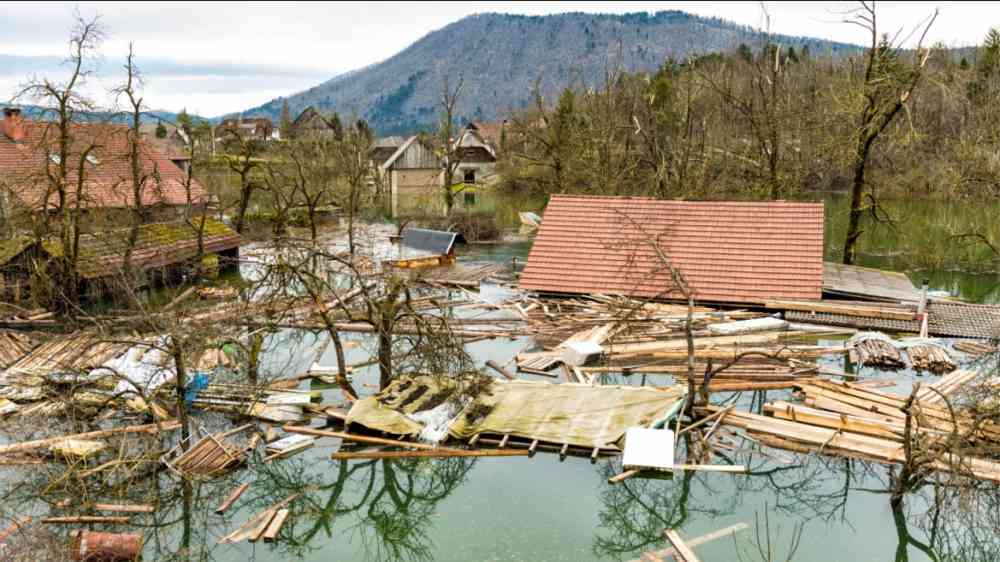
Chittagong, Bangladesh, 05 August, 2023 Due to continuous heavy rain, roads in different areas of Chittagong were flooded on Saturday.
Update
Bangladesh: Leveraging anticipatory action for disaster risk finance

Bangladesh is building flood risk insurance and a Community Protection Fund using existing anticipatory action systems. The initiative uses established triggers, beneficiary registries and delivery networks, while adapting them for post-flood payouts.

Financial Protection Forum (World Bank)
High angle view of Nairobi's skyline with modern buildings and a clear blue sky.
Update
Rewriting the rules of disaster finance

Kenya’s new risk financing strategy funds disaster prevention as well as recovery, breaking with a model most of the field still follows.

Centre for Disaster Protection
From principles to practice: Financing disaster risk reduction and residual risk thumbnail
Documents and publications

This report examines how national disaster risk management policies integrate disaster financing and residual risk, finding weak practical links and recommending improved coordination, clearer risk metrics, costings, and joint financing strategies.

Centre for Disaster Protection
Update
Japan: 2026 Kumamoto earthquake – Accessibility, not resource shortage

In the aftermath of a disaster, affected areas are trapped in a severe information vacuum. When roads are damaged and communications fail, entering the disaster zone and conducting onsite surveys doesn't give an tell what help is necessary and where.

Research Institute of Economy, Trade and Industry (RIETI) 独立行政法人経済産業研究所
Update
Podcast: Counter Crisis Season 3

Third season of Counter Crisis bridges the distance people closest to a disaster and decision makers about the money to respond. In each episode, the policymakers and the people living with their decisions are in the same conversation for the first time.

Centre for Disaster Protection
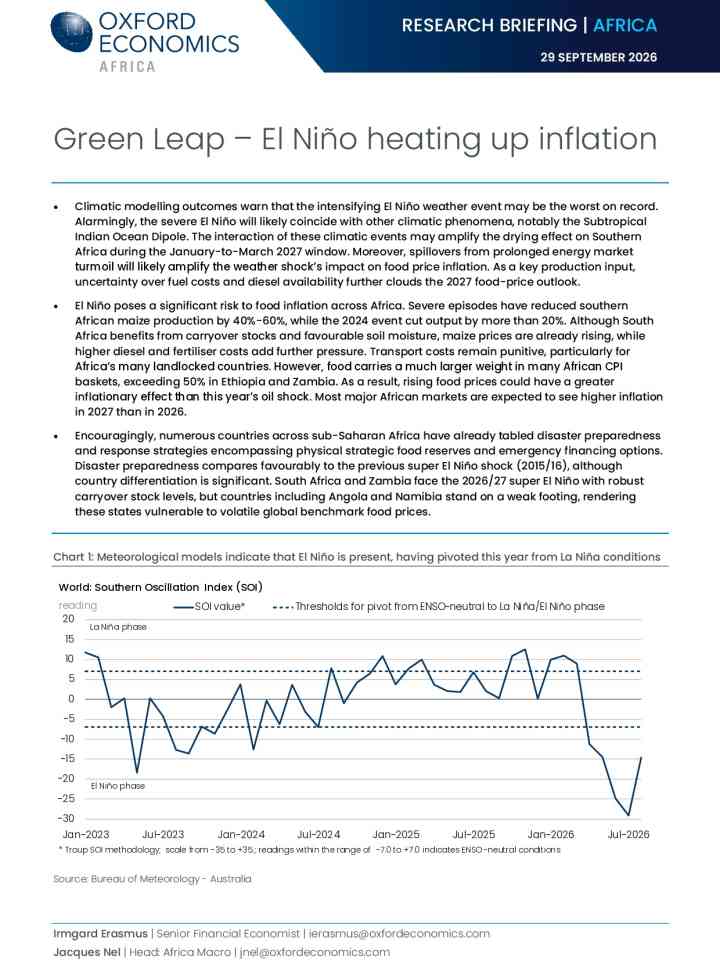
Green Leap – El Niño heating up inflation  thumbnail
Documents and publications

This research briefing analyzes how the intensifying El Niño and Indian Ocean Dipole will heighten drought and inflation risks in Africa by 2026/27, impacting food prices and regional economies; it recommends robust disaster risk management measures.

Oxford economics
Houses were destroyed by the floods in Pakistan 2022.
Bapon Fakhruddin
This blog poses that local preparedness cannot compensate for development, infrastructure, and investment decisions that systematically create and redistribute disaster risk.
Aerial drone view of concrete pier on turquoise water at the Black Sea.
Last updated 12 Oct 2026
This web-based collection shares local and regional experiences for the benefit of the wider DRR community and OACP countries, produced in the context of the Intra-ACP Disaster Risk Reduction (DRR) Programme.
two-pager-new-twg-investing-in-resilience_3010.pdf thumbnail
Documents and publications

The first DRRP Technical Working Group on Scaling Investment in Resilience, held in Brussels on 2 June 2026, brought Programme partners together to explore how resilience investment can be strengthened and scaled across OACPS regions.

Intra Africa, Caribbean and Pacific (ACP) Disaster Risk Reduction Programme (DRRP)
Case study
Location: Africa
This case study examines the REPAIR program, a US$926 million regional platform that combines reserves, contingent financing, and parametric insurance to get funds to governments within seven days of a disaster.
  • Global Shield Financing Facility
Case study
Location: Malawi
This case study explains how Malawi links pre-arranged disaster financing to its social protection system, automatically scaling up cash transfers to vulnerable households when drought triggers are reached.
  • Global Shield Financing Facility
Climate-economic country risk profile: Nigeria thumbnail
Documents and publications

This report examines Nigeria’s “double cost crunch” from climate impacts and the low-carbon transition, highlighting pressures on growth, public finances and investment and recommending adaptation, resilient infrastructure and energy diversification.

Potsdam Institute for Climate Impact Research
Climate-economic country risk profile: Indonesia thumbnail
Documents and publications

Report examines Indonesia’s “double cost crunch” from climate impacts and the low-carbon transition, finding that delayed action can increase damages and financing pressures and recommending early investment, adaptation and international climate finance.

Potsdam Institute for Climate Impact Research
Climate-economic country risk profile: India thumbnail
Documents and publications

This report examines India’s “double cost crunch” from climate damages and the low-carbon transition, finding that delayed mitigation intensifies economic pressures and that immediate climate action brings greater long-term benefits.

Potsdam Institute for Climate Impact Research
Last updated 8 Oct 2026
We cannot reduce risk effectively if we cannot measure disaster losses. Have a look at stocktaking, challenges and best practices in this collection on disaster loss data. Traditionally
People collecting relief supplies in a community outdoor setting in Africa.
Update
How Guinea-Bissau is strengthening emergency preparedness

When disasters strike in Guinea-Bissau, their effects can linger long after the immediate danger has passed. How quickly the government responds can shape how well lives are protected and how soon services, livelihoods, and communities recover.

Global Facility for Disaster Reduction and Recovery, the (GFDRR)
Update
This outbreak is unprecedented. The flawed financing response isn’t

It was May 2019, and I was in a large events hall in Goma — a venue built for social gatherings of the community. We weren’t there to celebrate. We were responding to what was then the second-largest Ebola outbreak on record. With spreadsheets.

Centre for Disaster Protection
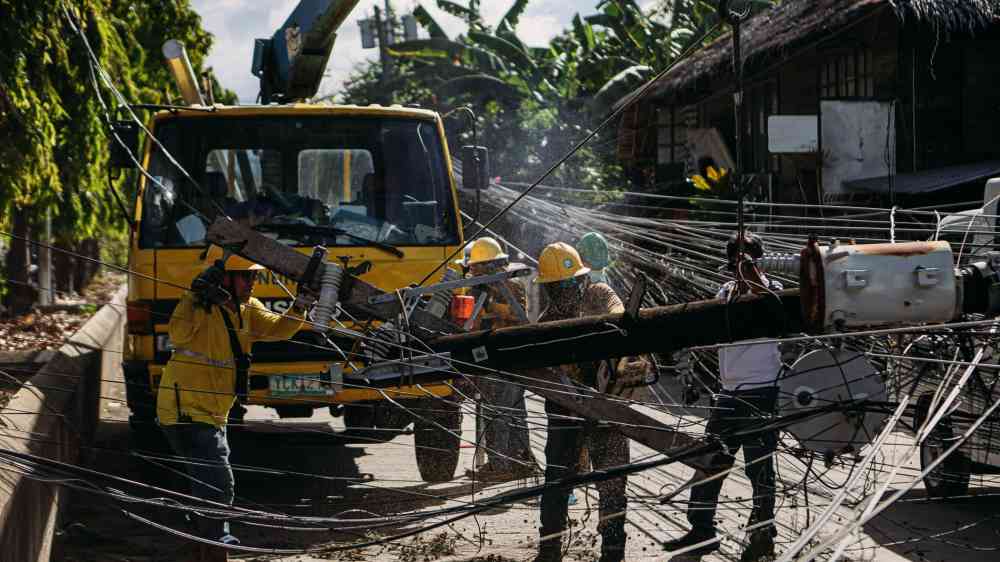
Utility workers repairing fallen power lines in a city street, highlighting teamwork and infrastructure maintenance.
Jessica Mosahari
Pacific SIDS need resilient, interconnected infrastructure and better-aligned climate finance to manage converging risks. The article highlights locally adapted standards, usable risk information, early warnings and coordinated, long-term investment.
Update
S’pore sets up heat resilience office, invests $40m in heat research

On addressing heat stress, Senior Minister of State for Sustainability and the Environment Janil Puthucheary said MSE has set up a new office to spearhead the Republic’s efforts in this area.

Straits Times, the
Fostering micro‑disaster risk finance in emerging Asia thumbnail
Documents and publications

This policy brief explores the role of micro-disaster risk finance in helping close protection gaps and strengthen resilience across the region. Disaster-related damage in Emerging Asia reached USD 685 billion between 2010 and 2024.

Organisation for Economic Co-operation and Development
Strengthening climate resilience through social protection programs thumbnail
Documents and publications

This report shows how adaptive systems that respond to climate shocks can increase resilience for women and marginalised communities.

Asian Development Bank (ADB)
Last updated 6 Oct 2026
These resources explore the economic, social and environmental dividends of investing in disaster risk reduction.
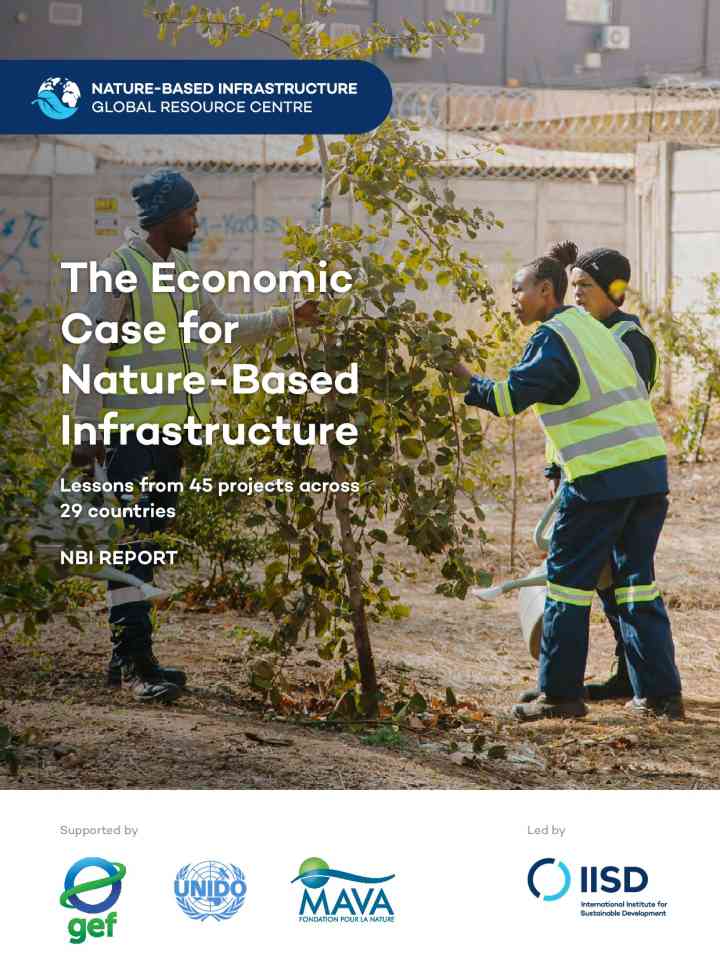
The economic case for nature-based infrastructure thumbnail
Documents and publications

This report assesses 45 nature-based infrastructure projects in 29 countries, finding a median benefit-cost ratio of 3.21 and 38% IRR, and recommends reforms to planning, finance, and policy to elevate NBI alongside traditional infrastructure options.

International Institute for Sustainable Development (IISD)
Las decisiones de hoy marcarán los impactos de El Niño
Update
El Niño 2026–2027: Preparedness and resilience to protect development

El Niño conditions have been observed in the tropical Pacific since June 2026, with forecasts indicating further strengthening through the end of 2026 and into early 2027, potentially making it one of the most intense events in decades.

Inter-American Development Bank (IDB)
Case study
Location: Americas
This case study shows how partnerships between CDB, UWI and CIMH are improving climate data, risk information and decision-making to strengthen preparedness, risk-informed investments and long-term resilience across the Caribbean.
  • Intra Africa, Caribbean and Pacific (ACP) Disaster Risk Reduction Programme (DRRP)
Case study
Location: Dominica
This case study shows how risk analysis, nature-based solutions and capacity building are informing resilient infrastructure design and investment planning in Dominica to strengthen climate resilience and reduce disaster risk.
  • Intra Africa, Caribbean and Pacific (ACP) Disaster Risk Reduction Programme (DRRP)
Case study
Location: Kenya
This case study assesses flood and coastal risks in Mombasa using probabilistic modelling, GIS and economic appraisal tools to inform resilient infrastructure, risk-informed planning and investment-ready urban resilience strategies.
  • Intra Africa, Caribbean and Pacific (ACP) Disaster Risk Reduction Programme (DRRP)
Case study
Location: Fiji Kiribati Marshall Islands Micronesia, Fed States of Palau Papua New Guinea Samoa Solomon Islands Tonga Tuvalu Vanuatu
Case study on risk-informed urban planning across Pacific Island Countries, combining urban analysis and multi-hazard risk assessment to guide resilient infrastructure, inclusive urban growth and climate adaptation.
  • Intra Africa, Caribbean and Pacific (ACP) Disaster Risk Reduction Programme (DRRP)
Case study
Location: Saint Lucia
Case study on how risk analytics, urban resilience assessments and flood mitigation studies are informing climate-resilient investment and infrastructure planning in St. Lucia.
  • Intra Africa, Caribbean and Pacific (ACP) Disaster Risk Reduction Programme (DRRP)
Case study
Location: Burundi
Case study on how a post-disaster needs assessment and climate-risk engineering study informed resilient rehabilitation of the Port of Bujumbura after the 2023–2024 El Niño floods.
  • Intra Africa, Caribbean and Pacific (ACP) Disaster Risk Reduction Programme (DRRP)
Case study
Location: Indonesia
This case study, part of the Adaptation and Resilience Solutions in Action series, looks at two flagship instruments: the Pooling Fund Bencana (PFB), and the State Assets Insurance Program (ABMN), which now insures more than 10,000 government buildings.
  • Global Shield Financing Facility
Case study
Location: Lesotho
This case study shows how Lesotho is moving from reactive disaster response to a pre-arranged, layered financing system, anchored in its first national disaster risk financing strategy and a dedicated resilience window for MSMEs.
  • Global Shield Financing Facility
Atmospheric aerial view of a green forest with planet Earth
Update
Forest resilience bonds strengthen communities

A decade after the idea took shape, Forest Resilience Bonds are helping partners finance and fund projects across the western U.S., reducing wildfire risk while enhancing the water supply and supporting local jobs.

World Resources Institute
Last updated 30 Sep 2026
These resources explore the nexus between poverty and disasters, as well as efforts to reduce disaster risks for vulnerable populations.
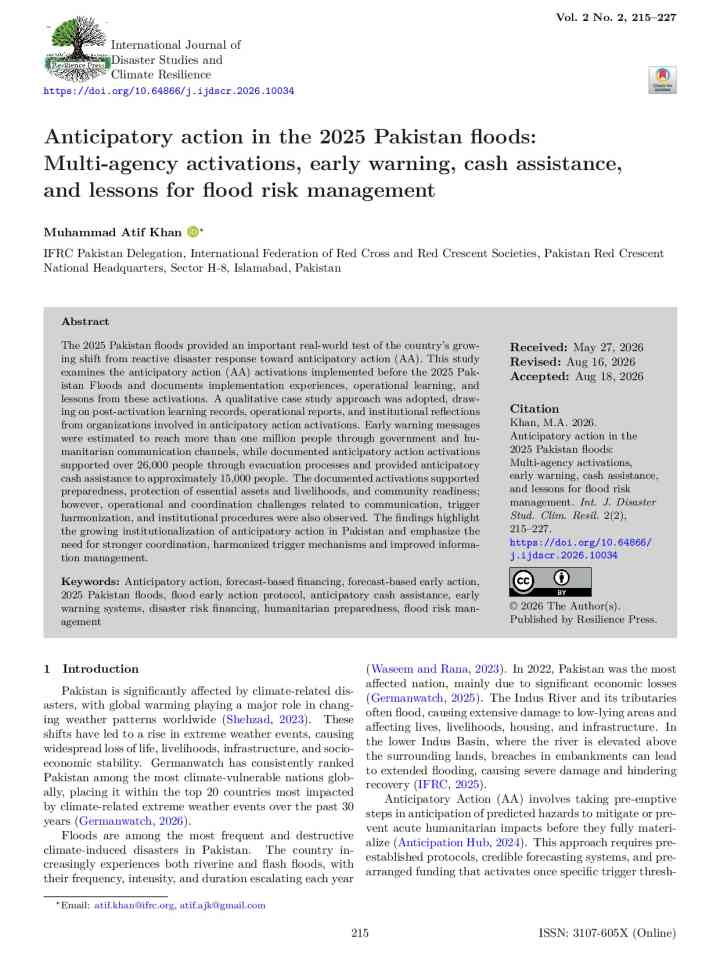
Anticipatory action in the 2025 Pakistan floods: Multi-agency activations, early warning, cash assistance, and lessons for flood risk management thumbnail
Documents and publications

This study examines the anticipatory action (AA) activations implemented before the 2025 Pakistan Floods and documents implementation experiences, operational learning, and lessons from these activations.

International Journal of Disaster Studies and Climate Resilience (IJDSCR)
Case study
Location: Kenya
Case study of Kenya’s disaster and climate budget tagging initiative, showing how expenditure tracking, DRR–CCA integration and risk-informed public financial management informed national DRM and DRF strategies.
  • Intra Africa, Caribbean and Pacific (ACP) Disaster Risk Reduction Programme (DRRP)
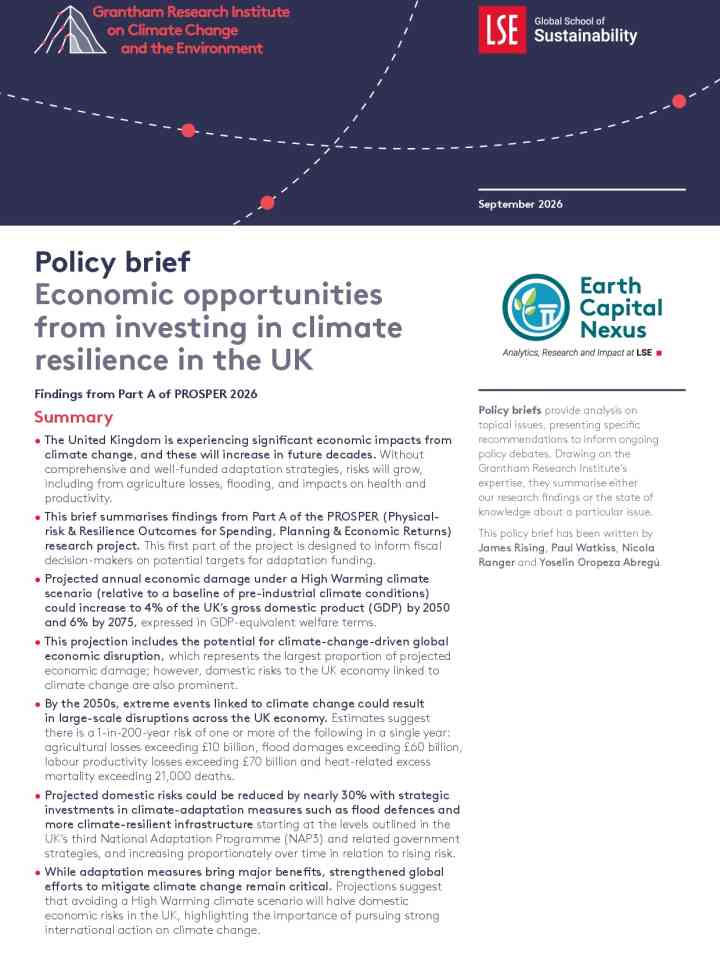
Economic opportunities from investing in climate resilience in the UK thumbnail
Documents and publications

This policy brief describes economic risks and adaptation opportunities for the UK in relation to agriculture, flood and coastal management, health and labour productivity.

London School of Economics and Political Science, the
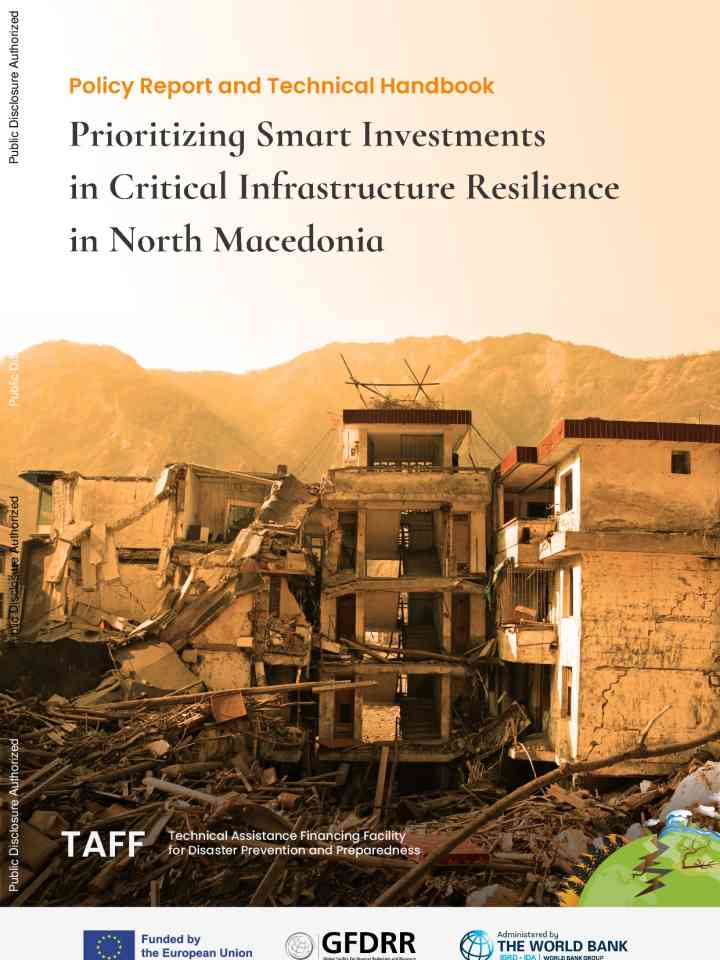
Prioritizing smart investments in critical infrastructure resilience in North Macedonia: a policy report and technical handbook thumbnail
Documents and publications

This report presents a scalable, data-driven methodology to help North Macedonia transition from reactive crisis management to proactive risk reduction and investment planning.

World Bank, the
More than an empty bucket? The competing rationalities in the operationalization of the fund for responding to Loss and Damage thumbnail
Documents and publications

This study explores the rationalities that have competed in shaping finance for loss and damage toward specific ends, and how the fund is designed as a result.

Global Environmental Politics (MIT Press)
Update
Nepal to use flood study to claim millions from UN disaster fund

Nepal plans to use a new study linking climate change to the deadly floods last month as the basis of a financial request from a United Nations fund.

British Broadcasting Corporation (BBC)
Rain on Galata Bridge in Istanbul and people walking
Last updated 18 Sep 2026
This is a centralized resource for policymakers, practitioners and researchers seeking to understand and reduce disaster risk in tourism systems.
Training event
Baghdad
-
Online
SMEs Resilience Workshop organized by the United Nations Office for Disaster Risk Reduction (UNDRR) and International Organization for Migration (IOM)
Lesson 1: Undertaking climate diagnostics for climate adaptation investment planning thumbnail
Documents and publications

Drawing on experience from Armenia, Bhutan, Cambodia, Indonesia, Mongolia, and Nepal, these lessons explain how strategic climate diagnostics can identify priority risks and how economic, fiscal, and financial analysis can build the case for investment.

Asian Development Bank (ADB)
Evaluating a model’s appropriateness for climate & disaster risk finance decision making thumbnail
Documents and publications

This guidance note provides a framework for evaluating whether climate and disaster risk models are fit for climate and disaster risk financing decisions, covering model transparency, hazard, exposure, vulnerability, loss and uncertainty assessment.

InsuResilience Solutions Fund
Solar panels on a suburban home, surrounded by lush greenery and a sunny blue sky.
Update
Mexico: Extreme heat and subsidised solar in Mexicali

Subsidised power is tackling energy poverty and health risks for some of northern Mexico’s most vulnerable city dwellers.

Dialogue Earth
Social protection challenges: The exposure of Social Assistance Reference Centers to flood and landslide risks thumbnail
Documents and publications

Study assessing the exposure of Brazil’s Social Assistance Reference Centers (CRAS) to flood and landslide risks. By integrating IDCRAS and BATER data, it identifies vulnerable facilities and supports preparedness, contingency planning and DRR.

Brazilian Journal of Environmental Sciences (Revista Brasileira de Ciências Ambientais)
Update
Bond bank releases first-ever disaster reserve benchmarks

Vermont recognized the ongoing flood exposure facing the state with the passing of July 10, a now-infamous date for Vermont.

Vermont league of cities & towns
Update
Seychelles ramps up preparedness with direct cash transfer agreement

The agreement will allow Seychelles to rapidly access funds for household cash transfers following climate shocks such as floods, landslides and tsunamis, with the ASP acting as the delivery channel for these transfers to affected individuals and families

African Risk Capacity
Search-and-rescue teams work through the rubble of a collapsed building in El Paraíso, southwest Caracas
Stefano Pampanin
In this blog, the author highlights that one of the central DRR questions is not simply how much disasters cost after they occur. It is how much we are willing, and actually capable, to keep paying by failing to reduce risk before disasters happen.
 northern lights alongside a thundercloud.
Research briefs
The economic costs of solar storms

During a 100-year geomagnetic storm, 3.5 million people and 91,000 businesses are predicted to lose power, with daily economic losses of $1.22 billion.

Eos - AGU