
Financing infrastructure systems that help island communities choose their future
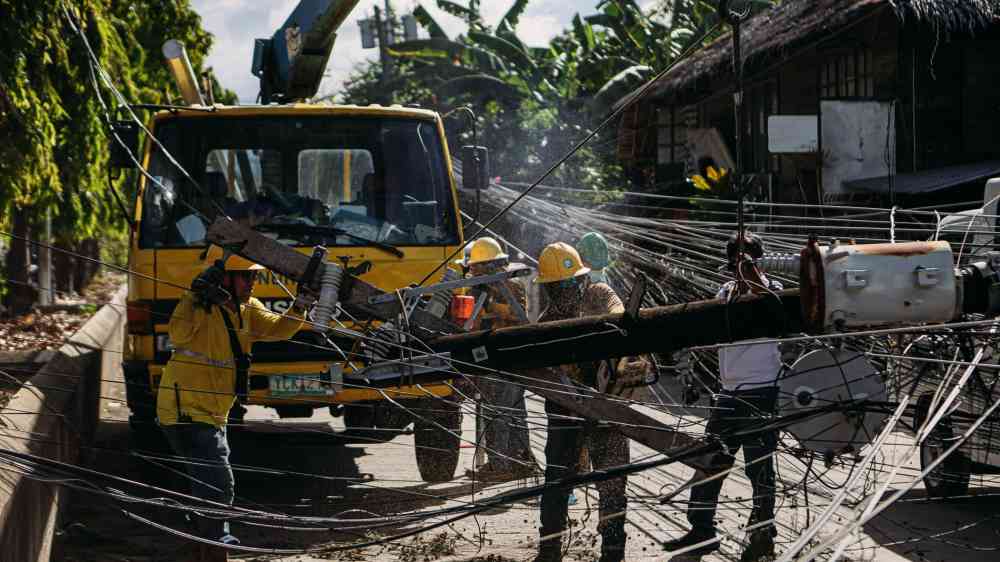
In Pacific Small Island Developing States (SIDS), the most critical piece of infrastructure is often the least remarkable: a road. It is the route a nurse takes to reach a patient, the lane fuel trucks use from the port, the path a school bus follows before the tide comes in.
When it fails, the failure travels — to a clinic short of supplies, a market stall with nothing to sell, a family waiting for a boat that cannot land, or a snapped power line. These are all failures in the tightly wired system a whole community depends on.
Small island states have never lacked evidence of climate risk: they have documented, mapped, and adapted to it for decades The challenge is not lack of local knowledge, but ensuring that international finance and technical support respond to the risks and priorities that countries have already identified.
When Pre-COP31 convenes in the Pacific this October, the question is not only how much funding is promised. It is whether that funding can support small island states in keeping the interconnected systems people rely on working: roads, ports, water, power, communications and early warnings.
Disaster Resilient Infrastructure (DRI) is where a finance commitment starts to translate into a safer, more secure daily life.
What it means to stay
Public conversations about climate and migration tend to reach for the most dramatic frame available: a family fleeing after a cyclone, a shoreline community weighing relocation.
Those moments are real, but the pressure that produces them usually begins much earlier — in a harvest lost to a drought, a fishing ground disrupted one season too many, a family repairing the same roof after every squall. When homes, water and sanitation, health care, schools, transport, power and communications cannot withstand hazards or recover quickly, a shock becomes more than an emergency: it disrupts livelihoods and essential services, drains household resources and narrows the realistic options people have to remain.
In the Pacific, “staying” does not mean denying climate risk or ruling out movement. It means being able to remain in one’s home, on one’s land and within one’s community safely and with dignity, with culture, identity, livelihoods and access to essential services protected. The Pacific Regional Framework on Climate Mobility, endorsed by Pacific leaders in 2023, recognizes that mobility can be planned, dignified, and beneficial. It places rights, dignity and cultural continuity at the centre of the response.
That is why disaster resilient infrastructure is more than protection from a single hazard. In Tuvalu, approximately eight hectares of reclaimed and elevated land on Fogafale is intended to create safer space for future housing and essential infrastructure in the face of flooding, erosion and sea-level rise. At regional scale, CDRI’s Infrastructure for Resilient Island States initiative supports Pacific SIDS to strengthen interconnected systems—including health and coastal infrastructure, transport, early warning, energy and telecommunications—on which safety, livelihoods and continuity of services depend.
These efforts do not guarantee that every community will be able to remain in place, nor can they substitute for rapid emissions reductions and sustained climate finance. But by keeping homes and essential services safer and more reliable before, during and after shocks, they can expand people’s practical choices and help ensure that displacement does not become the default result of repeated infrastructure failure and loss.
When risks converge
The World Meteorological Organization has confirmed that El Niño is now firmly established across the tropical Pacific and suggests it will intensify into a very strong event, with near-certain odds of persisting through February 2027, bringing extreme heat, drought, and disruptive rainfall unevenly across the region.
No two island nations will experience this the same way, but this pattern is one the Pacific governments know well. Climate risk does not arrive sorted into tidy sectors, so resilience cannot be planned or financed that way either.
Drought strains water, farming, and public health at once; heavy rain takes out roads, bridges, and drainage together, severing access to schools and clinics in a single stroke; a storm can silence a port, a power grid, and a communications network in one night, with the bill arriving long after the cameras have left. In Vanuatu, these connections became tangible when Cyclone Lola in October 2023 damaged water and sanitation systems, disrupted health care and education, and destroyed farms and food crops. Unsafe water increased the risk of waterborne disease, while disrupted health services and food supplies compounded threats to children’s health and nutrition. These impacts show why restoring an individual asset is not the same as restoring a service: a clinic needs safe water and reliable power, just as a school needs sanitation as well as classrooms.
The shortfall is therefore not simply one of ambition or planning. It is also a mismatch between the interconnected risks island governments are trying to manage and the fragmented way support is often delivered.
Island governments have identified infrastructure priorities through national investment plans. Yet securing support often means navigating disconnected processes: Pacific development banks describe duplicated readiness requirements and multiple templates, annexes and reporting systems demanded by different partners. Support also needs to build institutional depth that lasts beyond individual projects. The Pacific regional climate-finance strategy identifies short-term, project-based approaches as providing little basis for long-term planning. Technical requirements need to reflect local conditions, building codes drawing on Australian, New Zealand and US standards require adaptation to Pacific contexts, including local materials, traditional construction practices and hazard risks.
Such gaps can leave a viable project unable to advance towards financing because preparation work remains unfunded; a building code without the training or inspection capacity needed to enforce it; or an early warning system without the communications links and maintenance needed to deliver usable alerts.
These potential failures point to the same underlying lesson: infrastructure resilience depends not only on what gets built, but on whether the financing, standards, communications and institutional capacity needed to make it work are in place.
A Blueprint for Resilience
The Call to Action on Resilient Infrastructure for Small Island Developing States and Coastal Regions, developed by the Coalition for Disaster Resilient Infrastructure, responds to these gaps through ten actions across three pillars, with implementation through 2034.
Usable risk information and early warning systems
The first pillar treats data as a tool for decisions, not an archive A tool with better hazard and asset information, a shared SIDS Global Data Hub, resilient communications, and early warnings that reach remote islands and people with disabilities. The test is whether information helps governments decide what to protect, where to invest and whom to warn.
Standards feasible to build, inspect, and maintain locally
The second pillar closes the gap between standards on paper and standards in practice with modular codes adapted to local hazards and materials, recognition of locally appropriate building methods, incentives for retrofitting, and training and tools for builders and inspectors. A code matters only if people can build to it, check compliance and maintain what is built.
Finance structured to match how island economies operate
The third pillar proposes a common approval process for institutions seeking access to climate funds and development bank finance, national infrastructure pipelines, and investment platforms that coordinate donors and combine concessional and other suitable finance. Instead of repeated applications and stand-alone projects, the aim is coordinated support for a country’s priorities, backed by long-term technical expertise. The point is not simply more capital, but finance that is easier to reach and supports the capacity to plan, deliver and maintain resilient infrastructure.
Building systems that work
A Call to Action becomes meaningful only when these principles shape how projects are prepared, financed, built and maintained. CDRI is developing an implementation plan to translate the ten actions into country-led priorities with finance, expertise, and long-term institutional support needed to deliver them. The goal is to make existing commitments easier to identify and combine, and harder to quietly let lapse.
Different partners can address different gaps in the system:
- Island governments and regional institutions should set priorities.
- Donor governments can provide multi-year support for project preparation and maintenance.
- Development banks and climate funds can simplify access and finance upgrades to existing infrastructure as well as new construction.
- Philanthropies can complement that investment by supporting early-stage work through shared risk data, community-led design and training — activities that may be difficult to fund through individual infrastructure loans.
- Universities and engineering institutions can work with local practitioners on usable standards and long-term skills development.
Taken together, these actions point to a simple lesson: resilience cannot be built one isolated project at a time when the risks, infrastructure and institutions are connected.
The test for partners leaving Pre-COP is not how many names appear on a document, or how much funding is promised. It is whether their support helps an island government keep interconnected systems working: a road passable, a clinic powered, and communities connected to the places and ways of life that make a place home.
Jessica Mosahari, Senior Specialist-Advocacy, Coalition for Disaster Resilient Infrastructure. Her work focuses on advocacy and policy engagement in the disaster and climate space. She works to build awareness and support for resilient infrastructure systems, advocating for the integration of resilience into infrastructure planning and investment so that communities are better protected from disasters and climate risks.
Special thanks to Emily Wilkinson, Dr. Vikrant Panwar, Jennifer Calderon, and Andrea Sissa of ODI Global for their valuable contributions and support to the Coalition for Disaster Resilient Infrastructure’s Call to Action on Resilient Infrastructure for SIDS and Coastal Regions and the International Conference on Disaster Resilient Infrastructure 2025.