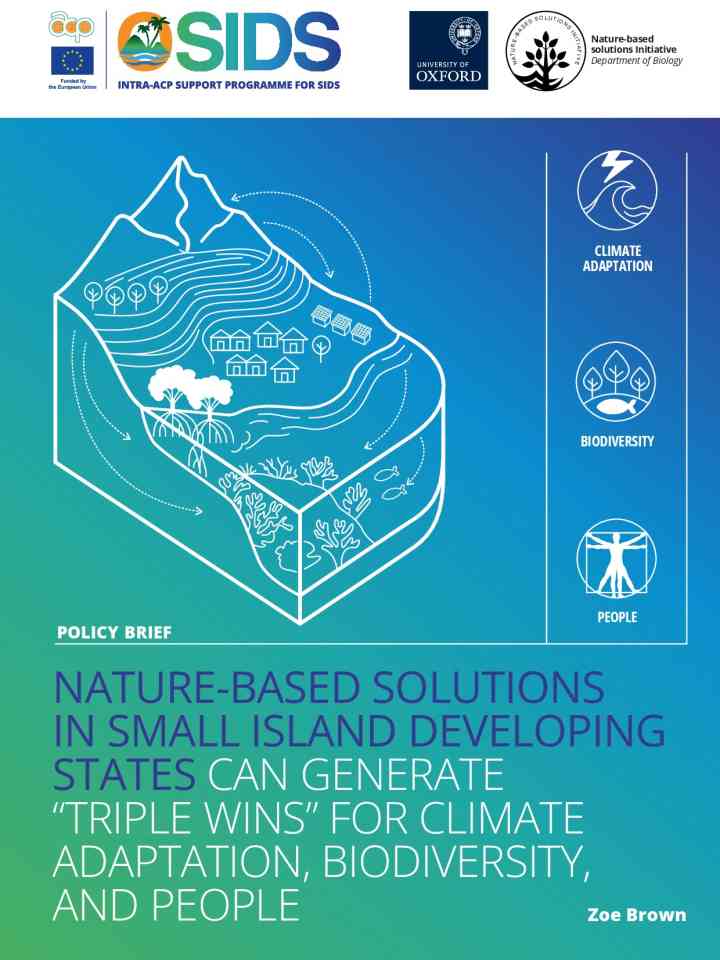
Nature-based solutions in Small Island Developing States can generate "triple wins" for climate adaptation, biodiversity, and people
This brief highlights the critical role that nature-based solutions can play in helping island nations address the growing impacts of climate change while simultaneously supporting biodiversity and local livelihoods. It identifies key policy implications based on a systematic review of 49 studies covering 53 nature-based interventions across 26 Small Island Developing States (SIDS) worldwide. Small Island Developing States (SIDS) are among the countries most vulnerable to climate change, facing escalating risks from sea-level rise, storms, coastal erosion, ecosystem degradation, and threats to food and water security. Nature-based solutions (NbS) are increasingly recognised as a key approach for climate adaptation because they can simultaneously reduce climate risks, support biodiversity, and strengthen livelihoods and local economies. For example, mangrove restoration projects can help reduce storm impacts and coastal erosion, while marine protected areas can support sustainable livelihoods.
The policy implications are as follows:
- Position NbS as a key pathway for delivering climate adaptation, biodiversity, and development objectives in SIDS;
- Invest in the evidence base needed to support adaptation planning and investment decisions – a lack of baselines, counterfactuals, and long-term monitoring limits the ability to assess the effectiveness, scalability, and reliability of NbS across different SIDS contexts;
- Prioritize coastal and marine NbS within SIDS adaptation research and assessment agendas;
- Strengthen economic evaluation of NbS and leverage private sector involvement;
- Place equity, justice, and local leadership at the center of NbS design and implementation;
- Empower SIDS-led research and knowledge-sharing.
Explore further