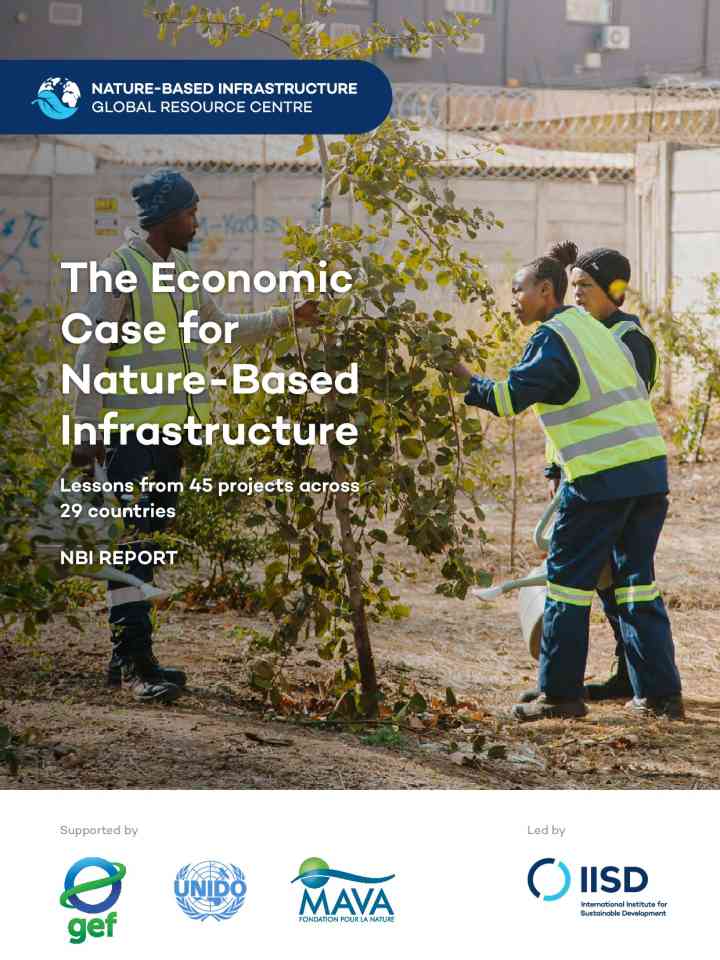
The economic case for nature-based infrastructure
This report examines the economic value of nature-based infrastructure (NBI) by synthesizing lessons from 45 project assessments undertaken by the International Institute for Sustainable Development's NBI Global Resource Centre across 29 countries. Using the Sustainable Asset Valuation (SAVi) methodology, which combines systems mapping and integrated cost-benefit analysis—including monetization of ecosystem services—the report evaluates the performance of NBI interventions such as wetlands, forests, urban greening, and coastal restoration. The scope spans urban, rural, and coastal environments with projects designed to address challenges like flood risk, water scarcity, pollution, and climate resilience.
The report finds that NBI investments deliver a median benefit-to-cost ratio of 3.21 and median internal rate of return of 38%, underscoring robust economic viability alongside social and environmental benefits. It shows that NBI assets provide multiple functions—flood mitigation, water purification, temperature regulation—often outperforming grey infrastructure. However, institutional and financial barriers limit scaling, mainly because public finance systems do not recognize avoided costs and cross-sectoral benefits. The authors recommend reforming planning, budgeting, and financing frameworks to place NBI on equal footing with grey options, integrating nature as a core infrastructure asset, and developing outcome-based and blended finance models. Community co-design, stewardship, and capacity building are highlighted as essential for sustainable, equitable outcomes.
Explore further