
From local resilience to systemic risk governance
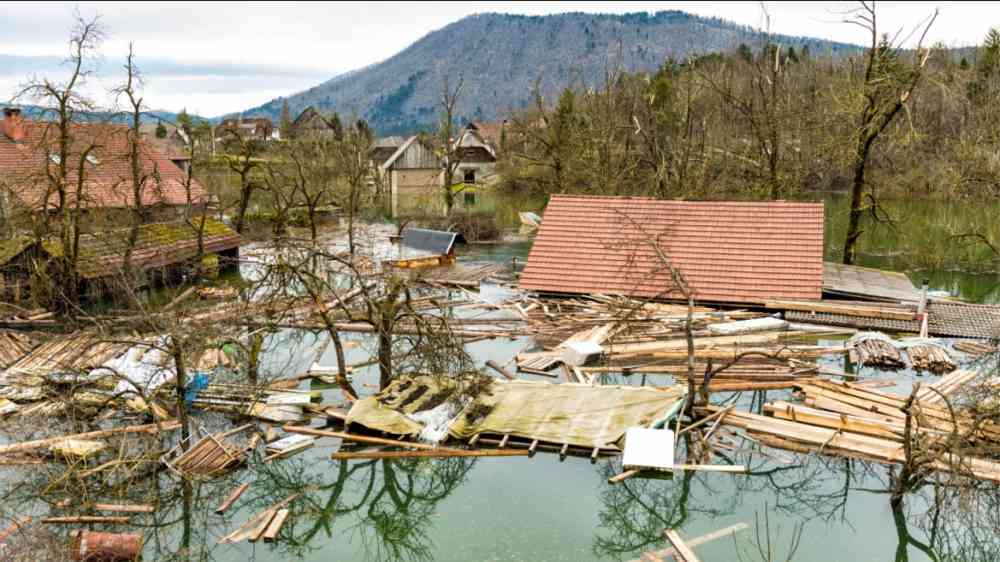
Local preparedness cannot compensate for development, infrastructure, and investment decisions that systematically create and redistribute disaster risk.
Households can prepare for floods. They cannot determine where development occurs upstream, how regional electricity networks are protected, or whether capital continues to flow into hazard-prone land. The 2026 International Day for Disaster Risk Reduction theme, “Resilience Starts at Home ,” rightly draws attention to preparedness where people live. Resilience does not originate only there. Many of the conditions that determine household losses are shaped much earlier through decisions about land, infrastructure, public services and investment.
Communities are not passive recipients of risk. Residents identify vulnerabilities, interpret warnings, mobilize assistance, and draw on locally embedded knowledge and social networks. But the location of disaster impacts should not be confused with responsibility for producing them. When resilience is framed primarily as a matter of household preparedness, institutions can evade responsibility for the land-use, infrastructure, regulatory, and financial decisions that determine whether preparedness is effective.
Household preparedness can only be effective where governance systems reduce foreseeable risk, maintain essential services, and ensure equitable protection. This perspective underpins the Local-to-Systemic Risk Governance framework developed here, linking community capacities with the institutional and systemic conditions that shape risk and resilience.
Trace how risk is produced
Three processes should be distinguished: risk creation, risk transmission, and risk bearing.
- Risk creation occurs when decisions alter hazards, exposure, or vulnerability, for example by approving unsafe development, degrading protective ecosystems, or excluding populations from secure housing.
- Risk transmission occurs when disruption spreads through interconnected infrastructure, services, territories, and organizations.
- Risk bearing describes who ultimately experiences injury, interrupted care, lost income, displacement, and the costs of recovery.
These processes overlap, but they involve different actors and forms of responsibility. A financial institution may influence patterns of exposure without bearing household losses. A local government may manage the consequences of development decisions made or financed elsewhere.
Who benefits from a development decision is often not who ultimately absorbs its risk. An intervention described as risk reduction may protect one population while transferring exposure to another. Disaster governance must therefore examine the distributional consequences of intervention, rather than assuming that all protection produces an equivalent public benefit.
Jurisdictional boundaries are a poor proxy for the reach of risk. A project approved in one municipality may change runoff, housing demand, ecosystem functions, or infrastructure loads elsewhere. Governance arrangements should follow these consequences across administrative boundaries.
Inter-dependence further expands this domain. A flood-related electricity outage can interrupt water pumping, health care, communications, transport, and food storage. Dependency analysis should identify critical connections among water, food, energy, health, transport, digital infrastructure, and ecosystems.

Match responsibility with authority
The Sendai Framework for Disaster Risk Reduction 2015–2030 calls for preventing new risk and reducing existing risk across sectors and levels of government. The challenge is translating this broad commitment into institutional authority. Evidence from the integration of public health and disaster risk reduction in Padang, Indonesia, identifies unclear leadership, insufficient resources, and weak coordination as continuing constraints according to a qualitative study conducted involving government agencies for COVID-19 response, health sector actors, and community representative.
Assigning responsibility without corresponding authority and finance does not strengthen local resilience. It transfers accountability to institutions that may be unable to alter the conditions producing risk.
This article proposes financed local resilience compacts as a governance mechanism linking local responsibilities with defined decision rights, predictable financing, and accountable institutional support. Such compacts would specify responsibilities across levels of government, infrastructure operators, service providers, and local actors, including authority to reconsider risk-generating development decisions, finance maintenance, release contingency funds, and resolve cross-jurisdictional disputes.
It would also identify functions that should not be devolved. Local authorities cannot independently regulate national infrastructure networks, major financial institutions, or investment practices whose consequences extend across regions. Where local fiscal capacity is limited, national transfers and international cooperation could finance prevention through established subnational planning and budgeting systems. Cambodia provides an example through the GCF-funded Local Governments and Climate Change III (LGCC-3) programme, which supports the integration of climate adaptation into subnational governance and financing arrangements.
Financed local resilience compacts are a governance proposition, not a validated intervention. Their effectiveness would need to be tested comparatively across political, fiscal, and hazard contexts. Evaluation should examine whether they change decisions and outcomes, rather than merely generating new plans or coordination bodies.
Investment appraisal provides a second point of intervention. Major projects should be assessed for future exposure, cascading service disruptions, and the distribution of potential gains and losses beyond the immediate project boundary. Appraisal should compare alternatives and disclose assumptions, residual risks, and institutional responsibilities. Where protection for one group increases exposure for another, the trade-off should be made explicit and subjected to safeguards.
Accountability does not mean that every disaster loss demonstrates negligence. Some residual risks are unavoidable. The relevant test is whether responsible institutions considered foreseeable consequences, examined reasonable alternatives, justified their decisions, and discharged the obligations attached to their authority.
Give participation institutional influence
Participation must extend beyond consultation about household preparedness. Communities should be able to influence upstream decisions through which exposure and vulnerability are produced.
Research in Dominica shows how trust, identity, and social networks shape the movement of information across governance levels. Representation must account for differences in disability, gender, age, livelihood, and tenure. Information must be accessible, and affected populations need credible means of contesting decisions.
Technical and local knowledge should not be treated as competing alternatives. Technical analysis can characterize hazards and infrastructure dependencies; local knowledge can reveal patterns of access, institutional trust, and everyday vulnerability that formal assessments may overlook. Both should remain open to scrutiny.
Participation also requires continuity. A Malaysian Living Lab connecting residents, researchers, civil society, and public authorities illustrates the potential value of sustained dialogue and shared learning, while also emphasizing the importance of stable finance and trust. Such cases identify plausible mechanisms, but they do not establish that participation automatically reduces disaster losses. A systematic review similarly finds that favorable accounts of civil society engagement often exceed the available evidence of risk reduction. Participation matters only if it changes something consequential: decisions, resource allocation, exposure, service continuity or recovery.
Measure who remains unprotected
Accountability should extend from investment and preparedness through warning and recovery. Warning effectiveness depends on how people can act early to take actions instead of just on information dissemination. For instance, in Bangladesh, an anticipatory action framework for severe monsoon flooding links forecast-based triggers with pre-agreed actions.
Recovery should similarly be assessed through outcomes rather than physical reconstruction or implementation activity alone. The Sendai Framework Monitor supports this orientation through internationally agreed indicators covering affected populations, disrupted livelihoods and damage to critical infrastructure. Measures such as continuity of essential services, duration of displacement, unmet care needs and the distribution of recovery assistance can further reveal disparities obscured by aggregate recovery statistics. Disaggregated assessment is therefore essential to identify populations and places for which protection and recovery remain incomplete.
A framework for local-to-systemic governance
This article advances the Local-to-Systemic Risk Governance framework linking three domains: upstream decisions, interdependent services, and differentiated household outcomes. Authority, finance, information, and accountability operate across all three, enabling local knowledge to inform planning and investment while evidence of protection and recovery feeds back into subsequent decisions. The framework ultimately aspires to reposition resilience as a property of accountable systems rather than principally a capacity expected of communities.
The approaching conclusion of the Sendai Framework for Disaster Risk Reduction 2015–2030 provides an opportunity to reconsider global risk governance beyond 2030. Future architecture could place greater emphasis on whether governance, financing and investment decisions reduce production and unequal distribution of risk, although international commitments will matter only insofar as they influence domestic authority, resource allocation and accountability. Resilience is experienced locally, but it is not produced locally alone.

Dr. Bapon Fakhruddin is an award-winning global expert in climate resilience and climate finance, with over 25 years of experience working with governments and international organisations. He leads the Water Sector at the Green Climate Fund and is an AsiaGlobal Fellow at the Asia Global Institute, The University of Hong Kong. His expertise spans disaster risk reduction, early warning, water security, climate adaptation, and innovative resilience finance. For further details, visit his LinkedIn page and personal website.