My account
Menu
Your experience on PreventionWeb

Please help us improve PreventionWeb by taking this brief survey. Your input will allow us to better serve the needs of the DRR community.

See the survey

Published on
3 August 2021
Status
Completed

Localised Preparedness for More Effective Response with Affected Communities

Expected duration
Jan 2018 - Jun 2021
SFVC commitment ID
20190301_001
Version
6.0
Author
Christopher Ball
Upload your content

To enable civil society organisations (CSOs) and faith-based organisations (FBOs) to establish localised preparedness and response systems and capacities to respond more effectively in collaboration with affected communities and populations.

    Description

    On the basis that affected communities and local actors are frequently the first responders to disasters, Diakonie Katastrophenhilfe supports civil society organisations (CSOs) and faith-based organisations (FBOs) to establish localised preparedness systems and capacities. This includes the development of capacities which can support resilience building during emergencies. This initiative will be realised by supporting our local and national partners and communities to develop their preparedness and response capacity by: providing direct institutional capacity building on emergency preparedness and response planning; supporting the development and implementation of projects and programmes piloting new approaches which empower communities to co-run emergency response; supporting our partners to develop local preparedness and response systems, including their own institutional capacities; and conducting learning reviews to identify and communicate good practices and lessons learnt, and to inform future programming. This initiative works with existing community structures and mobilises the engagement of community leaders, women and men and youth, while always ensuring those most vulnerable are always placed at the centre. Capacities established include: disaster management committees and coordination mechanisms; risk awareness; early warning systems; information and communication systems; community-based protection, and advocacy capacity to address root causes of vulnerability during a crisis. This initiative invites collaboration with other actors at the local and national level including local authorities, the private sector, the media, academia and other CSOs and FBOs.

    Did the Sendai Framework change or contribute to changes in your activities/organization? If so, how?

    The HFA framework accompanied the establishment of DRR as a pillar within our institutional programming. Along with the Sendai process we have adjusted our approach to apply more resilience and systems thinking to disasters, shocks and stresses. Additional motivation was found in the fact that the Sendai Framework encourages better articulation of responsibilities as well as the involvement and empowerment of local actors with resources, incentives, and decision making responsibilities. Furthermore, the Sendai Framework states that to understand disaster risk at the national and local levels, enhanced collaboration and involvement of community-based organisations and non-government organisations is needed to disseminate information.

    What led you to make this commitment/initiative?

    What was your position before making this Voluntary Commitment / prior to the Sendai Framework?

    To communicate the interventions of Diakonie Katastrophenhilfe and those of our national and local civil society and faith-based partners - with the intention of fostering collaborative partnerships.

    Deliverables and Progress report

    Deliverables

    Deliverables are the end-products of the initiative/commitment, which can include issuance of publications or knowledge products, outcomes of workshops, training programs, videos, links, photographs, etc.

    Development of localised first responder systems and capacities
    Intended date of delivery
    31 December 2020

    5 CSOs and FBOs trained on approaches for integrating resilience approaches throughout the disaster management cycle. Products will include training reports and activity completion reports.

    Emergency preparedness & response planning
    Intended date of delivery
    30 June 2021

    5 CSOs or FBOs have received Emergency Preparedness & Response Planning capacity development (support / training), including approaches for building resilience. Products will include workshop & training reports and activity completion reports.

    Establishment or strengthen local community groups or committees for response
    Intended date of delivery
    30 June 2021

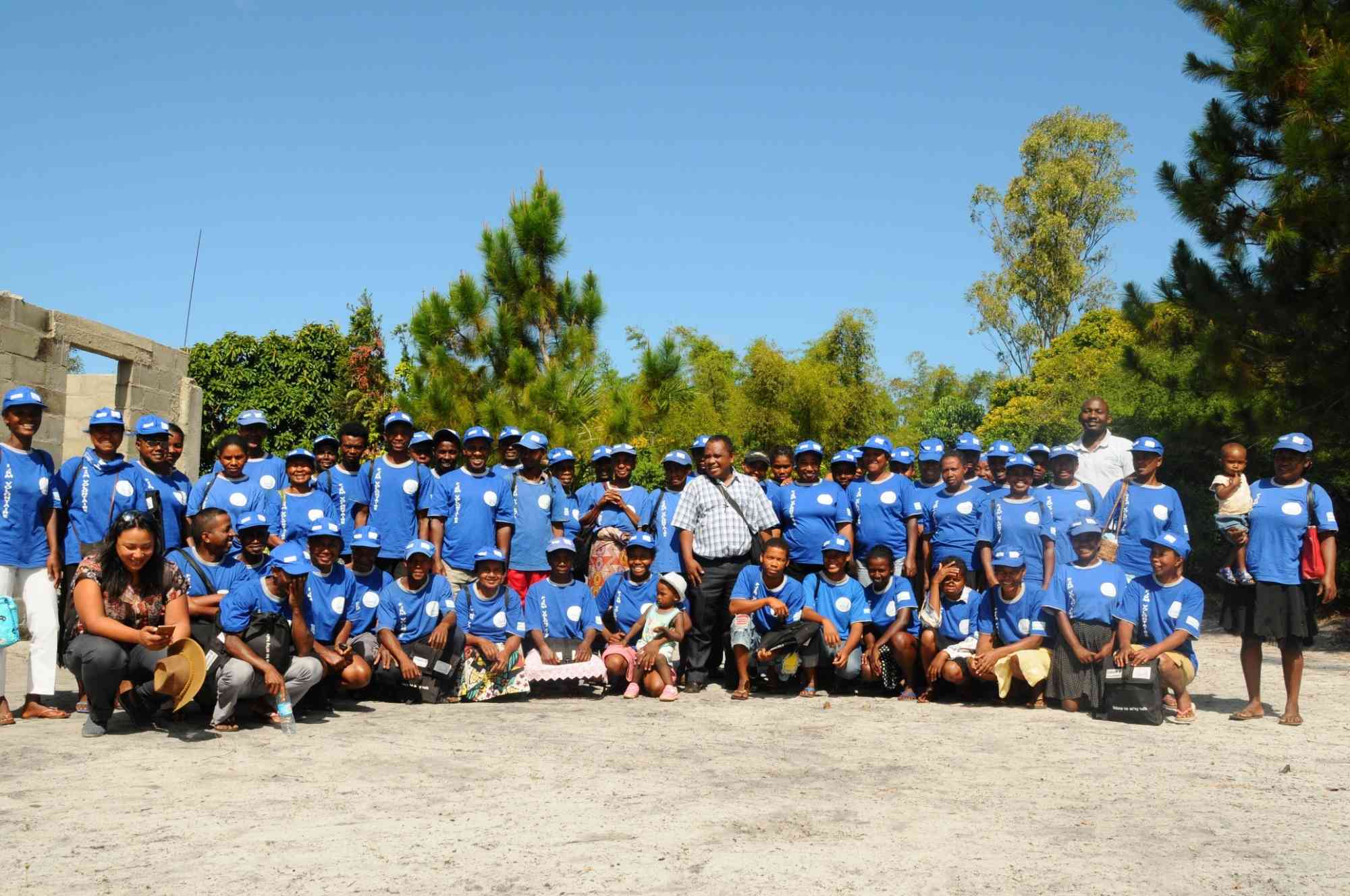
    Establishment or strengthening of 40 local voluntary Community Groups including Church-Based Groups and Ecumenical Disaster Risk Management Committees for community preparedness, early warning and response. Products will include activity completion reports.

    Piloting 'Supporting Community-Led Response' (SCLR)
    Intended date of delivery
    30 June 2021

    5 CSOs or FBOs have piloted the approach of Supporting Community-Led Response (SCLR) which aims to empower communities and self-help groups to co-run response to crises and to address root causes of vulnerability. Products will include workshop reports and lessons-capture reports.

    Porgress report

    Progress date
    1 July 2021
    Summary

    No progress made since previous submitted report

    Achievements at a glance

    No progress made since previous submitted report

    Supporting documents
    DKH SFVC Deliverables Report - Consolidated 20210715.pdf (184.94 KB)
    Organizations and focal points

    Implementing Organization(s)

    • Comité Ecuménico para o Desenvolvimento Social
    • Sampan'Asa mombany Fampandrosoana / Church of Jesus Christ in Madagascar
    • Citizens' Disaster Response Center

    Focal points
    Main focal point
    Christopher Ball (Director / Consultant, Bounce Back Resilience)

    Explore further

    Sendai priorities
    Priority 4Enhancing disaster preparedness for effective response, and to «Build Back Better», rehabilitation and reconstruction
    Sendai targets and indicators
    A-1 (Compound)Number of deaths and missing persons attributed to disasters, per 100,000 population
    B-2Number of injured or ill people attributed to disasters
    G-3Number of people per 100,000 that are covered by early warning information through local governments or through national dissemination mechanisms
    G-6Percentage of population exposed to or at risk from disasters protected through pre-emptive evacuation following early warning
    Hazards Cyclone, Hurricane and Typhoon Drought and Desertification Earthquake Flood Landslide Storm surge Tsunami Volcano
    Themes Disaster risk communication Capacity development Children and Youth Civil Society/NGOs Climate change Community-based DRR Preparedness Early warning Food security and agriculture Fragility and conflict Gender Recovery Risk identification and assessment Social impacts and social resilience
    Country and region Kenya Madagascar Mozambique Haiti Philippines
    Sustainable Development Goals SDG2: Zero hunger SDG5: Gender equality SDG10: Reduced inequalitities SDG13: Climate action SDG16: Peace, justice and strong institutions
    Budget scale
    USD 1 million to < 5 million
    Scope
    National (or local) - Kenya, Madagascar, Mozambique, Haiti, Philippines
    Scale of beneficiaries
    5,000 to < 10,000
    Secured budget size
    70%
    Donors
    Diakonie Katastrophenhilfe
    Videos
    Related links
    Introductory video on Local 2 Gloabl Protection's work with developing new ways…

    Is this page useful?

    Yes No
    Report an issue on this page

    Thank you. If you have 2 minutes, we would benefit from additional feedback (link opens in a new window).

    PreventionWeb is the global knowledge sharing platform for disaster risk reduction (DRR) and resilience.

    • Newsletter
    • Submit your content
    • Blog pitches
    • Submission and publishing policy
    • About PreventionWeb
    • Contact us

    Hazards

    • Avalanche
    • Cold Wave
    • Cyclone, Hurricane and Typhoon
    • Drought and Desertification
    • Earthquake
    • Epidemic and pandemic
    • Flood
    • Heatwave, extreme heat and heat stress
    • Insect infestation
    • Land subsidence
    • Landslide
    • Nuclear, biological, chemical (NBC)
    • Sea level rise
    • Technological hazard
    • Thunderstorm
    • Tornado
    • Tsunami
    • Volcano
    • Wildfire

    Regions

    • Africa
    • Americas
    • Asia
    • Europe
    • Oceania

    Themes

    Understanding & managing risk

    • Preparedness
    • Early warning
    • GIS and mapping
    • Data and information management
    • Risk identification and assessment
    • Small Island Developing States
    • Earth Observation

    Natural environment

    • Climate change
    • Environment and ecosystems
    • Food security and agriculture
    • Water

    Cross-cutting

    • Systemic risk
    • Recovery

    Human development

    • Capacity development
    • Children and youth
    • Civil society / NGOs
    • Community-based DRR
    • Cultural heritage
    • Gender
    • Human mobility
    • Inclusion
    • Social impacts and resilience

    Science, knowledge & advocacy

    • Disaster risk communication
    • Traditional and Indigenous knowledges
    • Science-policy-practice interface

    State, governance & economy

    • Financing DRR
    • Fragility and conflict
    • Governance
    • Insurance and risk transfer
    • Private sector

    Infrastructure & critical services

    • Critical infrastructure
    • Education and school safety
    • Health and health facilities
    • Structural safety
    • Urban risk and planning
    Loading