My account
Menu
Your experience on PreventionWeb

Please help us improve PreventionWeb by taking this brief survey. Your input will allow us to better serve the needs of the DRR community.

See the survey

Published on
31 December 2020
Status
Progress not updated

Enhancing Access to Resilience& Community Adaptation in North Central Nigeria

Expected duration
Mar 2017 - Dec 2018
SFVC commitment ID
20190228_001
Version
2.0
Author
Victoria Tosin Apiriola
Upload your content

Building Resilience of Women and Youth in Disaster Risk Reduction to Enhance Community Based Adaptation (CBA) for sustained rural livelihood

    Description

    Women Environment Youth Development (WOYODEV) Initiative is a non governmental, non sectoral organization formed to help in the all round development of Women and Youth which constitutes a larger part of the population of the world. The creation of the organisation was informed out of the passion and general concern about the dwindling reality of gender parity, women and youth economic empowerment in Nigeria and continued exposure to environmental hazards.
    WOYODEV particularly focuses on awareness creation and advocacy for gender equality, promotion of children and women’s rights, indigenous knowledge skills transfer, Water sanitation &Disaster Risk Reduction.
    As an organisation, we adopt various strategies to inform, empower and mobilize the entire populace with particular attention to the rural areas which are marginalized by the society. We adopt the participatory, development and evaluation approaches in achieving our goals.

    Our Motto is attaining greater heights for women and youths in a conducive environment
    Our Goal is to reach the less privileged with succour while engaging communities actively in finding solutions to their problems
    Our Vision: We envision Good Health, Zero level of Ignorance, Health Friendly Decisions and Hazard Free Environment for the betterment of Women, Youth and the community at large.

    In fulfilment of our corporate goal, mission and objectives as an organisation, we commit to contribute to the Sendai Framework for Disaster Risk Reduction by engaging our target groups (women and youth) to enhance their coping capacity for increased protection against hazards, reinforcing sustainable livelihood and to alleviate sufferings at the grassroots level. We did these via skills transfer on Agro-ecology, sustainable farming techniques, Rain water harvesting amongst other direct program interventions. We also build their capacities on citizen engagement to demand Government accountability while together we work to demand women and youth inclusion in Disaster Risk Reduction/ Management contingency planning at all levels.

    Did the Sendai Framework change or contribute to changes in your activities/organization? If so, how?

    The Sendai Framework has, to a large extent contributed to changes in our activities. With available Sendai Framework tools we have been able to better engage, work with communities to achieve desired goals and contribute to regional Programme of Action and commitments.

    What led you to make this commitment/initiative?

    What was your position before making this Voluntary Commitment / prior to the Sendai Framework?

    We made this commitment and engaged in the program initiative so as to be part of sustainable efforts globally, contribute local resilience and reduce hazards being faced by women and youth at the community level on daily basis.
    Additional motivation was found in the fact that the Sendai Framework encourages the empowerment of local actors (with resources, incentives, decision making responsibilities, etc.). Furthermore, the Sendai Framework states that to understand disaster risk at the national and local levels, enhanced collaboration and involvement of community-based organizations and non-government organizations is needed to disseminate information as we are the closest to communities and are readily on ground.

    Deliverables and Progress report

    Deliverables

    Deliverables are the end-products of the initiative/commitment, which can include issuance of publications or knowledge products, outcomes of workshops, training programs, videos, links, photographs, etc.

    Capacity/Resilience Building for Enhanced Livelihoods of Women&Youth in Nigeria
    Intended date of delivery
    31 October 2018

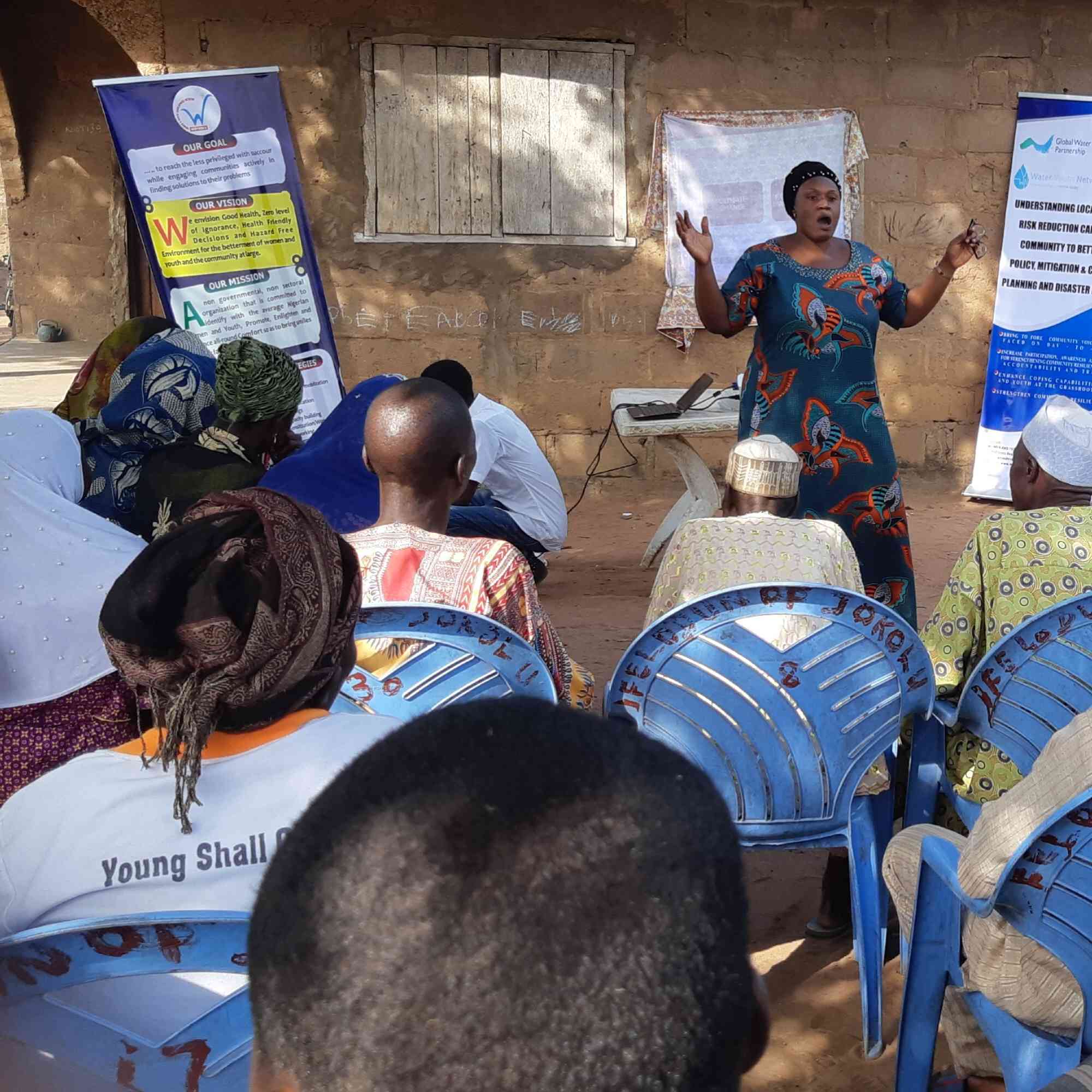
    This is a report that presents the progress made, challenges encountered and recommendations as a result of implementing the commitment for the period 2017-2018. The capacity building project focused on women and young people and had as main topics sustainable agricultural practices as well as resilience building. The project was conducted in the Jokolu community, Moro LGA, Kwara State, Nigeria. Around 3 community sessions were conducted and it is estimated that 1,000 people benefited directly and many more indirectly.
    Strategies used were Focus group discussions, presentation by facilitator and hands-on-training.

    File
    WOYODEV DRR WYN Youth Project report.-1.pdf (198.51 KB)
    Organizations and focal points

    Implementing Organization(s)

    • Women Environment and Youth Development Initiative

    Focal points

    Main focal point
    Victoria Tosin Apiriola (Executive/ Project Director, Women and Youth Development Initiatives)

    Partners

    • Organisation for the Sustenance of the Nigeria Environment

    Explore further

    Sendai priorities
    Priority 1Understanding disaster risk
    Priority 2Strengthening disaster risk governance to manage disaster risk
    Priority 3Investing in disaster risk reduction for resilience
    Priority 4Enhancing disaster preparedness for effective response, and to «Build Back Better», rehabilitation and reconstruction
    Sendai targets and indicators
    A-1 (Compound)Number of deaths and missing persons attributed to disasters, per 100,000 population
    B-1 (Compound)Number of directly affected people attributed to disasters, per 100,000 population
    B-2Number of injured or ill people attributed to disasters
    B-3Number of people whose damaged dwellings were attributed to disasters
    B-4Number of people whose destroyed dwellings were attributed to disasters
    B-5Number of people whose livelihoods were disrupted or destroyed, attributed to disasters
    C-1 (Compound)Direct economic loss attributed to disasters in relation to global gross domestic product
    C-2Direct agricultural loss attributed to disasters
    C-3Direct economic loss to all other damaged or destroyed productive assets attributed to disasters
    C-4Direct economic loss in the housing sector attributed to disasters
    C-5Direct economic loss resulting from damaged or destroyed critical infrastructure attributed to disasters
    C-6Direct economic loss to cultural heritage damaged or destroyed attributed to disasters
    E-1 (Compound)National average score for the adoption and implementation of national disaster risk reduction strategies in line with the Sendai Framework for Disaster Risk Reduction 2015-2030
    E-2 (Compound)Percentage of local governments that have adopted and implemented local disaster risk reduction strategies in line with national strategies
    G-1 (Compound)Number of countries that have multi-hazard early warning systems
    G-2Number of countries that have multi-hazard monitoring and forecasting systems
    G-3Number of people per 100,000 that are covered by early warning information through local governments or through national dissemination mechanisms
    G-4Percentage of local governments having a plan to act on early warnings
    G-5Number of countries that have accessible, understandable, usable and relevant disaster risk information and assessment available to the people at the national and local levels
    G-6Percentage of population exposed to or at risk from disasters protected through pre-emptive evacuation following early warning
    Hazards Drought and Desertification Flood
    Themes Disaster risk communication Capacity development Children and Youth Civil Society/NGOs Climate change Cultural heritage Preparedness Early warning Financing DRR Food security and agriculture Gender Governance Health and health facilities Traditional and Indigenous knowledges Risk identification and assessment Social impacts and social resilience Water
    Country and region Nigeria
    Sustainable Development Goals SDG1: No poverty SDG2: Zero hunger SDG5: Gender equality SDG8: Decent work and economic growth SDG10: Reduced inequalitities SDG11: Sustainable cities and communities SDG12: Responsible consumption and production SDG13: Climate action SDG15: Life on land SDG16: Peace, justice and strong institutions SDG17: Partnerships for the goals
    Budget scale
    USD 5,000 to < 10,000
    Scope
    National (or local) - Nigeria
    Scale of beneficiaries
    1,000 to < 2,000
    Secured budget size
    10%
    Donors
    Global Water Partnership
    Water Youth Network
    X (Twitter)
    http://www.twitter.com/woyodev
    Related links
    Women Environment aand Youth Development Initiative

    Is this page useful?

    Yes No
    Report an issue on this page

    Thank you. If you have 2 minutes, we would benefit from additional feedback (link opens in a new window).

    PreventionWeb is the global knowledge sharing platform for disaster risk reduction (DRR) and resilience.

    • Newsletter
    • Submit your content
    • Blog pitches
    • Submission and publishing policy
    • About PreventionWeb
    • Contact us

    Hazards

    • Avalanche
    • Cold Wave
    • Cyclone, Hurricane and Typhoon
    • Drought and Desertification
    • Earthquake
    • Epidemic and pandemic
    • Flood
    • Heatwave, extreme heat and heat stress
    • Insect infestation
    • Land subsidence
    • Landslide
    • Nuclear, biological, chemical (NBC)
    • Sea level rise
    • Technological hazard
    • Thunderstorm
    • Tornado
    • Tsunami
    • Volcano
    • Wildfire

    Regions

    • Africa
    • Americas
    • Asia
    • Europe
    • Oceania

    Themes

    Understanding & managing risk

    • Preparedness
    • Early warning
    • GIS and mapping
    • Data and information management
    • Risk identification and assessment
    • Small Island Developing States
    • Earth Observation

    Natural environment

    • Climate change
    • Environment and ecosystems
    • Food security and agriculture
    • Water

    Cross-cutting

    • Systemic risk
    • Recovery

    Human development

    • Capacity development
    • Children and youth
    • Civil society / NGOs
    • Community-based DRR
    • Cultural heritage
    • Gender
    • Human mobility
    • Inclusion
    • Social impacts and resilience

    Science, knowledge & advocacy

    • Disaster risk communication
    • Traditional and Indigenous knowledges
    • Science-policy-practice interface

    State, governance & economy

    • Financing DRR
    • Fragility and conflict
    • Governance
    • Insurance and risk transfer
    • Private sector

    Infrastructure & critical services

    • Critical infrastructure
    • Education and school safety
    • Health and health facilities
    • Structural safety
    • Urban risk and planning
    Loading