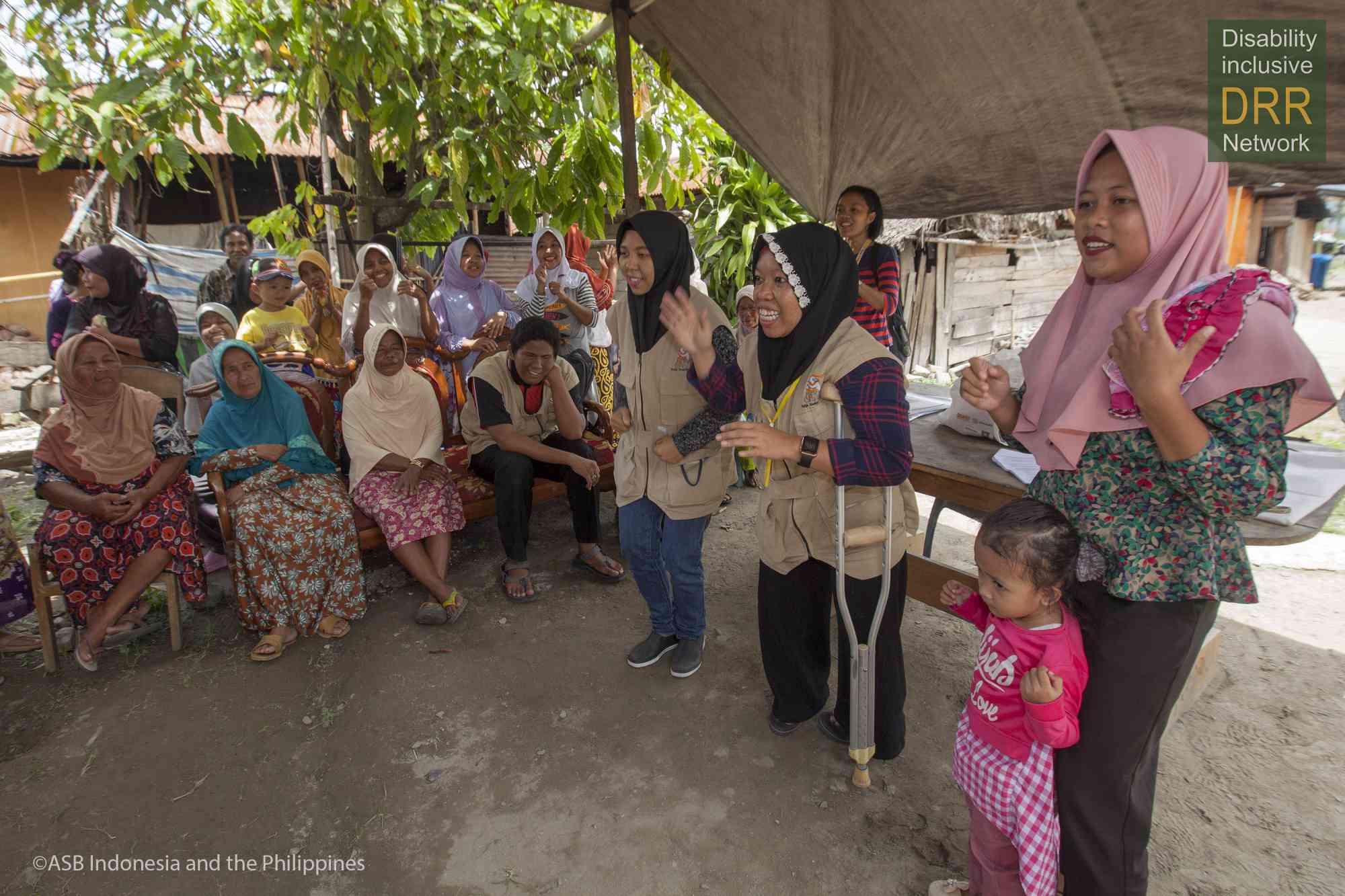
Leadership of persons with disabilities in delivering the Sendai Framework
The Disability-inclusive Disaster Risk Reduction Network (DiDRRN) is committed to reduce the disproportionate risk of persons with disabilities in disaster by ensuring Sendai Framework commitments on disability-inclusion are implemented practically and reflected in regional and national strategies.
Description
The Disability-inclusive Disaster Risk Reduction Network (DiDRRN) is a consortium of like-minded Disabled People’s Organisations (DPOs), disability-focused and ‘mainstream’ DRR/relief organisations. The DiDRRN aims to secure the active participation and meaningful contribution of persons with disabilities in DRR policy and practice in line with respective commitments mentioned in the Sendai Framework for Disaster Risk Reduction. Our mission is based on the evidence that the mortality rate among persons with disabilities during disaster is twice to four times that of the rest of the population (UNESCAP, 2014), and that this is something that can be prevented through disability-inclusive DRR (GFDRR, 2017).
Based on this, we are committed to: (1) Promote leadership of persons with disabilities in inclusive DRR policy and planning development at all levels, (2) Increase active contribution of persons with disabilities and their representing organisations in building community resilience, (3) Equip disability and DRR actors with practical knowledge and skills in delivering inclusive and coordinated disaster preparedness and humanitarian response, and (4) Facilitate multi-sector and multi-level partnerships for inclusive DRR implementation.
This commitment is going to be delivered by DiDRRN members that are working on Disability-inclusive DRR (DiDRR) both at country level and throughout Asia-Pacific region, namely: Arbeiter-Samariter-Bund (ASB), in Indonesia, the Philippines, and Nepal, Christian Blind Mission (CBM) in Bangladesh, Philippines, Nepal, Pakistan and Vietnam, Centre for Disability in Development (CDD) in Bangladesh, Humanity & Inclusion in Philippines and Pakistan, Malteser International in Myanmar, Pacific Disability Forum in Fiji, Vanuatu and Tonga, and South Asian Disability Forum (SADF) in Pakistan. The evidence of DiDRR practices will be collected and shared among countries within the network, and will be disseminated at the regional and global DRR policy and consultation mechanisms.
Did the Sendai Framework change or contribute to changes in your activities/organization? If so, how?
Prior to the Sendai Framework, the DiDRRN has realised the need to engage persons with disabilities in its work and hence has been actively contributing and influencing DRR policies at regional and global level to accommodate this. The result is reflected in the Sendai Framework’s commitment to all-of-society engagement, which then provided a strong foundation for us to continue to support the government and all other relevant stakeholders to ensure the DRR policy and practice are inclusive.
What led you to make this commitment/initiative?
What was your position before making this Voluntary Commitment / prior to the Sendai Framework?
DiDRRN has been an advocate for disability-inclusive DRR since its establishment in 2012, working and collaborating with DRR and disability stakeholders to promote disability inclusive DRR policies and practices at all levels. Since the adoption of Sendai Framework and its landmark commitment to all-of-society engagement, the DiDRRN expands its aim to support broader social inclusion by continuing to work through disability inclusion as the entry point.
Deliverables and Progress report
Deliverables
Deliverables are the end-products of the initiative/commitment, which can include issuance of publications or knowledge products, outcomes of workshops, training programs, videos, links, photographs, etc.
DIDRRN ensured that persons with disabilities and their representing organizations have a strong voice in Regional and Global DRR Platforms such as the sixth session of the Global Platform for Disaster Risk Reduction and the Eighth Africa Regional Platform for Disaster Risk Reduction. In total 133 People with disabilities actively participated in key SFDRR related events / mechanisms at national and regional level.
In Bangladesh, DiDRRN supported the implementation of the 2nd International Conference on Disability and Disaster Risk Management that led to the “Dhaka Declaration”.
Based on national and global policies, regulations and commitments, representation of OPDs in Indonesia have agreed on “five inclusion must” in disaster risk management and humanitarian response (identification, accessibility, meaningful participation, empowerment and rights). A guidebook to implement the five inclusion was developed
DiDRRN implemented activities on capacity building of governmental and civil society DRR actors in several countries. Key achievements:
- 51,642 persons have improved knowledge on inclusive DRR
- 17 OPDs capacitated
- OPDs facilitated 86 DRR trainings
- 8 actionable DiDRR Guidelines created
HI has engaged in the ”EMPOWER project” which provides strong evidence of the impact of the meaningful participation of organizations of women, youth, older persons, and persons with disabilities on local disaster and climate risk governance.
ASB and Nossal Institute conducted a joined gap analysis which provides an understanding of how available evidence leads to better inclusion of people with disability and older people.
ASB and UNDRR have developed a series of disaster preparedness guides for persons with disabilities.
A video has been produced by ASB to promote the broader use of the Washington Group Short Set
DiDRRN has contributed to inclusive COVID-19 responses in various countries
DiDRRN members have made strong links to humanitarian action and been engaged in the development of the IASC Guidelines on Disability Inclusion in Humanitarian Action and are also active members on the Disability Reference Group.
DiDRRN has enhanced exchange and coordination with the International Disability Alliance (IDA) and the Latin-American Network on inclusive DRR.
Safe Hospital Initiatives: Funded by BMZ, the objective of the HI implemented project is to enhance community resilience through disaster preparedness and incident management in hospitals, multi partner coordination and community empowerment ensuring continuous inclusive care for disaster affected population.
In Indonesia, an “Accessibility Toolkit” was developed to guide observation on the accessibility of training facilities and what needs to be improved within the National Disaster Management Agency (BNPB), particularly at the Disaster Management Education and Training Center (Pusdiklat PB) Indonesia.
Through a 1,35mio. € BMZ-funded project, DiDRRN implemented community-based activities on inclusive DRR in Bangladesh, Myanmar, Indonesia and the Fiji between Nov 2017 and Apr 2020. Self-help groups and local OPDs' capacities have been increased to bring them in a position to advocate independently for inclusive DRR programming.
An Inclusive Child-Centered DRR Project was implemented in 5 schools and 5 villages in Quezon City in Philippines led by HI.
With funding from ELRHA, ASB produced a report describing their research on the inclusion of people with disabilities and older people in WASH programming following the Central Sulawesi earthquake in 2018.
In the effort to strengthen the institutionalisation of disability-inclusive DRR into Sub-National Disaster Management (BPBD) in Indonesia, several Disability Service Units have been established in BPBDs.
In 2018, CBM launched a guide for disability-inclusive DRR called "Gaibhana Model" based on experience in Bangladesh.
Porgress report
In the first semester of 2021, the Disability Inclusive Disaster Risk Reduction Network (DiDRRN) members have been continuously widening opportunities for persons with disabilities to contribute and take up leadership roles in the implementation of Sendai Framework for Disaster Risk Reduction (SFDRR) related policy, strategy and plan at the community to global levels. These have been achieved through capacity building, partnership, research and advocacy. We have also been actively promoting the inclusion of persons with disabilities in DRR and humanitarian action while increasing actors and the community’s awareness of the significance of inclusive DRR and humanitarian actions including during the COVID-19 pandemic response.
- 24.072 persons with disabilities received capacity development on inclusive preparedness and humanitarian action
- 84 persons with disabilities actively participated in key SFDRR events at different levels
- 90 OPD members demonstrated the ability to equip communities on building community resilience
- 14 OPDs received facilitation to partner with other organisations/government/CSOs in DiDRR and humanitarian response
- 4 humanitarian responses involved persons with disabilities as active contributors
- 105 persons with disabilities and 165 DRR actors received practical knowledge and skills in delivering inclusive and coordinated disaster preparedness and humanitarian response
- 13 policies and planning established and 2 lesson learns and knowledge products produced to support DiDRR/inclusive response
Organizations and focal points
Implementing Organization(s)
- South Asian Disability Forum
- Pacific Disability Forum
- Arbeiter-Samariter-Bund Indonesia and the Philippines
- Centre for Disability in Development
- CBM International
- Malteser International
- Humanity & Inclusion
Focal points
If a VC's contact information has been hidden, the SFVC team can forward a message.