Honeywell Safe Schools Program
Students learn better when schools are safe, secure, happy and comfortable. In places where daily stresses and disaster risks coincide, a holistic school safety initiative is required. We are committed to ensure children go to school without fear, remain safe in school and return home safely.
Description
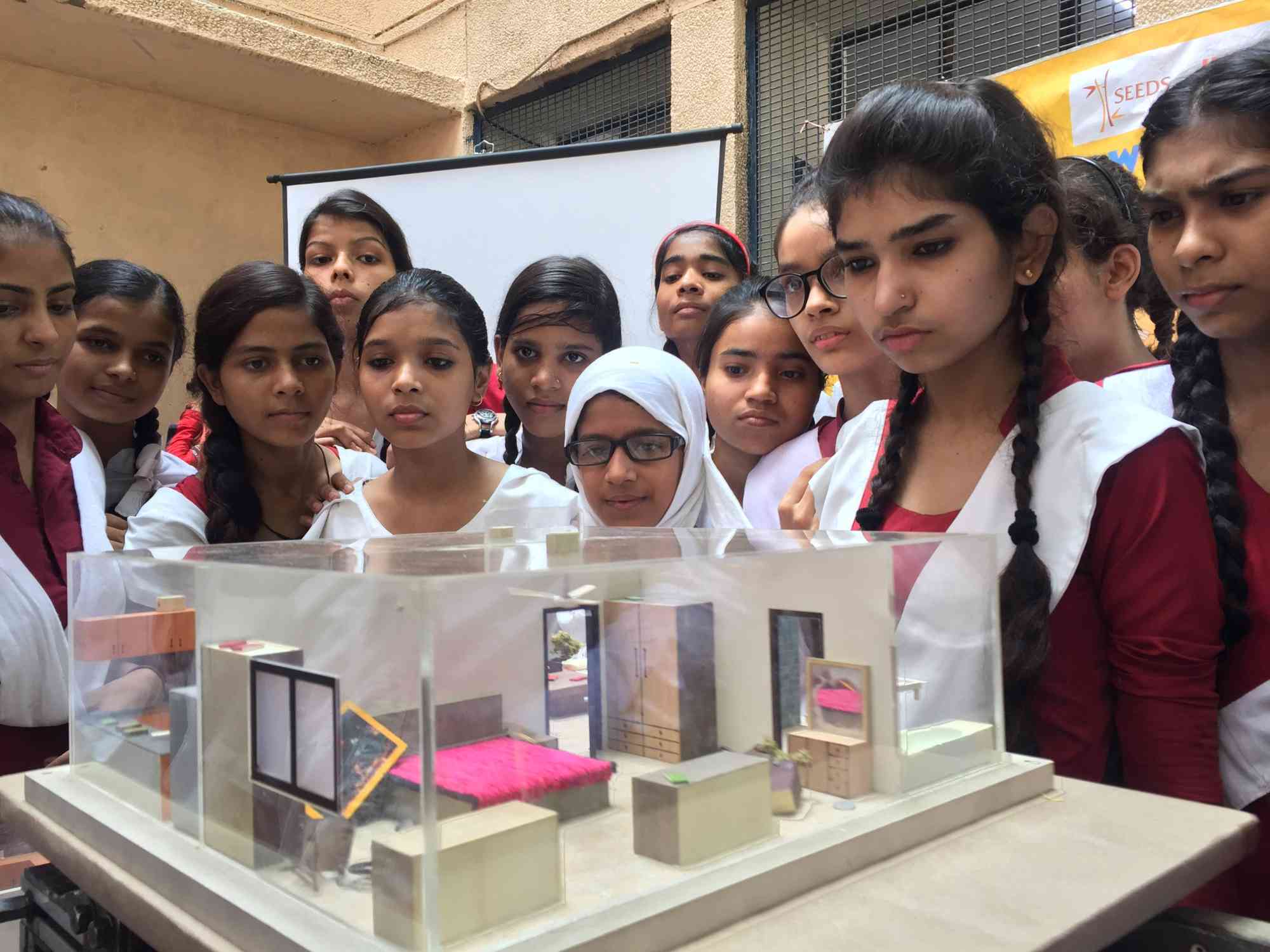
In the Safe Schools program, by Sustainable Environment and Ecological Development Society (SEEDS), a leading not-for-profit organization, are committed to go beyond the confines of the school compound to ensure children go to school without fear, remain safe in school and return home safely. Students learn better when schools are safe, secure, happy and comfortable. In a place where a myriad of daily stresses and disaster risks coincide, a holistic school safety initiative is required.
Safe Schools is a holistic school safety program that is built on SEEDS’ child-first approach to risk reduction. It empowers children to become change agents for building resilience in their communities. Designed to bring a tailor-made approach to each school’s unique challenges, the implementation differed in each of the schools participating in the program. Overall, however, it addresses different facets of safety and security including:
- Developing detailed disaster management plans and early warning systems for each school
- Forming a Disaster Management Committee and getting other key stakeholders involved
- Forming task forces for students to take the lead – on fire safety, first aid, search & rescue, and water, sanitation and hygiene (WaSH).
- Preventing loss from falling hazards: As highly earthquake prone zones, understanding and addressing non-structural mitigation was a key component
- Making the environment of the school more child-friendly through small design changes
- Running campaigns on environmental risks – particularly heat stress and air pollution
- Looking at safety on the road and other risks in the neighbourhood
- Behavioural campaigns on water, sanitation and hygiene
As a result, the programme has already reached more than a 52,000 children, 45,000 parents, and 2,200 teachers across 50 schools in East Delhi. It aims to reach another 31,000 students, 50,000 parents, and 700 teachers across 100 schools in Dehradun and Haridwar districts of Uttarakhand.
Did the Sendai Framework change or contribute to changes in your activities/organization? If so, how?
The Sendai Framework for Disaster Risk Reduction promotes a change from managing disasters to managing risk. It calls for the development of effective global and regional campaigns to promote a culture of disaster prevention, resilience and responsible citizenship. We are motivated by the statement to strengthen “disaster-resilient public and private investments, particularly through structural, non-structural and functional disaster risk prevention and reduction measures in critical facilities, in particular schools and hospitals and physical infrastructures.”
What led you to make this commitment/initiative?
What was your position before making this Voluntary Commitment / prior to the Sendai Framework?
A school is more than a building. It is a place for children to learn, play, to be inspired, and to be safe. Yet in the event a child’s safety is compromised, how well prepared are we? Several schools are located on cities exposed to natural and manmade hazards such as flood, fog, smog, epidemics, and accidents. However, if a major event does not occur in the recent past, there is low recall and awareness among the population on the associated risks. This makes the inhabitants more vulnerable as they are not aware or prepared.
The program integrates both hard and soft components of school safety into a single program. The methodology it uses has been developed and showcased in UN publications as an example of good practices. The inclusive nature of this intervention feeds off of its interactive and participatory approach. Additionally, it also supports children with disabilities. The concept of School Safety Barometer will be introduced , which will keep a record of the progress level in making a school safe, aiding the program in keeping track of the impact it has had.
Deliverables and Progress report
Deliverables
Deliverables are the end-products of the initiative/commitment, which can include issuance of publications or knowledge products, outcomes of workshops, training programs, videos, links, photographs, etc.
SEEDS undertook a baseline study to understand school safety and disaster-preparedness in Delhi, assess risks and risk perception, and determine remedial measures. The baseline study was released on 27th July 2017. It primarily identified potential risks related to natural and man-made disasters, and revealed startling facts about the lack of awareness and involvement from parents:
- Ironically, most parents feared road accidents and bullying, but failed to recognize more serious life-risks from natural disasters such as earthquakes and floods.
- About 60 percent respondents blamed losses during disasters to inadequate response systems, but 99 percent did not know any helpline numbers to these response systems.
- Also in contradiction, while response systems were to blame, lack of community preparedness was not.
This statistic consists of the study with respect to school safety in 51 government schools of East Delhi through a mixed method approach. This method involves collecting and analyzing both quantitative and qualitative data. The calculated questionnaire further helps derive the vulnerability score for the school. The vulnerability score is ranked between 1 to 5 with 1 being the lowest and 5 being the highest risk score. Thus, resulting in gathering a holistic understanding of the risks and preparing a vulnerability scorecard for each of the 51 schools.
Honeywell Safe Schools program with SEEDS achieved a major milestone in the year 2020 with the unveiling of State Government Schools in Dehradun and Hardiwar that have been successfully of restored, repaired, and retrofitted, progressing ahead by maintaining a safe environment for school children. While schools remained shut during the ongoing pandemic, Honeywell and SEEDS focused on making school infrastructure safer for students and teachers when they eventually return.
Organizations and focal points
Implementing Organization(s)
Focal points