My account
Menu
Your experience on PreventionWeb

Please help us improve PreventionWeb by taking this brief survey. Your input will allow us to better serve the needs of the DRR community.

See the survey

Published on
26 August 2020
Status
Completed

Building Community Resilience through Community-Based Disaster Risk Management

Expected duration
Jan 2018 - Dec 2020
SFVC commitment ID
20190228_002
Version
5.0
Author
Christopher Ball
Upload your content

To enable local civil society organisations (CSOs) and faith-based organisations (FBOs) to strengthen communities and local systems for resilience to disasters, in coordination with other actors and sectors

    Description

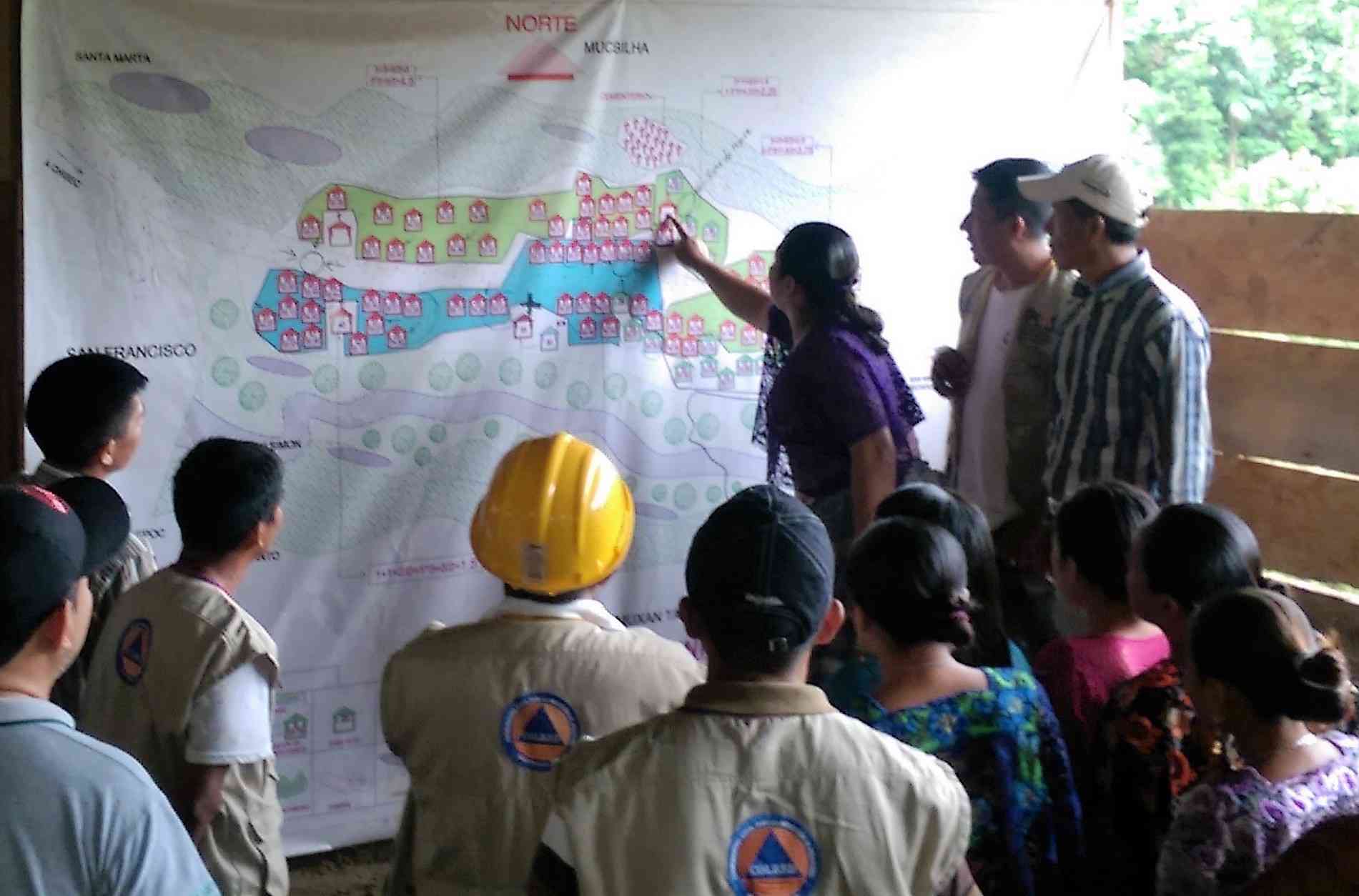
    Provision of support via local civil society and faith-based partner organisations building community resilience through Community-based Disaster Risk Management (CBDRM) approaches. This includes empowering marginalised and vulnerable groups and improving institutional systems to enable and foster collaborative engagement in the development, communication and implementation of community and local 'disaster risk management' plans. This includes support for establishing measures, capacities and systems for improved resilience to disasters. Across all countries support is provided to establish community committees where needed or to strengthen existing structures where they exist to build their capacity to raise their voice and advocate for policies and laws supporting their resilience to disasters, shocks and stresses. In countries where resource gaps have been identified practitioner manuals will be develop and learning documented and communicated. This initiative works in collaboration with other local actors from different sectors, local authorities and national level institutions with responsibilities relating to disaster risk management, adaptation and resilience.

    Did the Sendai Framework change or contribute to changes in your activities/organization? If so, how?

    The HFA framework accompanied the establishment of DRR as a pillar within our institutional programming. Along with the Sendai process we have adjusted our approach to apply more resilience and systems thinking to disasters, shocks and stresses. Additional motivation comes from the fact that one of the guiding principles of the Sendai Framework requires an all-of-society engagement and partnerships for disaster risk reduction. This inclusive approach should be reflected across mechanisms and institutions for the implementation of instruments relevant to building resilience for all. The Sendai Framework also encourages better articulation of responsibilities as well as the involvement and empowerment of local actors.

    What led you to make this commitment/initiative?

    What was your position before making this Voluntary Commitment / prior to the Sendai Framework?

    To communicate the interventions of Diakonie Katastrophenhilfe and those of our national and local civil society and faith-based partners - with the intention of fostering collaborative partnerships.

    Deliverables and Progress report

    Deliverables

    Deliverables are the end-products of the initiative/commitment, which can include issuance of publications or knowledge products, outcomes of workshops, training programs, videos, links, photographs, etc.

    Development of a CBDRM manual for practitioners
    Intended date of delivery
    31 December 2019

    Community-Based Disaster Risk Management Manual (comprising of 5 modules) - Spanish, Guatemala

    Link
    https://drive.google.com/open?id=1A_o6OveaLgNHgoITqmDlclMKYLjyAZxc
    Documentation of lessons learnt
    Intended date of delivery
    31 December 2019

    Publication documenting CBDRM good practices and lessons learnt - English, Guatemala

    Link
    https://drive.google.com/open?id=1Aa7vCxXEeTB0ejsrAv54O4y1l4JBfIFZ
    Establishment of 100 sustainable Community Disaster Risk Management Committees
    Intended date of delivery
    31 December 2020

    Community 'DRM' Committees established having received training according to (locally) established CBDRM components and standards to enable them to reach a growth stage of maturity towards building resilience capacity for disasters, shocks and stresses. Minimum number of committees per country: Afghanistan (16), Chad (20) Pakistan (61), Guatemala (17). The establishment of committees will be demonstrated by providing documentation with details of the committees with either links to website pages featuring committee information, hyperlinks to reports, news releases, memorandum of creation, or other supporting documentation.

    Porgress report

    Progress date
    1 August 2020
    Summary

    Deliverable 1: CBDRM manual produced - all modules finalised and published in January 2020. Deliverable 2: CBDRM lessons learnt document produced - Spanish & English versions of the document published in January 2020. Deliverable 3: Establishment of 100 sustainable Community DRM Committees: 104 committees established to date.

    Achievements at a glance

    All planned activities are ongoing as planned. Deliverable 3 on establishment of Community DRM Committees will be exceeded.

    Supporting documents
    DKH SFVC Deliverables Report - Consolidated 21.08.20.pdf (186.07 KB)
    Organizations and focal points

    Implementing Organization(s)

    • Help in Need
    • Society for Human & Natural Resource Development
    • Afghan Development Association
    • Lutheran World Federation Chad
    • Asociación de Servicios Comunitarios de Salud
    • Agency for Humanitarian and Development Assistance for Afghanistan

    Focal points
    Main focal point
    Christopher Ball (Director / Consultant, Bounce Back Resilience)

    Explore further

    Sendai priorities
    Priority 2Strengthening disaster risk governance to manage disaster risk
    Priority 3Investing in disaster risk reduction for resilience
    Sendai targets and indicators
    A-2Number of deaths attributed to disasters, per 100,000 population
    B-1 (Compound)Number of directly affected people attributed to disasters, per 100,000 population
    C-3Direct economic loss to all other damaged or destroyed productive assets attributed to disasters
    E-2 (Compound)Percentage of local governments that have adopted and implemented local disaster risk reduction strategies in line with national strategies
    G-6Percentage of population exposed to or at risk from disasters protected through pre-emptive evacuation following early warning
    Hazards Cyclone, Hurricane and Typhoon Drought and Desertification Earthquake Flood Landslide Volcano
    Themes Disaster risk communication Capacity development Children and Youth Civil Society/NGOs Climate change Community-based DRR Preparedness Early warning Environment and ecosystems Food security and agriculture Gender Governance Traditional and Indigenous knowledges Risk identification and assessment Social impacts and social resilience
    Country and region Chad Guatemala Afghanistan Pakistan
    Sustainable Development Goals SDG2: Zero hunger SDG5: Gender equality SDG6: Clean water and sanitation SDG10: Reduced inequalitities SDG13: Climate action SDG16: Peace, justice and strong institutions SDG17: Partnerships for the goals
    Budget scale
    USD 1 million to < 5 million
    Scope
    National (or local) - Chad, Guatemala, Afghanistan, Pakistan
    Scale of beneficiaries
    5,000 to < 10,000
    Secured budget size
    70%

    Is this page useful?

    Yes No
    Report an issue on this page

    Thank you. If you have 2 minutes, we would benefit from additional feedback (link opens in a new window).

    PreventionWeb is the global knowledge sharing platform for disaster risk reduction (DRR) and resilience.

    • Newsletter
    • Submit your content
    • Blog pitches
    • Submission and publishing policy
    • About PreventionWeb
    • Contact us

    Hazards

    • Avalanche
    • Cold Wave
    • Cyclone, Hurricane and Typhoon
    • Drought and Desertification
    • Earthquake
    • Epidemic and pandemic
    • Flood
    • Heatwave, extreme heat and heat stress
    • Insect infestation
    • Land subsidence
    • Landslide
    • Nuclear, biological, chemical (NBC)
    • Sea level rise
    • Technological hazard
    • Thunderstorm
    • Tornado
    • Tsunami
    • Volcano
    • Wildfire

    Regions

    • Africa
    • Americas
    • Asia
    • Europe
    • Oceania

    Themes

    Understanding & managing risk

    • Preparedness
    • Early warning
    • GIS and mapping
    • Data and information management
    • Risk identification and assessment
    • Small Island Developing States
    • Earth Observation

    Natural environment

    • Climate change
    • Environment and ecosystems
    • Food security and agriculture
    • Water

    Cross-cutting

    • Systemic risk
    • Recovery

    Human development

    • Capacity development
    • Children and youth
    • Civil society / NGOs
    • Community-based DRR
    • Cultural heritage
    • Gender
    • Human mobility
    • Inclusion
    • Social impacts and resilience

    Science, knowledge & advocacy

    • Disaster risk communication
    • Traditional and Indigenous knowledges
    • Science-policy-practice interface

    State, governance & economy

    • Financing DRR
    • Fragility and conflict
    • Governance
    • Insurance and risk transfer
    • Private sector

    Infrastructure & critical services

    • Critical infrastructure
    • Education and school safety
    • Health and health facilities
    • Structural safety
    • Urban risk and planning
    Loading