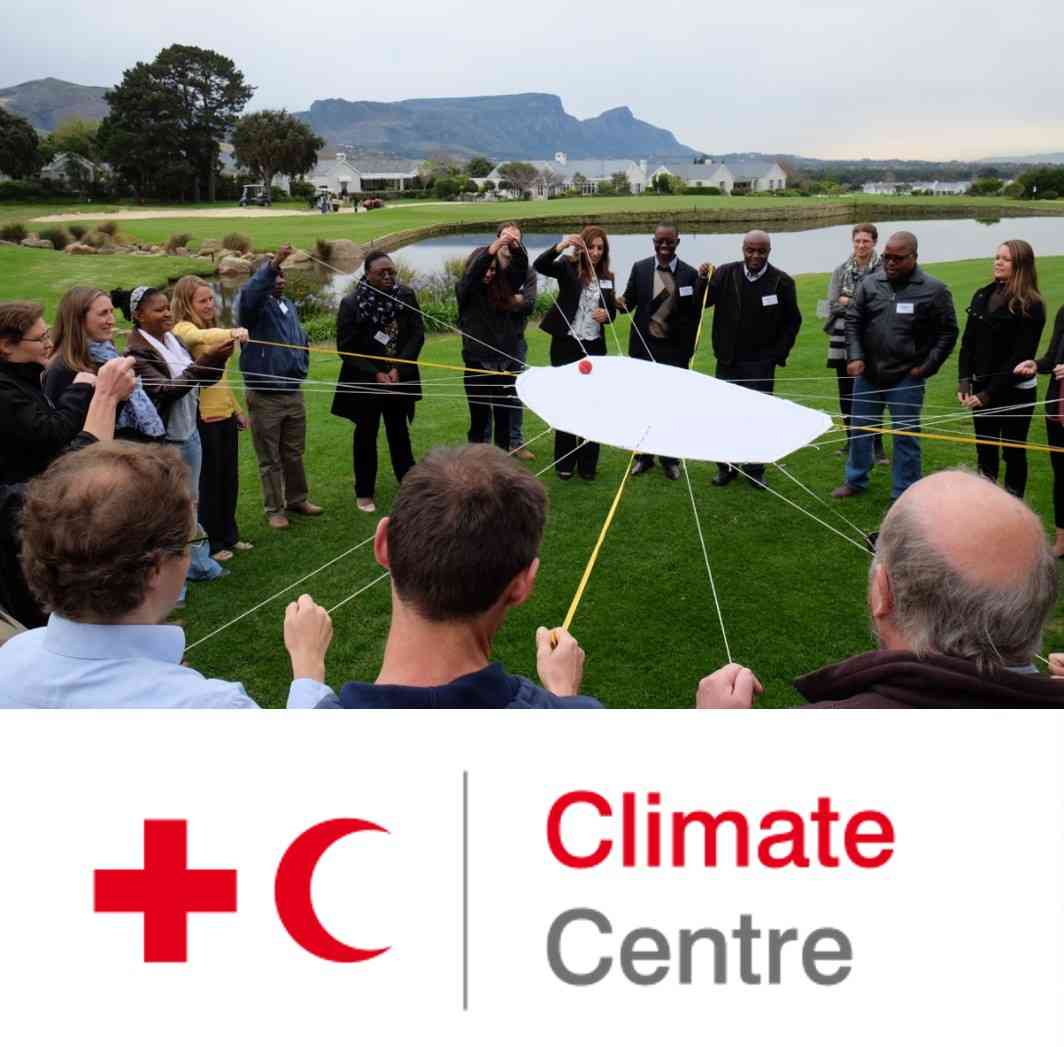
Using Games for Raising Climate, Disaster Risk Reduction and Gender Awareness
For this initiative, the Climate Centre and its partners have the goal of designing games about disaster preparedness and other humanitarian issues. Games can support the development of better governance and disaster risk management systems.
Description
The Climate Centre’s mission is to help the Red Cross and Red Crescent Movement and its partners reduce the impacts of climate change and extreme-weather events on vulnerable people. Games are a fun but serious way of helping humanity tackle the complexities, volatilities and uncertainties that could be hallmarks of the “new normal” for the global climate. It is well known that climate change is closely connected to disaster risk reduction. Increases in the frequency and intensity of extreme weather events are also likely to increase the number and magnitude of disasters. Likewise, better disaster risk management can enhance capacities for adaptation to climate change.
Games are helpful for fostering learning and dialogue. Games encourage active learning and active engagement in dialogues. Games allow people to simplify complex systems. In games, one has to take decisions and receive feedback on the result of that decision. Games provide opportunity for reflection, discovery, exploration and challenge. Last, but not least, games are fun! Considering that emotions matter in learning - this is also a serious goal.
In recent years the Climate Centre and its partners have designed at least 45 games about humanitarian issues like disaster preparedness, gender, food security, health, migration. Across five continents, Red Cross Red Crescent volunteers, goverment officials, farmers, schoolchildren, meteorologists, students and climate-policy negotiators have used our games.
Did the Sendai Framework change or contribute to changes in your activities/organization? If so, how?
The Sendai Framework changed the focus form disaster management to risk management. A key component for this is building the knowledge of government officials at all levels, civil society, communities and volunteers, as well as the private sector, through sharing experiences, lessons learned, good practices and training and education on disaster risk reduction, including the use of existing training and education mechanisms and peer learning. The work of the Climate Centre on games is strongly aligned with this call by the Sendai Framework.
What led you to make this commitment/initiative?
What was your position before making this Voluntary Commitment / prior to the Sendai Framework?
Changes happen at the speed of trust. Unfortunately, today’s governance systems are less successful than they could be in engendering this trust. This is particularly true in the realm of climate change where threats are rising more quickly than our collective ability to understand and address their causes and consequences.
Part of the problem is how we interact. Traditional meeting formats dominate, a sequence of presentations with few opportunity for questions. Unidirectional statements dominate, establishing an atmosphere of ‘more of the same’ and rarely leading to transformation in ideas and positions. To help participants meaningfully rethink the future and their role in it, a new approach is needed.
Games offer a promising option. Virtual or involving face-to-face interaction, games that capture the essence of real-world systems allow for safe and rich explorations of how those systems could be changed. They compress space and time and offer an embodied experience of the tensions that dominate global governance challenges – ‘now versus later’, ‘certainly versus probably’, ‘me versus us versus them’.
Deliverables and Progress report
Deliverables
Deliverables are the end-products of the initiative/commitment, which can include issuance of publications or knowledge products, outcomes of workshops, training programs, videos, links, photographs, etc.
Games with an underlying serious purpose can speed up learning, dialogue and action on climate risks, engaging people’s minds and emotions, in sharp contrast to unidirectional learning through traditional lectures and PowerPoint presentations. Learn how with this working paper, the first in our series.
Humanitarian and development practitioners are confronting an irrefutable challenge: the past no longer elucidates the future. This book explores how we can accelerate learning and dialogue for climate-compatible development in a changing world among very diverse stakeholders.
This detailed look at best practice for using games in disaster risk reduction, using the example of Ready! in Namibia, documents what’s been learned by humanitarian organisations, designers, and practitioners interested in the potential of games.
“Decisions for the Decade” is an intensely interactive game designed to support learning and dialogue about key aspects of long-term investments under uncertainty.
Learning objectives:
- Planning for extremes, experiencing climate change impacts, cooperation to better manage risk.
This paper examines the role of games in improving communication and spurring learning, and improving decision-making capacity about climate risk management amongst diverse stakeholers. Among other aspects, it discusses challenges associated with communicating the concept of loss and damage and the implications post-2015.
This physical participatory activity aims to support experiential learning and dialogue on the concept of 'resilience'. Players become subsistence farmers and face changing risks.
Learning objectives:
- Communication skills, decision making under uncertainty, role of donors in humanitarian and development work.
Invest in the Future is an interactive game played with cards. It combines story-telling and strategy to engage players in thinking about the importance of taking Climate Change into consideration as they strive to make responsible, sustainable development investment decisions.
Learning objectives:
- Climate change is happening and the rising generation will need to understand how to make resilient development decisions in order to build the future with well-being for all.
Two teams test their ability to respond to a crisis using existing opportunities. This game also explores decision making under pressure and dealing with complexity.
Learning objectives:
- To explore thinking and decision making under pressure. To explore communication with decision makers under pressure.
The aim of SURE! is to better protect urban people, services and buildings from flood risk.
Learning objectives:
This game aims to support community groups to engage in focused conversations about planning and collaboration to better prepare for floods.
The results of an evaluation of the effectiveness of a game-based handwashing curriculum to generate learning and behavior change.
A giant board game during which the 'community team'has to prioritise vulnerable community resources and take collective or individual actions to protect them from the 'hazard team'.
Learning objectives:
- To experience the impacts of climate change; to explore how different community resources are vulnerable to different types of extreme weather and hazards and what you can do individually or in groups to address this.
Before the Storm is a decision-making game designed to introduce the weather forecasts and possible actions to take against natural disasters through different roles. The object of the game is to win the most rounds by playing an action card from one's hand to best "match" that round's communal forecast card as chosen by that round's judging player.
Learning objectives:
- Players learn about weather forecasts, making appropriate decisions for different lead times and encourages players to argue their choice.
An energetic, physical game in which participants simulate the greenhouse effect, becoming either heat from the sun or greenhouse gases.
Learning objectives:
- To learn about the greenhouse effect. To learn that human activities which release greenhouse gases have amplified the greenhouse effect over the last century. To learn that this has resulted in global warming and climate change, exacerbating hazards and impacts across the world.
In this participatory activity, players become humanitarian workers, who are facing changing risks. They must make individual and collective decisions, with consequences.
Learning objectives:
- To experience the impacts of climate change, to understand the value of forecasts and to enhance the understanding of climate smart disaster risk reduction.
This quick game explores thinking patterns on a certain topic in a dynamic way with a partner and can be used to dynamically explore associations with a certain topic or process.
Learning objectives:
- To energise, activiate people's brain power and create a sense of bonding
- To learn from each other what topic others associate with a certain topic
During this energetic, physical ball game, participants become farmers who juggle various priorities.
Learning objectives:
- To energise the participants and reflect on making decisions under stress while handling unexpected tasks.
During this game players are presented with a probabilistic forecast, for example: there is 40% chance that there will be drier than average conditions. Players have to make decisions based on this information and will see the consequences of their decisions.
Learning objectives:
- To explore making decisions under uncertainty
- To explore the use and limitations of seasonal forecasts
This paper reviews serious games/simulations addressing issues related to disaster risk management (DRM) and serving as educational and engagement tools for affected communities, policy-makers, and other stakeholders. Building on earlier research in collecting and classifying serious games, we provide an objective and thorough overview of 45 non-commercial digital and analog gaming activities related to DRM, analyzing their characteristics, target groups, portrayed hazards, and possible DRM skills development. Moreover, realizing the need for a more reliable and scientific approach to testing serious games’ effectiveness in contributing to DRM, we explore the categories of objectives of existing activities, and collect qualitative and quantitative evidence (players’ feedback, quantitative surveys, scientific articles on the analyzed games etc.) supporting their assessment.
The Social Protection Juggle is a dynamic exercise that can be used to introduce how social protection systems can support people’s capacities to become more climate resilient.
To energise the group; to introduce social protection in a simple and accessible way.
“Decisions for the Seasons” is an intensely interactive game designed to support learning and dialogue about key aspects of long-term investments under uncertainty, with a special focus on financial preparedness needs
Learning objectives:
- Planning for extremes, experiencing climate change impacts, cooperation to better manage risk.
In this participatory activity, players become subsistence farmers, who face changing risks and government officers. Players must make individual and collective decisions, with consequences.
Learning objectives are to explore how:
- Regular cash transfer protects people from the impoverishing impacts of climate shocks
- Cash transfers allow people to invest in more resilient livelihoods
- Investing in social protection systems is in the long-run more cost-effective and can increase the speed of humanitarian response
‘Ready’ was developed as an innovative way to have focused conversations with communities around location-specific disaster preparedness and disaster risk reduction. ‘Ready’ is a physical game that can be played using any disaster scenario, and is most effective using a realistic scenario for the participants.
Learning objectives:
- ‘Ready’ Explore localised disaster preparedness and prioritisation while working in a team. With the extended debriefing and follow-up planning a good community "early warning - early action" contingency plan be generated.
In this document, you may find general facilitation tips.
For training support, we can organise Training of Trainer sessions.
Please find an example in the link below of a tried and tested 3 day agenda. We can adapt the agenda to cater to specific needs.
Organizations and focal points
Implementing Organization(s)
Focal points
If a VC's contact information has been hidden, the SFVC team can forward a message.Partners