My account
Menu
Your experience on PreventionWeb

Please help us improve PreventionWeb by taking this brief survey. Your input will allow us to better serve the needs of the DRR community.

See the survey

Published on
31 October 2022
Status
Completed

Resiliency Improvement, Support, and Education for Seafarer Communities and Enterprises in the Philippines (RISE)

Expected duration
Aug 2020 - Dec 2023
SFVC commitment ID
20221031_002
Version
3
Upload your content

Project RISE is a pioneer initiative of Philippine Transmarine Carriers, Inc. with the aim of building resilience among seafarer communities in the Philippines.

    Description

    Project RISE is a pioneer initiative of Philippine Transmarine Carriers (PTC) and its partners aiming to develop and implement disaster preparedness programs for model seafarer communities in the Philippines that can be replicated nationally, and to harness seafarer / global maritime professionals' experience and expertise in safety and disaster preparedness with the aim of building resilience among vulnerable seafarer communities in the Philippines.

    The communities selected have different risk profiles that expose them to various hazards brought by geology and exacerbated by climate change. Most communities have an active disaster risk management structure but are mostly focused on response. The project could complement existing community strategies by engaging private maritime professional volunteers and providing capacity building programs for barangay level disaster managers and responders.

    The project offers technical expertise from professionals in formulating their Disaster Risk Reduction and Resiliency (DRRR) capacity building program, provision of supplementary disaster risk reduction equipment (gears, apparels, etc.), and forging partnerships with the local government units. This will improve capacities for disaster preparedness on the community and barangay level, increase private-sector supported initiatives of the local government units to help build disaster resilience, and capacitate community leaders and residents with significant understanding and application of disaster preparedness and resiliency.

    Did the Sendai Framework change or contribute to changes in your activities/organization? If so, how?

    This activity both contributes to and is guided by the Sendai Framework for Disaster Risk Reduction to build community resilience supporting priority 1: understanding disaster risk and priority 2: strengthening disaster risk governance.

    It is also among one of the good practices submitted to ARISE, the Private Sector Alliance for Disaster the Private Sector Alliance for Disaster Resilient Societies, that raises awareness and shares knowledge with regards to disaster risk reduction and mobilization of the private sector.

    What led you to make this commitment/initiative?

    What was your position before making this Voluntary Commitment / prior to the Sendai Framework?

    PTC Project RISE is a pioneer program of the maritime industry to build disaster resilience in seafarer communities through seafarer volunteerism and community participation as experts in the field of safety of life at sea and disaster preparedness. Led by Philippine Transmarine Carriers, Inc., a leader in maritime industry, PTC Project RISE works with various sectors, organizations and local governments to advocate resilience and disaster preparedness to Philippine communities.

    Long-term impact expected are better resilience capacities for communities in times of hazards, stronger partnerships with the local government units, and spirit of volunteerism among maritime professionals in their communities.

    Deliverables and Progress report

    Deliverables

    Deliverables are the end-products of the initiative/commitment, which can include issuance of publications or knowledge products, outcomes of workshops, training programs, videos, links, photographs, etc.

    Disaster Preparedness Plans, Training Assessment and Orientation
    Intended date of delivery
    1 September 2022

    Development of plans to facilitate and implement Project RISE components in selected cities to capacitate their residents and communities. Assessment to determine the training needs of selected cities to ensure relevance and impact. Orientation with government officials and relevant stakeholders to garner support and ensure sustainability and impact.

    File
    Orientation for the Iloilo City Disaster Risk Reduction and Management Office (405.27 KB)
    Master Training Programs
    Intended date of delivery
    1 October 2022

    The MTP is a component of Project RISE that comprehensively and extensively trains its participants on Disaster Preparedness and Resiliency, after which they will be certified as Master Trainers who would be training their community members as part of the Citizen Training Program (CTP).

    File
    Master Trainer Program with 6 ACM Homes Communities in Imus and General Trias (411.23 KB)
    Citizen Training Program
    Intended date of delivery
    1 December 2022

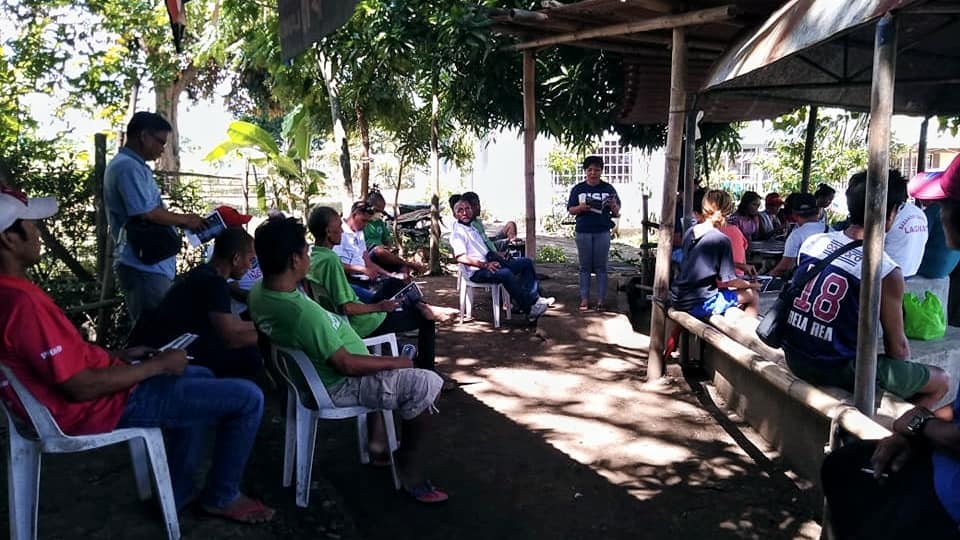
    The CTP is a Project RISE component where a certified Master Trainer who underwent the Master Trainer Program (MTP) will train at least 15 individuals on disaster preparedness and resiliency.
    File
    Balayan Citizen Training Program (89.24 KB)
    Organizations and focal points

    Implementing Organization(s)

    • Philippine Transmarine Carriers, Inc.
    • Philippine Transmarine Carriers Holdings Corp.

    Focal points

    If a VC's contact information has been hidden, the SFVC team can forward a message.
    Explore further

    Sendai priorities
    Priority 1Understanding disaster risk
    Priority 2Strengthening disaster risk governance to manage disaster risk
    Sendai targets and indicators
    A-1 (Compound)Number of deaths and missing persons attributed to disasters, per 100,000 population
    B-1 (Compound)Number of directly affected people attributed to disasters, per 100,000 population
    G-4Percentage of local governments having a plan to act on early warnings
    Hazards Avalanche Cyclone, Hurricane and Typhoon Drought and Desertification Earthquake Epidemic and Pandemic Flood Heatwave and Extreme Heat Landslide Storm surge Tornado Tsunami Volcano Wildfire
    Themes Disaster risk communication Capacity development Civil Society/NGOs Climate change Community-based DRR Preparedness Social impacts and social resilience Urban risk and planning
    Country and region Philippines
    Sustainable Development Goals SDG10: Reduced inequalitities SDG11: Sustainable cities and communities SDG13: Climate action SDG17: Partnerships for the goals
    Scope
    National (or local) - Philippines
    Scale of beneficiaries
    5,000 to < 10,000
    Secured budget size
    80%
    Umbrella initiative(s)
    UNDRR Private Sector Alliance for Disaster Resilient Societies (ARISE); ARISE: Cross-cutting - Awareness raising and education; ARISE: Cross-cutting - Training, capacity development and promotion for/of ARISE
    Related links
    Project RISE Facebook
    Philippine Transmarine Carriers, Inc. Website

    Is this page useful?

    Yes No
    Report an issue on this page

    Thank you. If you have 2 minutes, we would benefit from additional feedback (link opens in a new window).

    PreventionWeb is the global knowledge sharing platform for disaster risk reduction (DRR) and resilience.

    • Newsletter
    • Submit your content
    • Blog pitches
    • Submission and publishing policy
    • About PreventionWeb
    • Contact us

    Hazards

    • Avalanche
    • Cold Wave
    • Cyclone, Hurricane and Typhoon
    • Drought and Desertification
    • Earthquake
    • Epidemic and pandemic
    • Flood
    • Heatwave, extreme heat and heat stress
    • Insect infestation
    • Land subsidence
    • Landslide
    • Nuclear, biological, chemical (NBC)
    • Sea level rise
    • Technological hazard
    • Thunderstorm
    • Tornado
    • Tsunami
    • Volcano
    • Wildfire

    Regions

    • Africa
    • Americas
    • Asia
    • Europe
    • Oceania

    Themes

    Understanding & managing risk

    • Preparedness
    • Early warning
    • GIS and mapping
    • Data and information management
    • Risk identification and assessment
    • Small Island Developing States
    • Earth Observation

    Natural environment

    • Climate change
    • Environment and ecosystems
    • Food security and agriculture
    • Water

    Cross-cutting

    • Systemic risk
    • Recovery

    Human development

    • Capacity development
    • Children and youth
    • Civil society / NGOs
    • Community-based DRR
    • Cultural heritage
    • Gender
    • Human mobility
    • Inclusion
    • Social impacts and resilience

    Science, knowledge & advocacy

    • Disaster risk communication
    • Traditional and Indigenous knowledges
    • Science-policy-practice interface

    State, governance & economy

    • Financing DRR
    • Fragility and conflict
    • Governance
    • Insurance and risk transfer
    • Private sector

    Infrastructure & critical services

    • Critical infrastructure
    • Education and school safety
    • Health and health facilities
    • Structural safety
    • Urban risk and planning
    Loading