Glacier-related disaster risk reduction: Enhancing resilience from mountains to valleys
This article is based on an Ignite Stage presentation at the 2025 Global Platform for Disaster Risk Reduction. The Ignite Stage offers fast-paced, impactful talks from diverse voices working at the forefront of disaster risk reduction.
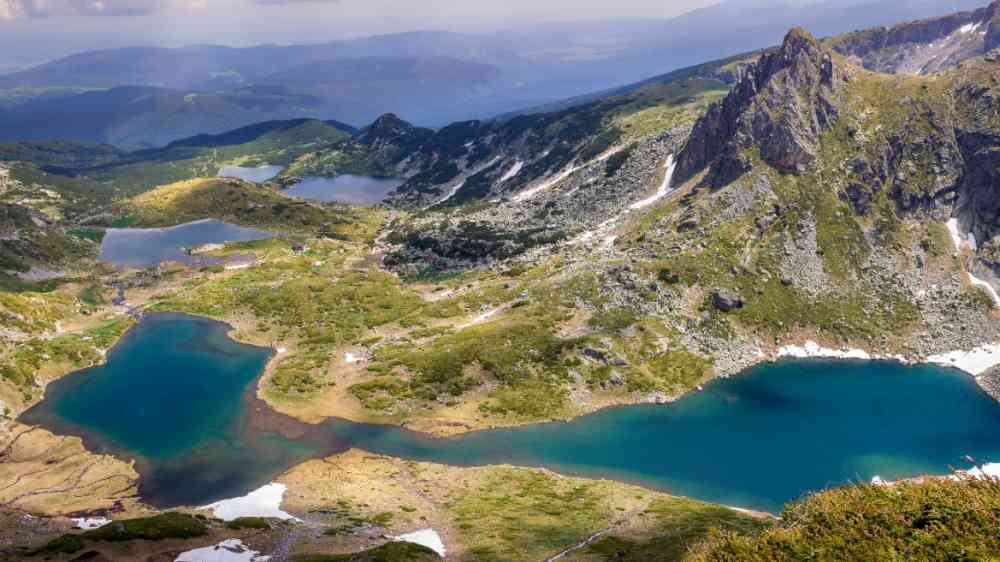
Glacial lake outburst floods (GLOFs) occur when glacial lakes suddenly drain, water bursting through its confines and rapidly rushing towards their surroundings. With a growing number of glacial lakes around the world due to melting glaciers, GLOFs have become a major hazard, with 15 million people exposed to this risk in the face of climate change.
What makes GLOFs an important topic?
Glacial lakes form when moraines (deposits of debris left by glaciers), ice or rocks create dams that hold back meltwater. When these natural dams fail - triggered, for example, by ice or rock avalanches, or the collapse of moraines due to excessive lake water, melting or earthquakes - the resulting GLOFs can cause severe disasters. Such events have occurred in various regions, including the Alps, Andes and Himalayas. These major hazards can devastate communities and infrastructure, and pose a severe and deadly threat to nearby populations.
Risks from GLOFs are expected to increase as new lakes form from melting and rapidly retreating glaciers due to climate change. The number of glacial lakes has increased by 53 per cent since 1990 and, coupled with the growing downstream populations, communities and infrastructure have become further exposed to potential risks.
As climate change impacts intensify in conjunction with this development, GLOFs may leave even more communities and infrastructure at risk of dangerous outbursts. GLOF-related disasters, such as those in the Indian Himalayas in 2013 (Uttarakhand) and 2023 (Sikkim), have shown the potentially devastating economic impacts of this hazard on the tourism and energy sectors.
How can we effectively manage the risks from GLOFs?
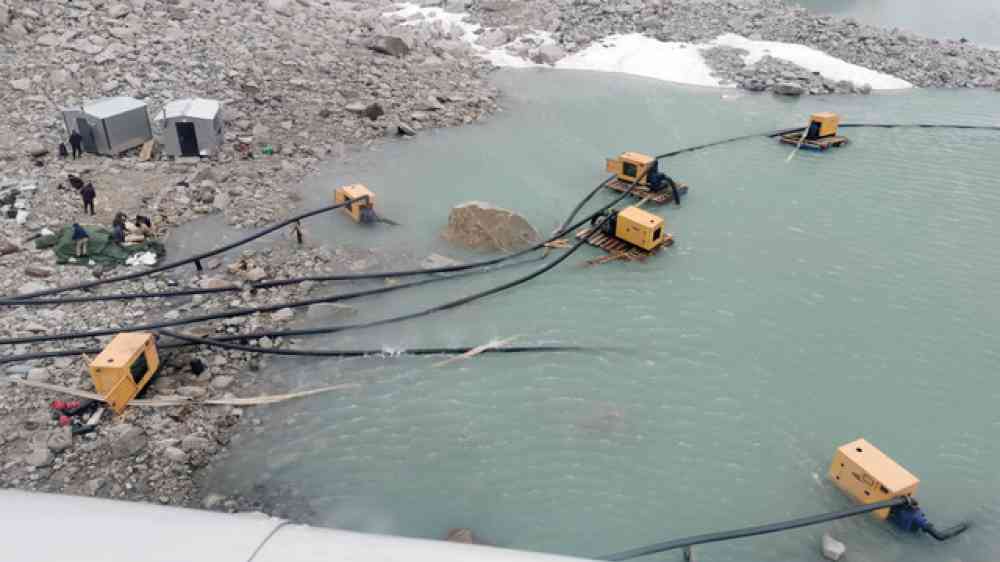
Various strategies are already being implemented to protect communities and infrastructure from GLOFs, such as lowering water levels and developing early warning systems.
The Adaptation at Altitude programme, and the Universities of Geneva and Zurich, have developed a series of solutions and recommendations selected from a global review of 100 GLOF risk management solutions to address glacier-related risks.
Various case studies show that GLOF risk reduction must be part of an integrated, multi-hazard management approach that considers cascading hazards and their impacts, and that successful strategies will depend on strong coordination, stable governance, and the incorporation of local culture, socioeconomic contexts, and community knowledge and perceptions.
For instance, a pilot project in northern Pakistan aims to reduce climate change-induced risks of GLOFs in the Gilgit-Baltistan and Chitral districts through a combination of short- and long-term solutions. Recognizing that no solution is effective on its own, the GLOF risk reduction strategy applied in this project required solutions that not only address the hazard itself, but also reduce exposure and vulnerability.
Another project which is implemented in Bhutan, NAPA II, is integrated with the UNDRR multi-hazard and people-centred approach. It incorporates GLOF risk reduction within a comprehensive multi-hazard management framework that acknowledges the potential for cascading hazards and their impacts. Its primary goal is to enhance the capacities of national, local and community stakeholders to prepare for and respond to various climate-induced hazards.
The Community-Based Flood and Glacial Lake Outburst Risk Reduction project in Nepal puts the local culture and socioeconomic context, knowledge and perception at the centre of GLOF risk reduction. This study demonstrates that top-down approaches and inadequate stakeholder coordination and cooperation weaken the local sense of ownership and responsibility required for effective and long-term sustainable GLOF risk management. On the other hand, it also shows that meaningful engagement with local communities begins with the generation of risk knowledge, and continues through the design of GLOF disaster risk management measures that address local needs and expectations.
We conclude emphasizing that, even with available solutions, some remaining GLOF risks require insurance or financial support. Innovative and flexible solutions are needed for confident and secure investment in our global mountain regions. However, the development of appropriate risk transfer mechanisms in GLOF risk management is still an emerging field.
To learn more about the solutions listed in this blog, visit the Adaptation at Altitude Solutions Portal and download the brochure Managing risks from glacial lake outburst floods.
Alex Mackey is a Project Manager at Zoï Environment Network, working on analysis and communication on topics such as climate change adaptation, sustainable mountain development, and chemicals and waste management. Her work at Zoï entails global policy mainstreaming, research, and communicating complex environmental topics to different audiences. Zoï Environment Network is a partner of Adaptation at Altitude, a collaborative programme launched and co-supported by the Swiss Agency for Development and Cooperation, focusing on increasing the resilience and adaptive capacity of mountain communities and ecosystems to climate change around the world. The programme fosters dialogue and knowledge sharing among the mountain areas of the world, mobilises resources and seeks short- and long-term solutions to the problems arising from climate change. This work includes sharing knowledge about glacial lake outburst floods, and other hazards in mountain areas.
Editors' recommendations
- Risk communication for early action in Barbados: Findings, learnings and opportunities for scale
- To build trust, start by listening: Introducing the Community Trust Index for early warning systems
- From risk to resilience: A new tool to build safer cities
- Yemen’s front lines of resilience: How local action is saving lives from floods and conflict
- From warnings to action: How Makati is building a resilient future with MAWARI
- CoastalSense: Empowering community with low-cost technology for coastal resilience
- Ni-Vanuatu women leading inclusive disaster risk reduction and response