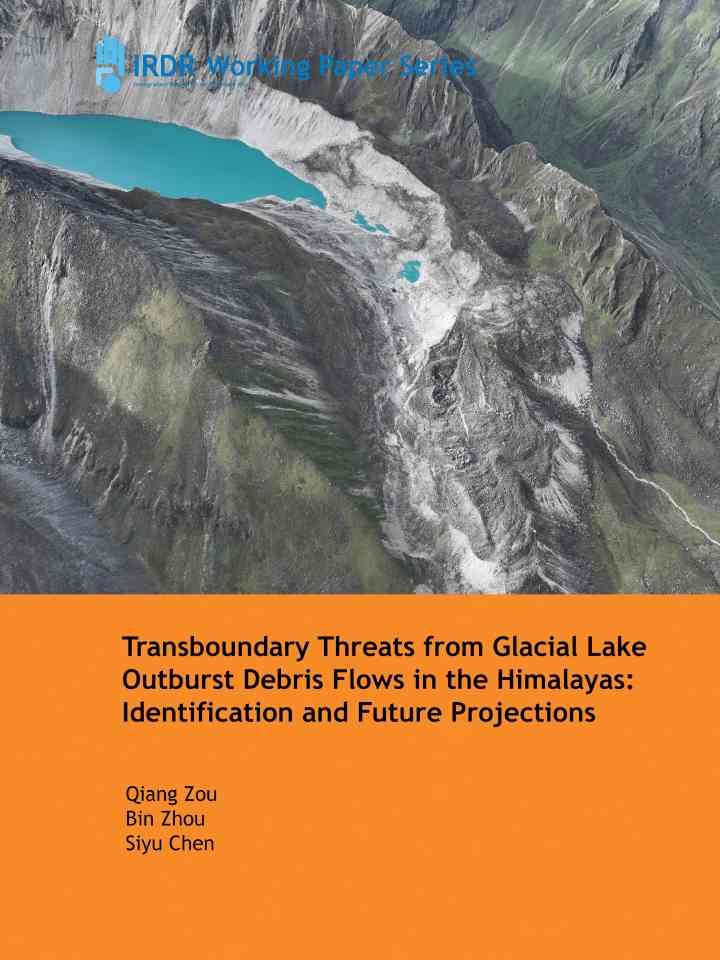
Transboundary threats from glacial lake outburst debris flows in the Himalayas: Identification and future projections
This paper examines transboundary threats from glacial lake outburst debris flows (GLODFs) in the Himalayas and projects how these hazards may evolve under future climate change. The authors present a novel framework to predict Himalayan GLODF occurrence in the 21st century. The study analyzed 8,204 glacial lakes across the Himalayan region and divided the landscape into 1,435 glacial-lake-containing catchments. Using literature review, remote-sensing interpretation, field investigations, a process-driven indicator system, three hybrid machine-learning models, and downstream outburst-flow simulations, the research assessed GLODF susceptibility and identified catchments capable of generating transboundary impacts.
The findings show that approximately 34% of glacial-lake-containing catchments fall within high or very high susceptibility levels, while 128 catchments with potential transboundary threats were identified. Around 65% of high- to very-high-susceptibility transboundary catchments are concentrated along the China–Nepal border, making it the most prominent hotspot of transboundary GLODF threats. The paper highlights the need to strengthen transboundary monitoring, early warning and risk-information sharing, particularly in high-risk border areas. It recommends integrating remote sensing, ground-based monitoring and scenario-based assessments to support anticipatory action and coordinated disaster risk reduction across national boundaries.
Explore further