Strengthen leadership, cooperation and participation in disaster risk reduction in the Municipality of Amadora
Strengthening leadership and level of cooperation in DRR among all entities of the city. The objectives are: - consolidation of contingency and emergency plans - encouragement of active citizen participation - better communication and improved public awareness - strengthened early warning systems
Description
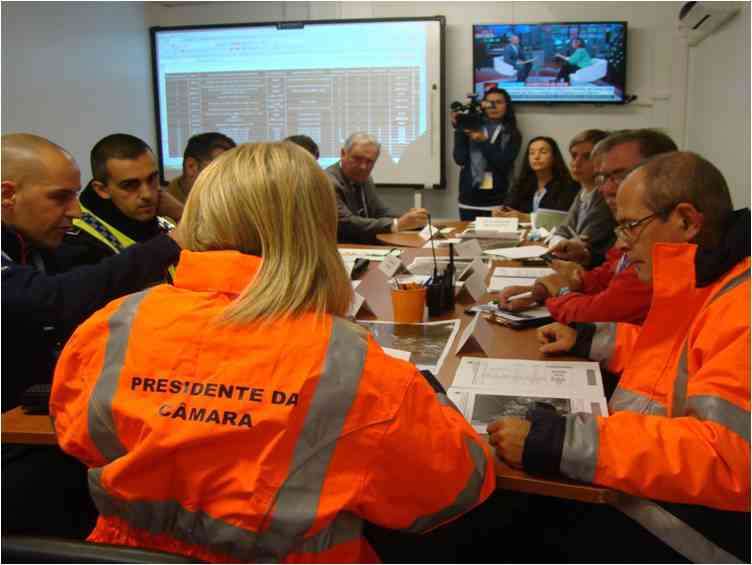
The Municipality of Amadora has an overarching strategy until 2020 that focuses on strong leadership and coordination, recognising these as vital to successfully creating and maintaining city resilience and to empowering the whole of the community to participate in disaster risk reduction.
In order to achieve these objectives, the municipality will conduct workshops for local authorities to consolidate plans, awareness sessions in the way of school programmes and community training, activities [public sessions about local risks; playsets for kids regarding disaster prevention] to improve the availability and dissemination of local information on disaster losses, hazards and risks, and take actions [public outdoors; social networks; promotional videos] to strengthen the early warning system.
As deliverables, the commitment will produce summary notes about the workshops for local authorities, a report on the awareness sessions with the community, a communications kit and a briefing note on the state of the early warning system. We are confindent that engaging local stakeholders with this actions will be possible to improve the city’s capacities to manage and coordinate the response to emergencies due to natural hazards.
Did the Sendai Framework change or contribute to changes in your activities/organization? If so, how?
Yes, the Sendai Framework was decisive for a broader work with the whole community in DRR.
Regarding the Sendai priorites Amadora made a lot of progress to ensure local authorities and the population a better understanding about risks and disasters in the city and how important is sharing local information on disaster losses, hazards and risks including who is exposed and who is vulnerable.
What led you to make this commitment/initiative?
What was your position before making this Voluntary Commitment / prior to the Sendai Framework?
We are working hard at local level to promote a local action plan. We want to do that with all the stakeholders in our community. Under the mayor´s leadership, it will be possible to improve our capacities to manage a natural hazard event. This commitment is proof that motivation and collaboration with the community can be decisive for the damages and losses reduction. Amadora will keep all the necessary efforts to make disaster risk reduction a priority in the municipality agenda.
Deliverables and Progress report
Deliverables
Deliverables are the end-products of the initiative/commitment, which can include issuance of publications or knowledge products, outcomes of workshops, training programs, videos, links, photographs, etc.
Ensure that the community is prepared to face the city´s risks. Commitment to ensure that 50% of the population receives information on self-protection measures and to encourage active citizen participation.
This sessions will be based on powerpoint presentation and pratical exercises about risks and self-protection measures. Will have the collaboration of city officials and civil protection entities. In the end a report and promotinal video will be made with main results.
Ensure that the community receives information about hazards risk and warnings and from civil protection. Ensure that 30% of citizens receive information from the warning system.
This sessions will be based on powerpoint presentation and word documents about methodologies to dissiminate public information (hazard risk and weather warnings). Will have the collaboration of city officials, civil protection entities and private entities. In the end a report and promotinal video will be made with main results.
Ensure better articulation between all entities in the face of a major accident or disaster situation. Knowing each other's mission and consolidating contingency and emergency plans is key to increasing city resilience.
The workshop will feature video, exercise room and powerpoint presentation. Will have the collaboration of city officials and civil protection entities. Each workshop will have a capacity of 20 people and at the end a report will be made of the main results and commitments.
Porgress report
Adding enlightment required by UNDRR Voluntary Commitments. Please consider this report, alongside with the previously attached documents, as our updated progress report.
Links were required for our Awareness sessions and early warning systems delieverables. We do not have a single video for awareness sessions, but we do have a playlist containing all videos regarding self protection measures , as well as a summary of the awareness sessions given during the comemorations of the international risk reduction day.
The playlist for self-protection measures (regarding floods, traffic accidents, droughts, fires, etc) can be found through this link - https://www.youtube.com/watch?v=83H6e0opk4A&list=PLbcldcgKrpzvbbwRCLNLYLJ6AmilDA13J
The video for the last international day for risk reduction (2021) can be found through this video - https://www.youtube.com/watch?v=AlsWQTMdMDA&list=PLED43462B014240C7&index=14
The dissemination video for our text-message early warning system can be found (in portuguese) through this link - https://www.youtube.com/watch?v=CpTu5g7x-pI&list=PL8647712FDD81BED5&index=9
Organizations and focal points
Implementing Organization(s)
Focal points