My account
Menu
Your experience on PreventionWeb

Please help us improve PreventionWeb by taking this brief survey. Your input will allow us to better serve the needs of the DRR community.

See the survey

Published on
5 November 2021
Status
Deliverable update needed
Progress not updated

Strengthen disaster preparedness and management across the Pacific

Expected duration
Jan 2018 - Jul 2027
SFVC commitment ID
20211026_001
Version
2.1
Author
Ashlee Betteridge
Upload your content

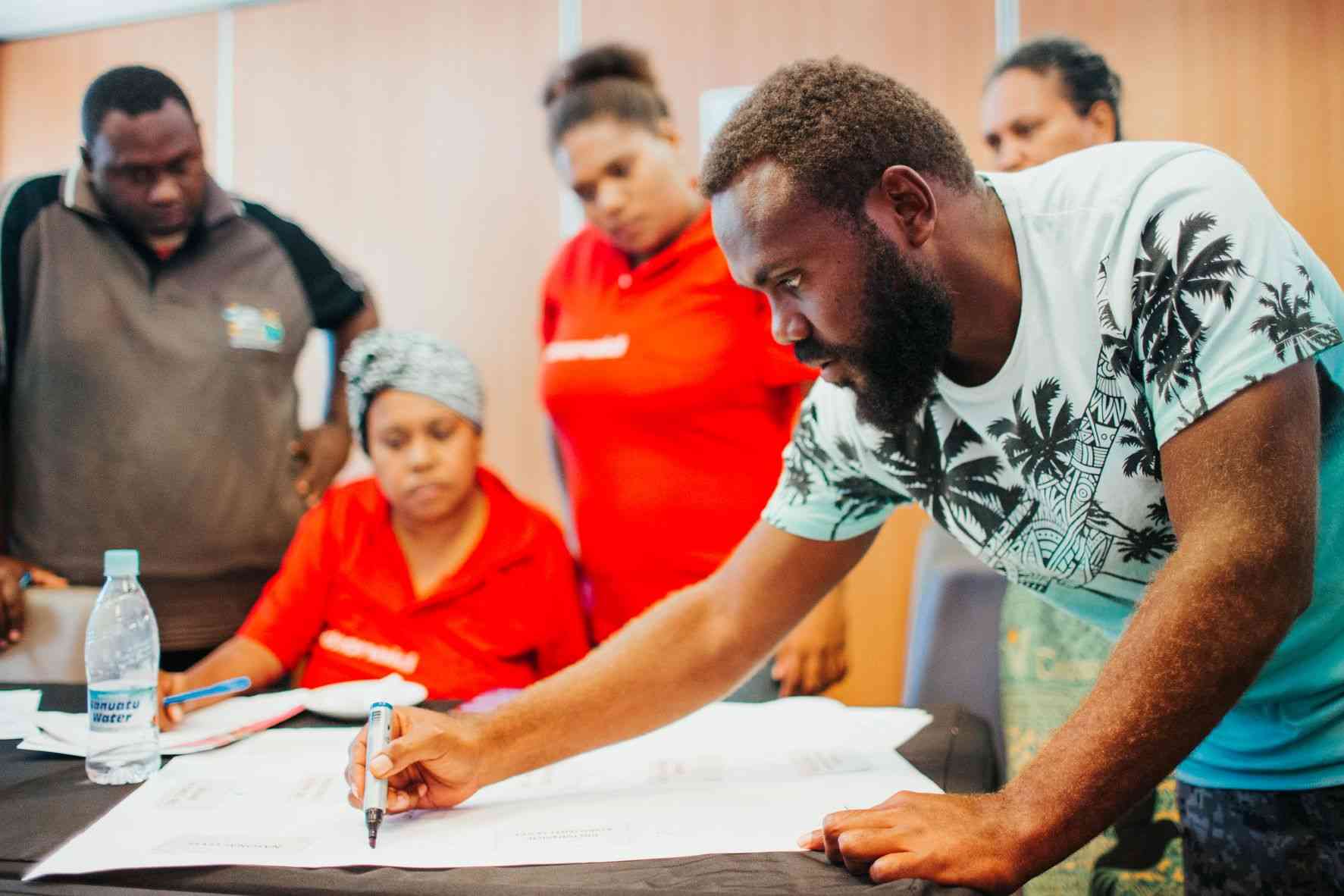
Disaster READY is an AUD 50 million disaster preparedness and resilience program. The focus of Disaster READY is to strengthen disaster preparedness and management across what is one of the world’s most vulnerable regions to natural disasters.

    Description

    Disaster READY is an AUD 50 million disaster preparedness and resilience program that is implemented by AHP partners and their local networks across the Pacific and Timor-Leste. The program represents Australia’s largest ever investment in disaster preparedness in the region, and is an important element of Australia’s stepped-up engagement for a more resilient Pacific.

    The focus of Disaster READY is to strengthen disaster preparedness and management across what is one of the world’s most vulnerable regions to natural disasters, and which is also prone to political instability. Disaster READY draws on the deep networks and partnerships developed by Australian NGOs in the region to support Pacific communities and governments to better prepare for and respond to disasters. The program focuses on ensuring vulnerable groups, including women, people with disabilities and children, are included and accounted for in disaster preparedness, management and risk reduction activities.

    Disaster READY is being implemented in Fiji, Vanuatu, the Solomon Islands, Papua New Guinea and Timor-Leste.

    Did the Sendai Framework change or contribute to changes in your activities/organization? If so, how?

    Enhancing disaster preparedness for effective response is a key priority of action in the 2015-2030 Sendai Framework for Disaster Risk Reduction, this informed the design of Disaster READY.

    What led you to make this commitment/initiative?

    What was your position before making this Voluntary Commitment / prior to the Sendai Framework?

    The Disaster READY program began in 2018, so the Sendai Framework informed its design from the beginning.

    Deliverables and Progress report

    Deliverables

    Deliverables are the end-products of the initiative/commitment, which can include issuance of publications or knowledge products, outcomes of workshops, training programs, videos, links, photographs, etc.

    Collaboration
    Intended date of delivery
    1 October 2022

    AHP NGOs work effectively together and with other relevant
    stakeholders.

    Coordination
    Intended date of delivery
    1 October 2022

    Government, NGOs, the private sector and communities will
    coordinate more effectively on preparedness and response in
    Disaster READY countries.

    Preparedness
    Intended date of delivery
    1 October 2022

    Communities are better prepared for rapid and slow-onset
    disasters.

    Protecting the Vulnerable
    Intended date of delivery
    1 October 2022

    The rights and needs of vulnerable groups are being met in
    disaster preparedness and response at all levels.

    Strengthening the role of local organisations
    Intended date of delivery
    1 October 2022

    National NGOs and faith-based organisations, often the
    first responders on the ground, have increased capacity and
    influence on their country’s humanitarian system.

    Organizations and focal points

    Implementing Organization(s)

    • Australian Humanitarian Partnership

    Focal points

    Main focal point
    Ashlee Betteridge (Communications and Visibility Manager, Australian Humanitarian Partnerships)

    Partners

    • Save the Children International
    • Church Agencies Network – Disaster Operations
    • World Vision International
    • Plan Australia
    • CARE International
    • Caritas Internationalis
    • Oxfam International Secretariat

    Explore further

    Sendai priorities
    Priority 1Understanding disaster risk
    Priority 2Strengthening disaster risk governance to manage disaster risk
    Priority 3Investing in disaster risk reduction for resilience
    Priority 4Enhancing disaster preparedness for effective response, and to «Build Back Better», rehabilitation and reconstruction
    Sendai targets and indicators
    A-1 (Compound)Number of deaths and missing persons attributed to disasters, per 100,000 population
    B-1 (Compound)Number of directly affected people attributed to disasters, per 100,000 population
    E-1 (Compound)National average score for the adoption and implementation of national disaster risk reduction strategies in line with the Sendai Framework for Disaster Risk Reduction 2015-2030
    G-3Number of people per 100,000 that are covered by early warning information through local governments or through national dissemination mechanisms
    G-4Percentage of local governments having a plan to act on early warnings
    G-5Number of countries that have accessible, understandable, usable and relevant disaster risk information and assessment available to the people at the national and local levels
    G-6Percentage of population exposed to or at risk from disasters protected through pre-emptive evacuation following early warning
    Hazards Cyclone, Hurricane and Typhoon Drought and Desertification Earthquake Epidemic and Pandemic Flood Landslide Storm surge Tsunami Volcano
    Themes Community-based DRR Preparedness Early warning Education and school safety Food security and agriculture Gender Social impacts and social resilience
    Country and region Timor-Leste Fiji Papua New Guinea Solomon Islands Vanuatu
    Sustainable Development Goals SDG1: No poverty SDG5: Gender equality SDG6: Clean water and sanitation SDG10: Reduced inequalitities SDG11: Sustainable cities and communities SDG13: Climate action SDG15: Life on land SDG17: Partnerships for the goals
    Budget scale
    More than USD 5 million
    Scope
    National (or local) - Timor-Leste, Fiji, Papua New Guinea, Solomon Islands, Vanuatu
    Scale of beneficiaries
    More than 10,000 people
    Estimated number of beneficiaries
    90,000 people
    Secured budget size
    100%
    Donors
    Department of Foreign Affairs and Trade (DFAT), Australia
    X (Twitter)
    https://twitter.com/AusHPship
    Videos
    Related links
    Disaster READY website
    Banding together: coastal communities in PNG respond to climate change
    Racing for resilience in the Pacific
    Meet Vanuatu inclusion champion Freda Willie
    GP2022 Ignite Stage: Building the bridge for Pacific resilience through Disaste…

    Is this page useful?

    Yes No
    Report an issue on this page

    Thank you. If you have 2 minutes, we would benefit from additional feedback (link opens in a new window).

    PreventionWeb is the global knowledge sharing platform for disaster risk reduction (DRR) and resilience.

    • Newsletter
    • Submit your content
    • Blog pitches
    • Submission and publishing policy
    • About PreventionWeb
    • Contact us

    Hazards

    • Avalanche
    • Cold Wave
    • Cyclone, Hurricane and Typhoon
    • Drought and Desertification
    • Earthquake
    • Epidemic and pandemic
    • Flood
    • Heatwave, extreme heat and heat stress
    • Insect infestation
    • Land subsidence
    • Landslide
    • Nuclear, biological, chemical (NBC)
    • Sea level rise
    • Technological hazard
    • Thunderstorm
    • Tornado
    • Tsunami
    • Volcano
    • Wildfire

    Regions

    • Africa
    • Americas
    • Asia
    • Europe
    • Oceania

    Themes

    Understanding & managing risk

    • Preparedness
    • Early warning
    • GIS and mapping
    • Data and information management
    • Risk identification and assessment
    • Small Island Developing States
    • Earth Observation

    Natural environment

    • Climate change
    • Environment and ecosystems
    • Food security and agriculture
    • Water

    Cross-cutting

    • Systemic risk
    • Recovery

    Human development

    • Capacity development
    • Children and youth
    • Civil society / NGOs
    • Community-based DRR
    • Cultural heritage
    • Gender
    • Human mobility
    • Inclusion
    • Social impacts and resilience

    Science, knowledge & advocacy

    • Disaster risk communication
    • Traditional and Indigenous knowledges
    • Science-policy-practice interface

    State, governance & economy

    • Financing DRR
    • Fragility and conflict
    • Governance
    • Insurance and risk transfer
    • Private sector

    Infrastructure & critical services

    • Critical infrastructure
    • Education and school safety
    • Health and health facilities
    • Structural safety
    • Urban risk and planning
    Loading