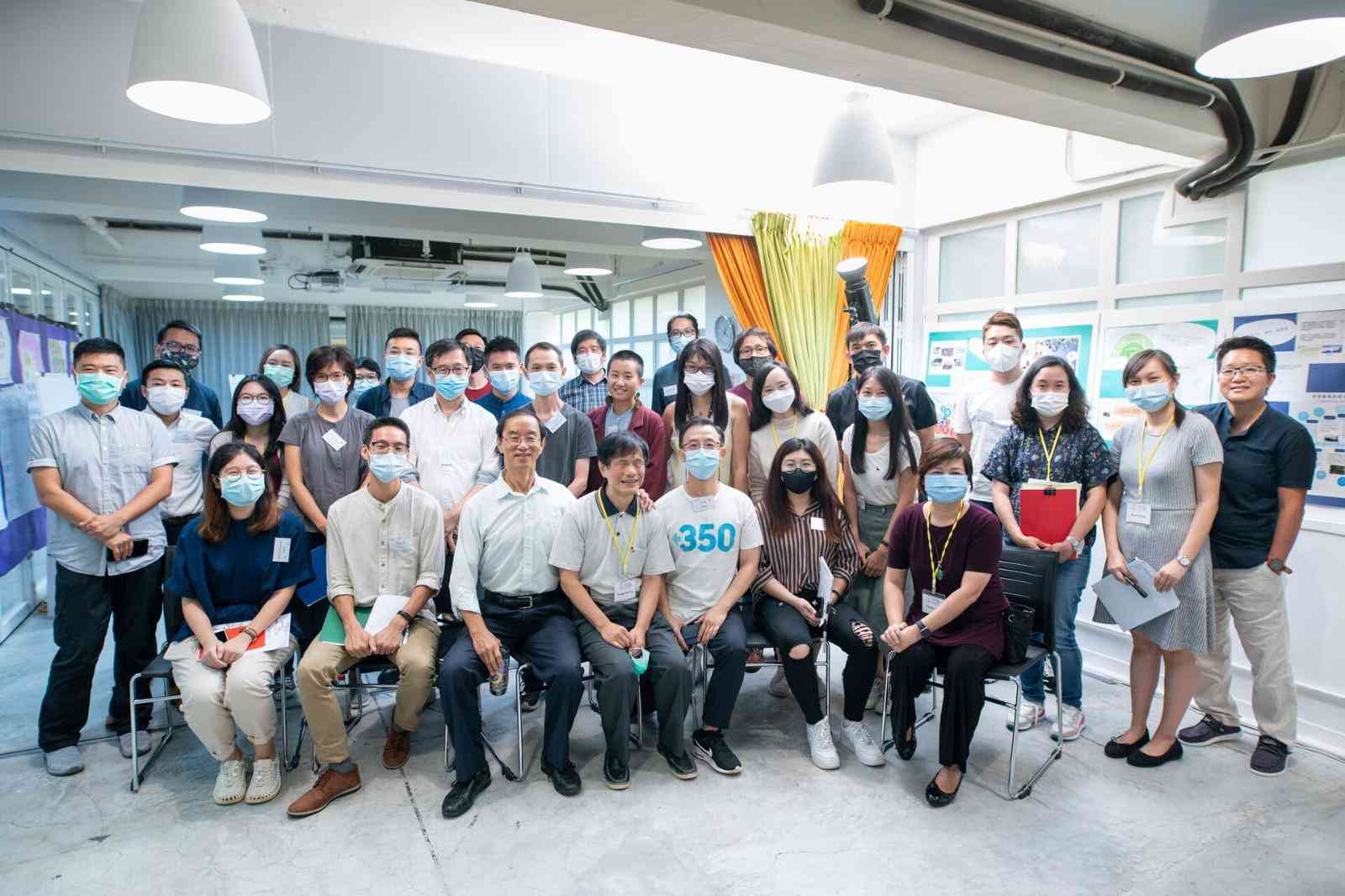
Paris Watch Climate Community Dialogue for a Just, Inclusive Transition
The Climate Community Dialogue project seeks to engage a broad range of stakeholders, particularly the most vulnerable, to engage them in climate change mitigation, adaptation and disaster preparedness, using the Talanoa Dialogue approach, and to address disproportionate negative impacts on them.
Description
Founded in 2014, CarbonCare InnoLab (CCIL) is an NGO dedicated to nurturing and expanding active communities, with a focus on the youth in Hong Kong, and encouraging them to mitigate climate change and developing sustainable low-carbon lifestyle through innovation, education and action. We put special emphasis on multi-stakeholder engagement and solution-oriented processes, as well as awareness-building across the community.
Our vision is bringing opportunity for action, innovation and awareness on climate change to young people in Hong Kong. Our mission is to encourage innovation that is both relevant to local needs and which contributes to solving global challenges. This includes climate justice, carbon reduction, resource conservation and action that will assist adaptation and resilience building.
Hong Kong is a densely populated, mountainous coastal city vulnerable to extreme weather. Meteorologists predict that climate change will lead to stronger typhoons and hotter, longer heatwaves, posing higher risks for children and the elderly, the disabled, the mentally ill, the chronically ill, residents of substandard flats and outdoor workers. CarbonCare InnoLab believes that Hong Kong should not be left behind in promoting a just transition. We have adopted the Talanoa Dialogue and conducted a series of climate community dialogues with a broad range of civil society actors, including residents of subdivided flats, outdoor workers, persons with disabilities and with mental illness, the elderly and the chronically ill, women, welfare workers, the community caregivers, environmental groups, think tanks and university researchers, and government officials, advocating a just, inclusive transition and seeking to mitigate and adapt to the impacts of global warming on people's livelihoods, and enhance the disaster preparedness and resilience for them.
Did the Sendai Framework change or contribute to changes in your activities/organization? If so, how?
The Priorities 1 and 2 of the Sendai Framework help enhance the design of community dialogue, including understanding climate risks and advocating for strong climate risk governance. We encourage participants to articulate and analyse climate risks through storytelling with a view to advocating for changes in policy and practice.
What led you to make this commitment/initiative?
What was your position before making this Voluntary Commitment / prior to the Sendai Framework?
The IPCC AR6 WG2 report states that more than 40% of the world's population will be threatened by climate catastrophe. It further states that climate change is disproportionately and unfairly affecting vulnerable groups. Climate disasters, coupled with structural poverty, social and economic inequalities, exacerbate the plight of the disabled and the urban poor. Under the sweltering heat, the quality of life of citizens declines, and emotional problems are on the rise. Increased heat or rainstorms are also causally linked to mental health problems, with suicide, anxiety, depression, and even mental illness, and increased psychiatric hospitalizations and visits. However, all these impacts are not being prioritized and properly addressed by local policymakers. Disaster preparedness for these groups is not taken seriously by local communities.
Deliverables and Progress report
Deliverables
Deliverables are the end-products of the initiative/commitment, which can include issuance of publications or knowledge products, outcomes of workshops, training programs, videos, links, photographs, etc.
Using the Talanoa Dialogue as a research method, the series of reports collects the findings on the impact of the transition to a low carbon economy, including building the knowledge base for the most vulnerable in coping with climate disasters, strengthen their disaster preparedness measures, and outline how Hong Kong achieves the vision for a just, inclusive transition. The available reports cover our climate community dialogues with the following stakeholders:
1. Residents of subdivided flats (September 2020);
2. Welfare sector and Community Caregiving sector (July and August 2021);
3. Outdoor workers (December 2021);
4. Persons with disabilities (February 2022);
5. Persons with mental illness (April 2022);
6. Women (May 2022);
7. Renewable Energy Communities (July 2022); and
8. Climate Resilient Smart City (September 2022)
Hong Kong’s civil society proposes a vision for our city’s future, with climate actions that are just and inclusive. However, to achieve this vision, we need partnership between the government, business and all walks of life. All stakeholders, especially women and vulnerable groups, should be able to participate, from the formulation of policies to the implementation of measures. This report is our first-ever attempt to discuss climate justice in Hong Kong. We hope that through dialogue we will be able to resolve differences in advancing a just transition, in order to realise a climate-just society.
Porgress report
The climate community dialogues project has been successfully completed, facilitating discussions on just transition with ten dialogues organized and 129 participants representing 93 organizations. Participants took 48 follow-up actions, including advocating to the government, organizing stakeholder seminars, and providing new services to vulnerable groups. The initiative was recognized by the United Nations and shared its learnings at international conferences. COVID-19 limitations led to modified round table discussions and over 100 conversations with potential participants, gathering insights for the Just Transition report published on 14 December 2022. A WhatsApp platform was established for ongoing communication. The report and featured articles were shared with various networks to raise awareness about just transition on climate action.
Several achievements have been reported, including the development of a replicable model for climate justice discussions, recognition of the community dialogues initiative by various organizations, and the publication of a report on a just transition roadmap. Ten community dialogues were organized, with 129 representatives from diverse sectors participating and resulting in 48 follow-up actions and the formation of new partnerships for climate adaptation. The dialogues have also led to increased awareness of climate adaptation and ongoing communication among participants through a WhatsApp communication platform.
Organizations and focal points
Implementing Organization(s)
Focal points
If a VC's contact information has been hidden, the SFVC team can forward a message.