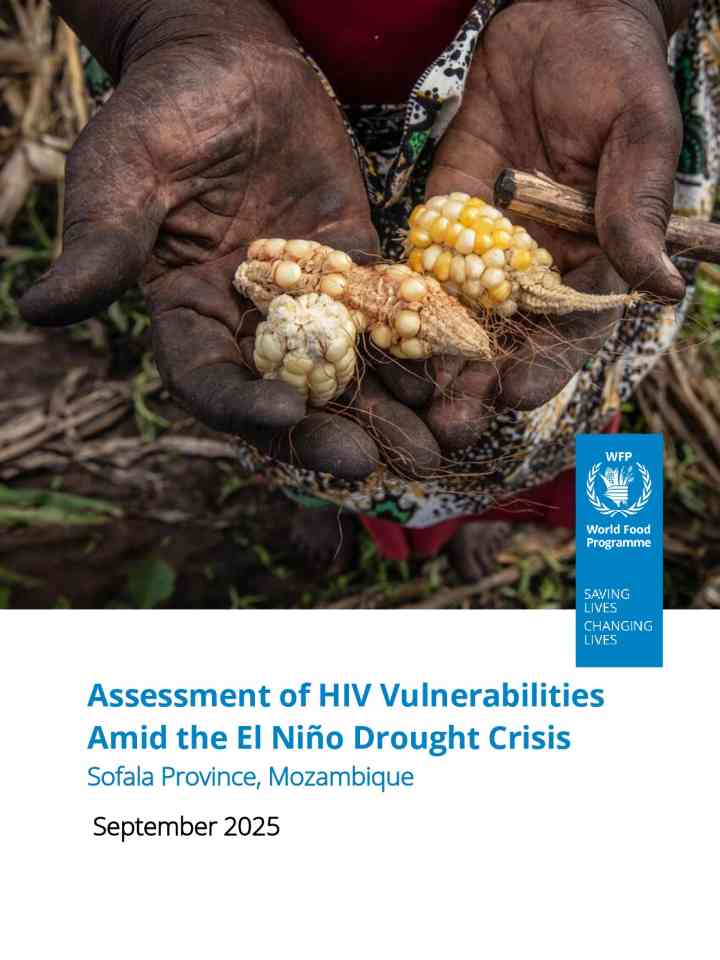
Assessment of HIV vulnerabilities amid the El Niño drought crisis
This country report from Mozambique summarizes qualitative findings of drought impact on people living with HIV and HIV-affected households in 2024. Actions are presented to mitigate the impact of climate shocks on HIV-related vulnerability.
To build resilience against future shocks and safeguard gains in the HIV response, it is essential to adopt an integrated, multisectoral approach that brings together health, nutrition, protection, education, and livelihoods. Stronger coordination among government entities, UN agencies, and local civil society is critical to ensure no one is left behind—especially the most vulnerable. The El Niño crisis presents an opportunity to reimagine emergency response models that are inclusive, gender-responsive, and HIV-sensitive. Timely investment and targeted action will be key to preventing further deterioration of the health and well-being of Mozambique’s most vulnerable populations.
Explore further