Strengthening inclusive Resilience to Disasters boosting Sustainable Development
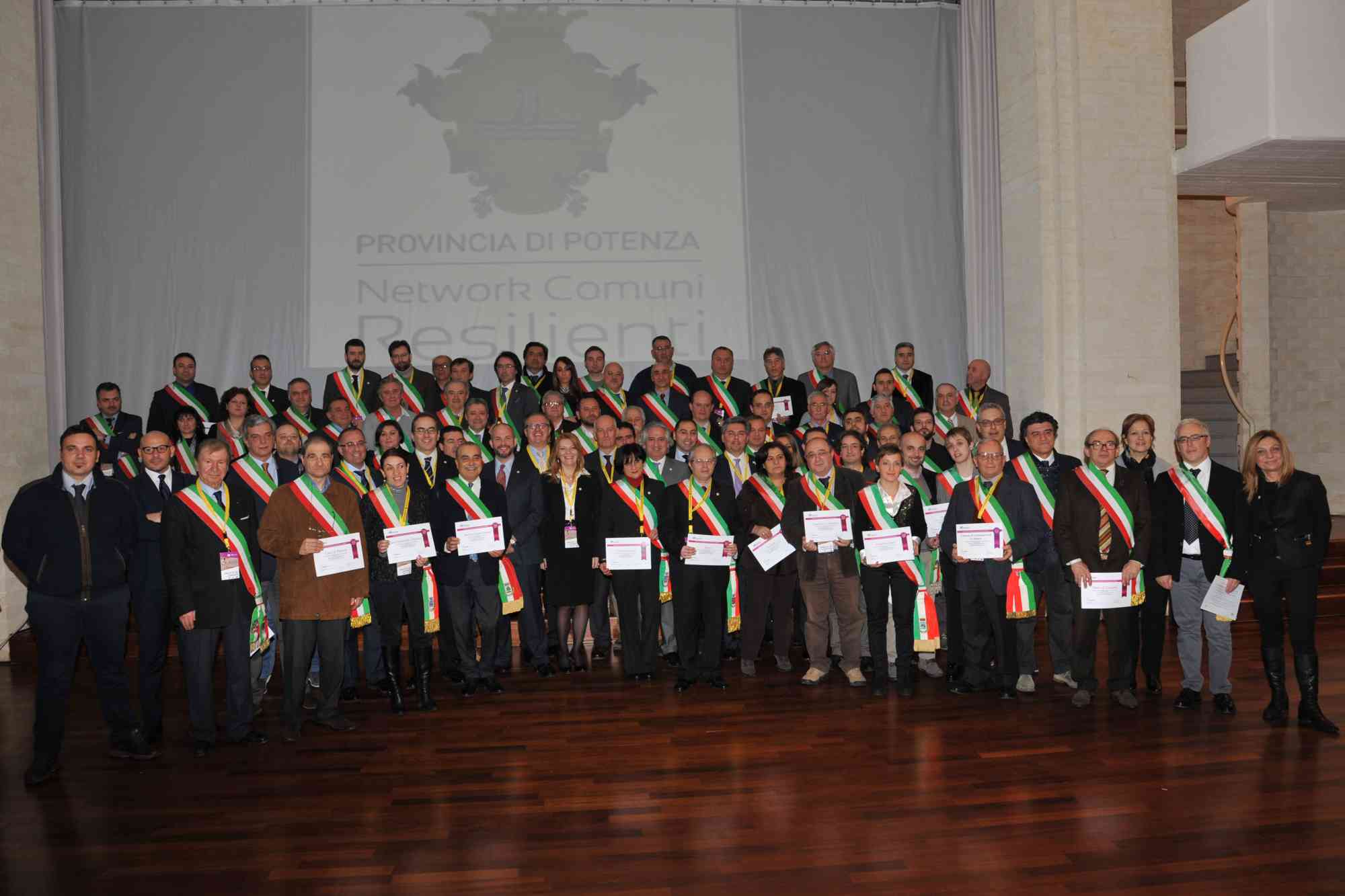
Re-assessment, monitoring and reviewing the level of Resilience of the Province of Potenza's 100 Municipalities’ network by means of a city-to-city peer review based on a multistakeholders and holistic approach to DRR
Description
As a specific contribution to the implementation of the Sendai Framework for Disaster Risk Reduction and as a UNISDR Role Model for Inclusive Resilience (received the certificate of the role model in the year 2015), for the forthcoming years, the Province of Potenza (Italy) commits itself to re-assess, monitor and review the level of Resilience of its 100 Municipalities’ network. This will be implemented through a city-to-city peer review based on a multistakeholders and holistic approach to DRR, collecting data and information for the review and follow-up process of the Sendai Framework and the other international Agendas’ implementation at the local level through alignment to local indicators developed in accordance with the abovementioned Agendas. On the basis of the actual resilience level detected, the Province of Potenza will continue assisting, guiding and supporting its Municipalities and local Communities in improving their attitudes towards disaster risk reduction and sustainable development. The same commitment will be made by the Province of Potenza to other worldwide governments, cities, municipalities and communities that intend to undertake similar improvement pathways by benefiting from the experience gained by the Province in decades of concrete and positive work.
Did the Sendai Framework change or contribute to changes in your activities/organization? If so, how?
Yes, the Sendai Framework provided for a significant content and methodological improvement to the activities that were running since early 2000.
What led you to make this commitment/initiative?
What was your position before making this Voluntary Commitment / prior to the Sendai Framework?
We are working in implementing local resilience starting from a previous assessment performed in 2013-2014. Now we intend to measure the progresses made in the last 5 years in order to follow-up and review our strategies and actions.
In addition, our commitment is also supported by the fact that the Sendai Framework calls for enhancing governance, including local governments, for disaster response, rehabilitation and reconstruction. Furthermore, the Sendai Framework encourages the facilitation and support of local multisectoral cooperation (e.g. among local governments) for national and local disaster risk management plans and policies relevant for disaster risk management.
Deliverables and Progress report
Deliverables
Deliverables are the end-products of the initiative/commitment, which can include issuance of publications or knowledge products, outcomes of workshops, training programs, videos, links, photographs, etc.
Local Report showing the State of Art of Resilience Level calculated by using the new Resilience Scorecard through peer-to-peer activities.
Porgress report
• The Voluntary Commitment is materializing in a structured path within partnership with: Krusevac _Serbia, Alba Iulia _Romania and Centar _North Macedonia, carring out a Pilot Action starting with the cities’ DDR assessment and, after a sharing and learning ongoing process, drafting a Resilience strategy, as final result.
• Moreover, during Covid19 emergency the Province has the opportunity to test level of Resilience of its 100 Municipalities’ network and, as component of the Regional Crisis Unit,
concurred to Regional Emergency Management operations assuring assistance to Municipalities in adopting emergency management measures; Diffusion of relevant information; assisting citizens also thanks a free-toll phone
The Province of Potenza guided the three involved cities in implementing:
• an inclusive approach due to strong community involvement;
• a governance-accountability system as powerful mean for creating the conditions that contribute to change towards resilience.
So, assessments of disaster resilience of the 3 Cities have been carried out by means of preliminary scorecards, with coordination and support by the Province.
Regarding Covid19 emergency, the level of resilience of the provincial Network came out good, thanks to coordination activity within the network: moreover, lots of emergency management measures were adopted on the basis of ‘Leaving no one behind’.
Organizations and focal points
Implementing Organization(s)
Focal points
If a VC's contact information has been hidden, the SFVC team can forward a message.