My account
Menu
Your experience on PreventionWeb

Please help us improve PreventionWeb by taking this brief survey. Your input will allow us to better serve the needs of the DRR community.

See the survey

Published on
11 December 2020
Status
Completed

Strengthening disaster risk management through institutional development

Expected duration
Sep 2018 - Mar 2020
SFVC commitment ID
20190201_002
Version
3.0
Author
Nyamkhuu Chuluunkhuu
Upload your content

Mongolian Red Cross Society is committed to reduce disaster risk by building resilience through community based approach in both rural and urban areas. Mongolian Red Cross will strengthen capacity of 4 local Red Cross branches within the project framework.

    Description

    The project aims to ensure respective 4 local Red Cross branches are well prepared for any type of hazard. The project includes a series of training for volunteers in which local emergency teams are established and equipped with necessary tools to respond against local hazards and the emergency teams are provided with expertise by local emergency agency ensuring safety of the volunteers. 4 local branches will also have adequate relief stock pre-positioned ensure they're able to respond with no time delay. The project will address the financial management of the branch by updating their financial system software enabling local branch to have better management of their financial management. At last, the humanitarian halls will be established at 4 local high-schools in 4 provinces where children are treated with psycho-social support when needed and will be functioning as the point where disaster information (flyers, brochures...) is disseminated.

    Did the Sendai Framework change or contribute to changes in your activities/organization? If so, how?

    Yes, Sendai Framework encourages investing in disaster risk reduction for resilience and Mongolian Red Cross will promote disaster risk resilience through structural, non-structural and functional disaster risk prevention and reduction
    measures in critical facilities, in particular schools and physical infrastructures.

    What led you to make this commitment/initiative?

    What was your position before making this Voluntary Commitment / prior to the Sendai Framework?

    Mongolian Red Cross had been implementing community based disaster risk reduction activities in both rural and urban areas through its branches and volunteers even before Sendai framework but after Sendai framework, local programmes and activities have been more encouraged by local and international organizations, individuals. Considering that, overall, the Sendai Framework encourages better articulation of responsibilities among State and non-State actors as well as the involvement and empowerment of local actors (with resources, incentives, decision making responsibilities, etc.

    Deliverables and Progress report

    Deliverables

    Deliverables are the end-products of the initiative/commitment, which can include issuance of publications or knowledge products, outcomes of workshops, training programs, videos, links, photographs, etc.

    Branch financial management capacity increased
    Intended date of delivery
    31 March 2020

    4 Red Cross branch have installed unified financial management system and have trained human resource for utilization for transparent and accountable reporting. A narrative report with photos will be available after the implementation.

    Humanitarian halls are established
    Intended date of delivery
    31 March 2020

    4 humanitarian halls at 4 local high-schools across 4 provinces will be established. Humanitarian halls will be used if the child needs a psycho-social support or learn about disaster risk reduction, even about Red Cross and Red Crescent movement. A narrative report with photos will be available after the implementation.

    Trained volunteers
    Intended date of delivery
    31 March 2020

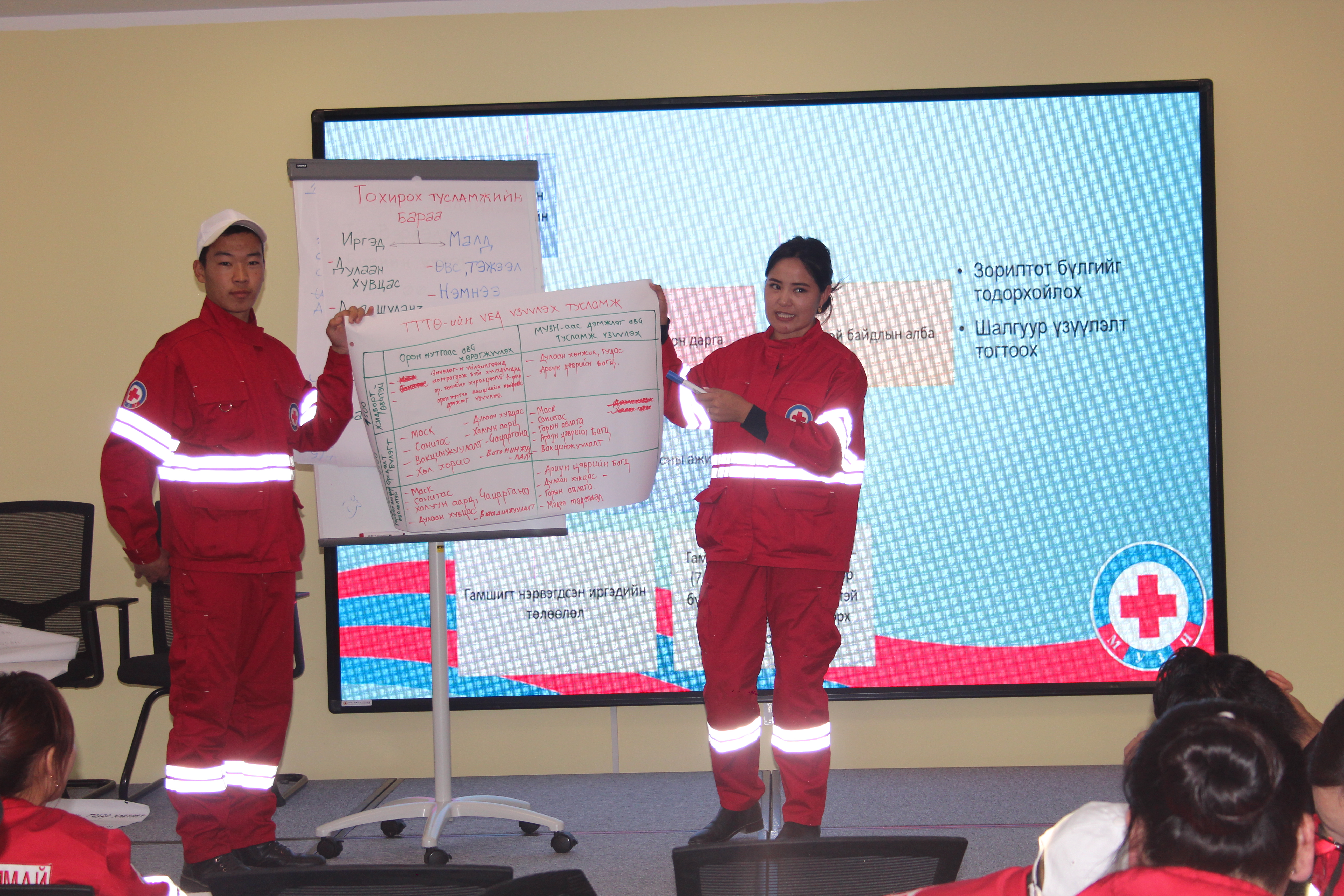
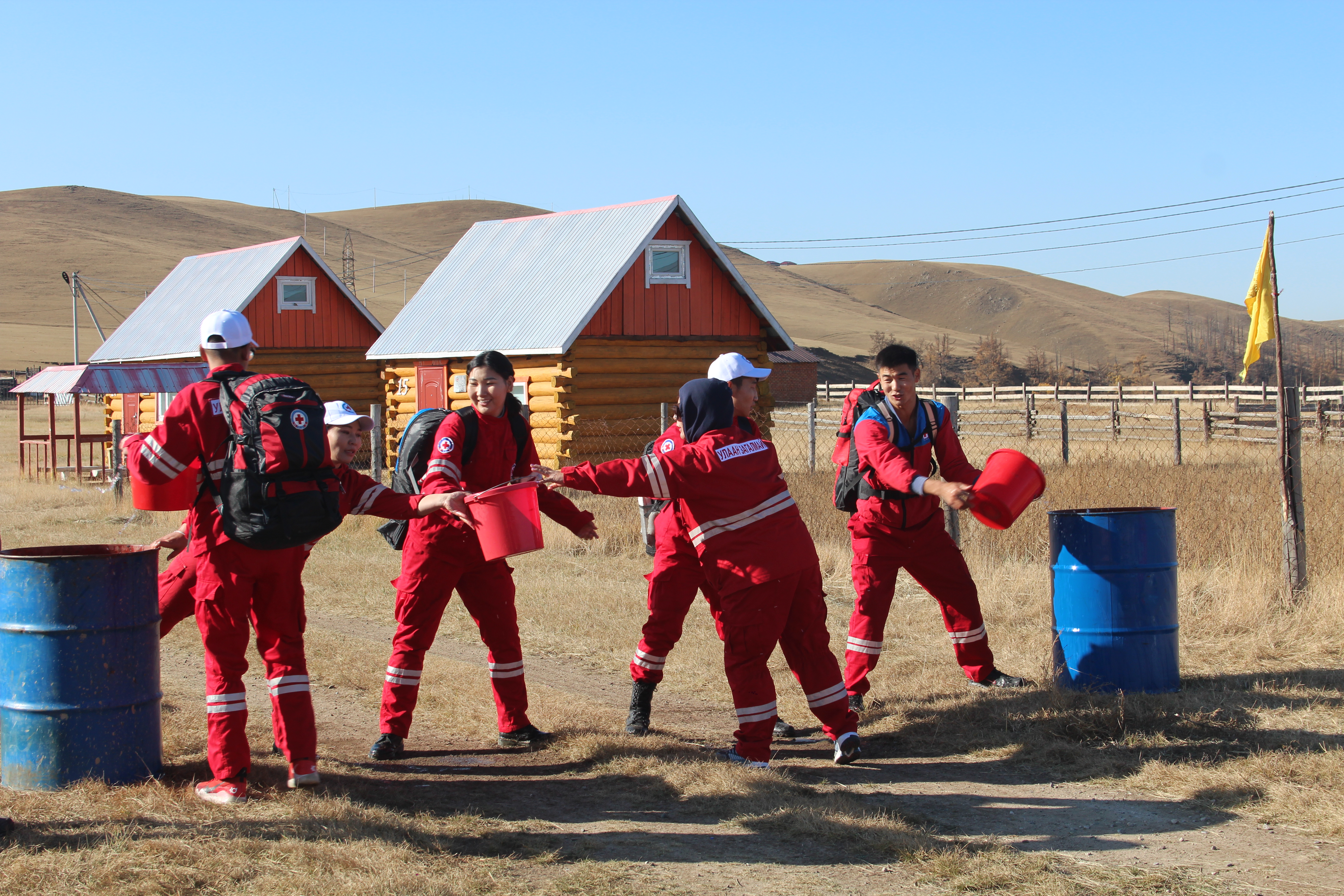
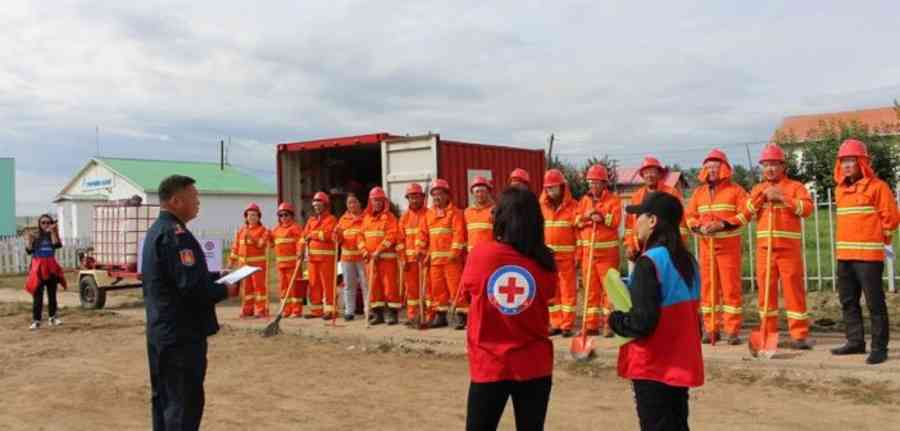
    4 Red Cross branches have pool of trained staffs and volunteers and enhanced capacities to become local partner of choice, in disaster preparedness and response activities and enhanced cooperation with the local emergency management agencies. 60 volunteers will be trained as a volunteer in emergency and after each training, a registry list of the participants and narrative report will be made.

    Updated contingency plans
    Intended date of delivery
    31 March 2020

    4 Red Cross branches updated their disaster contingency plan based on National Society's branch disaster response capacity assessment tool and in line with National contingency plan. A narrative report and photos will be available after the implementation.

    Porgress report

    Progress date
    1 November 2019
    Summary

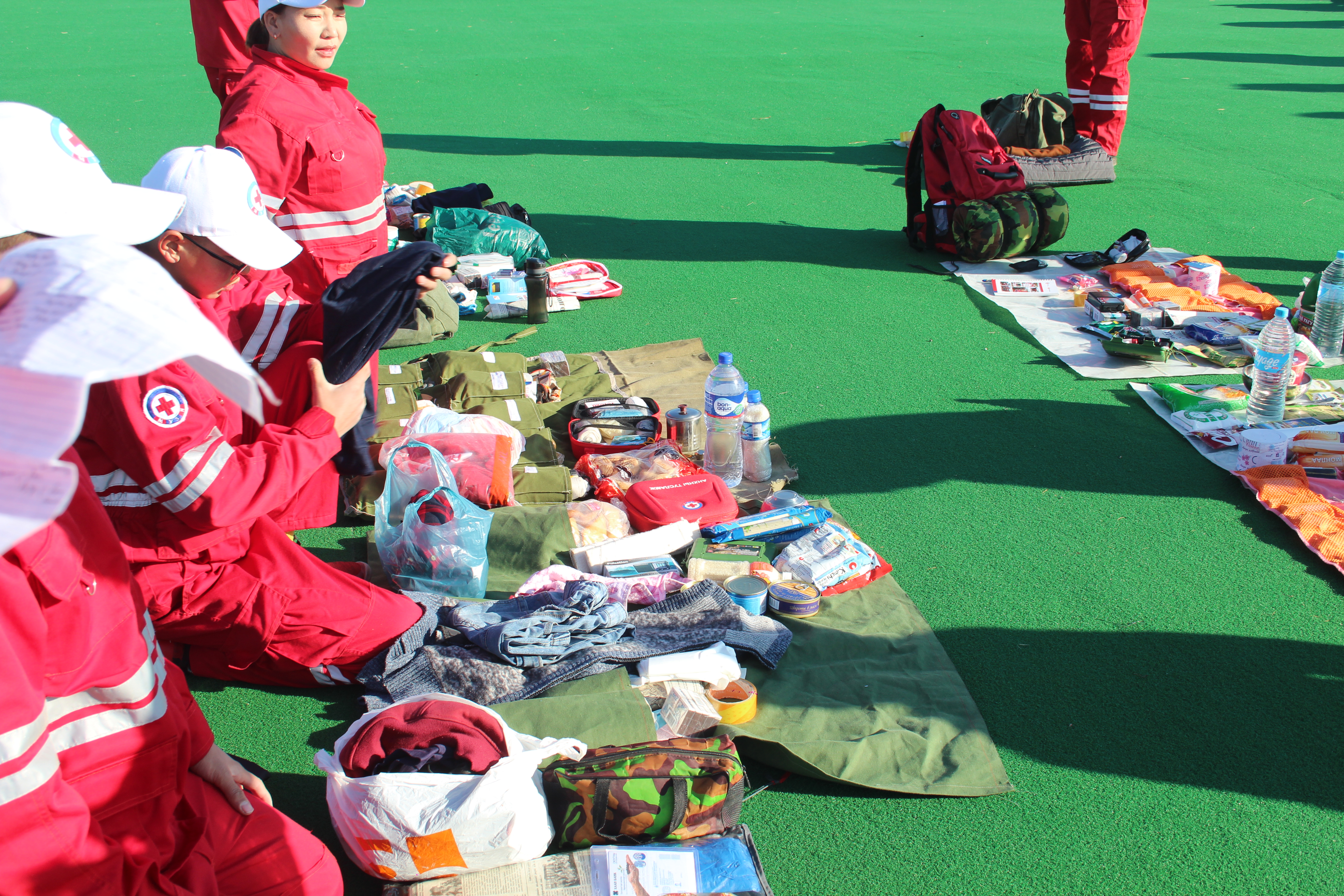
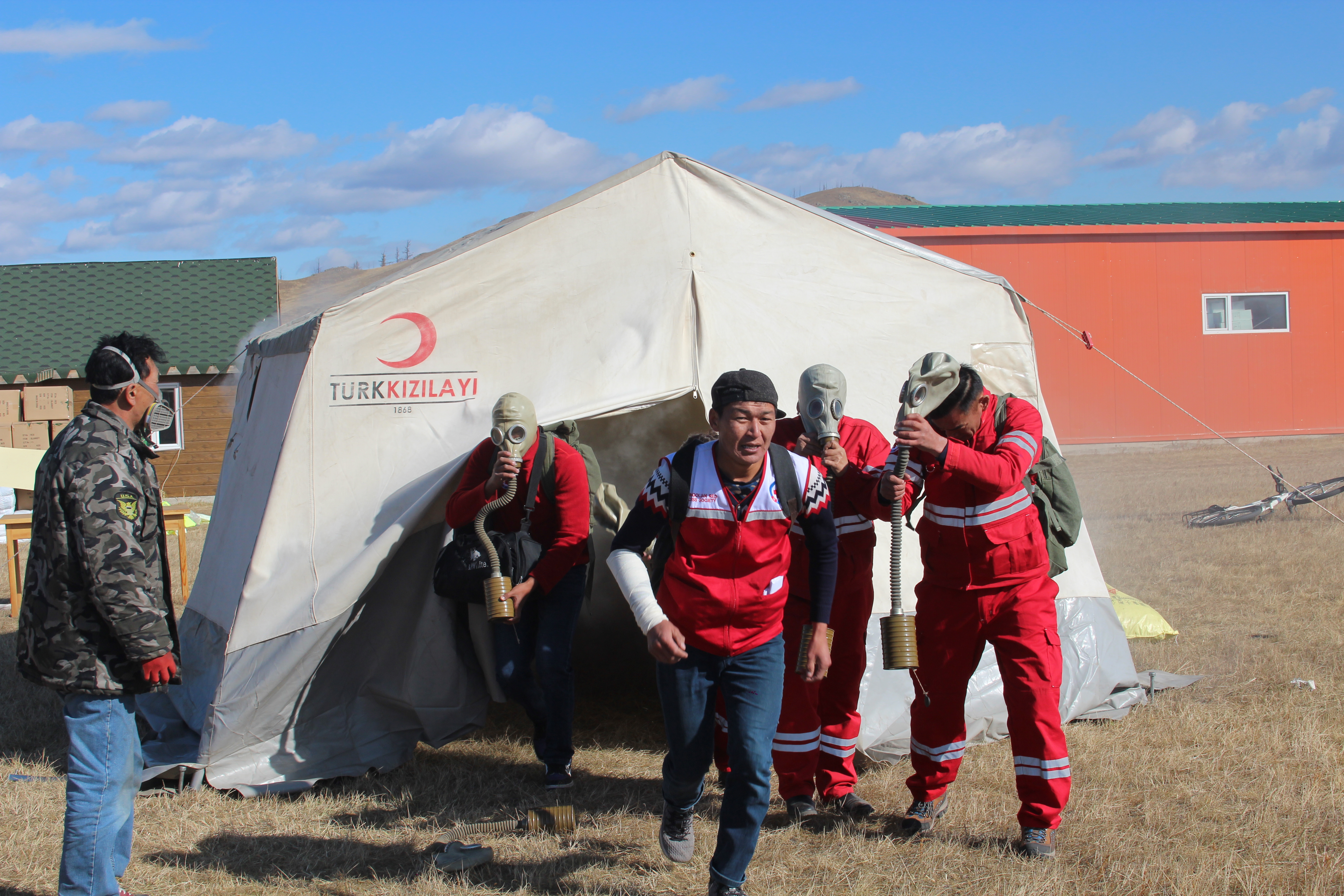
    60 branch disaster response team members from Dornod, Govi-Altai, Bayankhongor, Darkhan-Uul provinces have been trained in first aid, volunteering in emergencies, psycho-social support, water, sanitation, hygiene. Those Red Cross branches now use unified financial software and accountants have been trained to use the software. Those branches have updated their contingency plan and 2 regional disaster preparedness centers have received relief items to provide in emergencies.

    Achievements at a glance

    -Red Cross branch human resource have been strengthened.
    -Financial management capacity and transparency have been increased.
    -Regional disaster preparedness centers have more capacity to provide relief items.
    -Red Cross branches have updated contingency plans.
    Supporting documents
    m1.JPG (6.61 MB)
    m4.JPG (9.04 MB)
    m2.JPG (8.02 MB)
    m3.JPG (8.89 MB)
    Organizations and focal points

    Implementing Organization(s)

    • Mongolian Red Cross Society

    Focal points

    Main focal point
    Nyamkhuu Chuluunkhuu (Disaster management programme officer, Mongolian Red Cross)

    Explore further

    Sendai priorities
    Priority 1Understanding disaster risk
    Priority 3Investing in disaster risk reduction for resilience
    Priority 4Enhancing disaster preparedness for effective response, and to «Build Back Better», rehabilitation and reconstruction
    Sendai targets and indicators
    B-5Number of people whose livelihoods were disrupted or destroyed, attributed to disasters
    C-2Direct agricultural loss attributed to disasters
    C-3Direct economic loss to all other damaged or destroyed productive assets attributed to disasters
    F-1 (Compound)Total official international support (official development assistance (ODA) plus other official flows), for national disaster risk reduction actions
    F-6Total official international support (ODA plus other official flows) for disaster risk reduction capacity-building
    Hazards Cold Wave Drought and Desertification Earthquake Epidemic and Pandemic Flood Wildfire
    Themes Capacity development Children and Youth Climate change Community-based DRR Preparedness Education and school safety Risk identification and assessment
    Country and region Mongolia
    Sustainable Development Goals SDG1: No poverty SDG2: Zero hunger SDG3: Good health and well-being SDG4: Quality education SDG8: Decent work and economic growth SDG11: Sustainable cities and communities SDG13: Climate action
    Scope
    National (or local) - Mongolia
    Secured budget size
    100%
    X (Twitter)
    https://twitter.com/redcrossmn?lang=en
    Videos
    Related links
    Mongolian Red Cross

    Is this page useful?

    Yes No
    Report an issue on this page

    Thank you. If you have 2 minutes, we would benefit from additional feedback (link opens in a new window).

    PreventionWeb is the global knowledge sharing platform for disaster risk reduction (DRR) and resilience.

    • Newsletter
    • Submit your content
    • Blog pitches
    • Submission and publishing policy
    • About PreventionWeb
    • Contact us

    Hazards

    • Avalanche
    • Cold Wave
    • Cyclone, Hurricane and Typhoon
    • Drought and Desertification
    • Earthquake
    • Epidemic and pandemic
    • Flood
    • Heatwave, extreme heat and heat stress
    • Insect infestation
    • Land subsidence
    • Landslide
    • Nuclear, biological, chemical (NBC)
    • Sea level rise
    • Technological hazard
    • Thunderstorm
    • Tornado
    • Tsunami
    • Volcano
    • Wildfire

    Regions

    • Africa
    • Americas
    • Asia
    • Europe
    • Oceania

    Themes

    Understanding & managing risk

    • Preparedness
    • Early warning
    • GIS and mapping
    • Data and information management
    • Risk identification and assessment
    • Small Island Developing States
    • Earth Observation

    Natural environment

    • Climate change
    • Environment and ecosystems
    • Food security and agriculture
    • Water

    Cross-cutting

    • Systemic risk
    • Recovery

    Human development

    • Capacity development
    • Children and youth
    • Civil society / NGOs
    • Community-based DRR
    • Cultural heritage
    • Gender
    • Human mobility
    • Inclusion
    • Social impacts and resilience

    Science, knowledge & advocacy

    • Disaster risk communication
    • Traditional and Indigenous knowledges
    • Science-policy-practice interface

    State, governance & economy

    • Financing DRR
    • Fragility and conflict
    • Governance
    • Insurance and risk transfer
    • Private sector

    Infrastructure & critical services

    • Critical infrastructure
    • Education and school safety
    • Health and health facilities
    • Structural safety
    • Urban risk and planning
    Loading