Resilience policymaking in Nepal: giving voice to communities
Working in three rural villages in Nepal, we examined communities’ perceptions of disaster risks and their views on their ability to mitigate those risks and cope with future emergencies. This project brought often hidden community voices into resilience related policies.
Description
Nepal is a country with a history of conflict and disaster that also faces future risks resulting from environmental change. Resilience policy-making processes are key to address these challenges. In this project, we used a participatory video (PV) approach to facilitate and improve the sensitization of policymakers to community-level perceptions, thereby potentially opening up new policy directions, ideas and opportunities.
We wanted to address the gap that exists in Nepal between national-level resilience policy-making (undertaken with the support of international donors and experts) and community-level perceptions and expectations. In so doing, the project sought to give those most-affected by disasters a powerful way to engage with - and potentially influence - high-level policymakers.
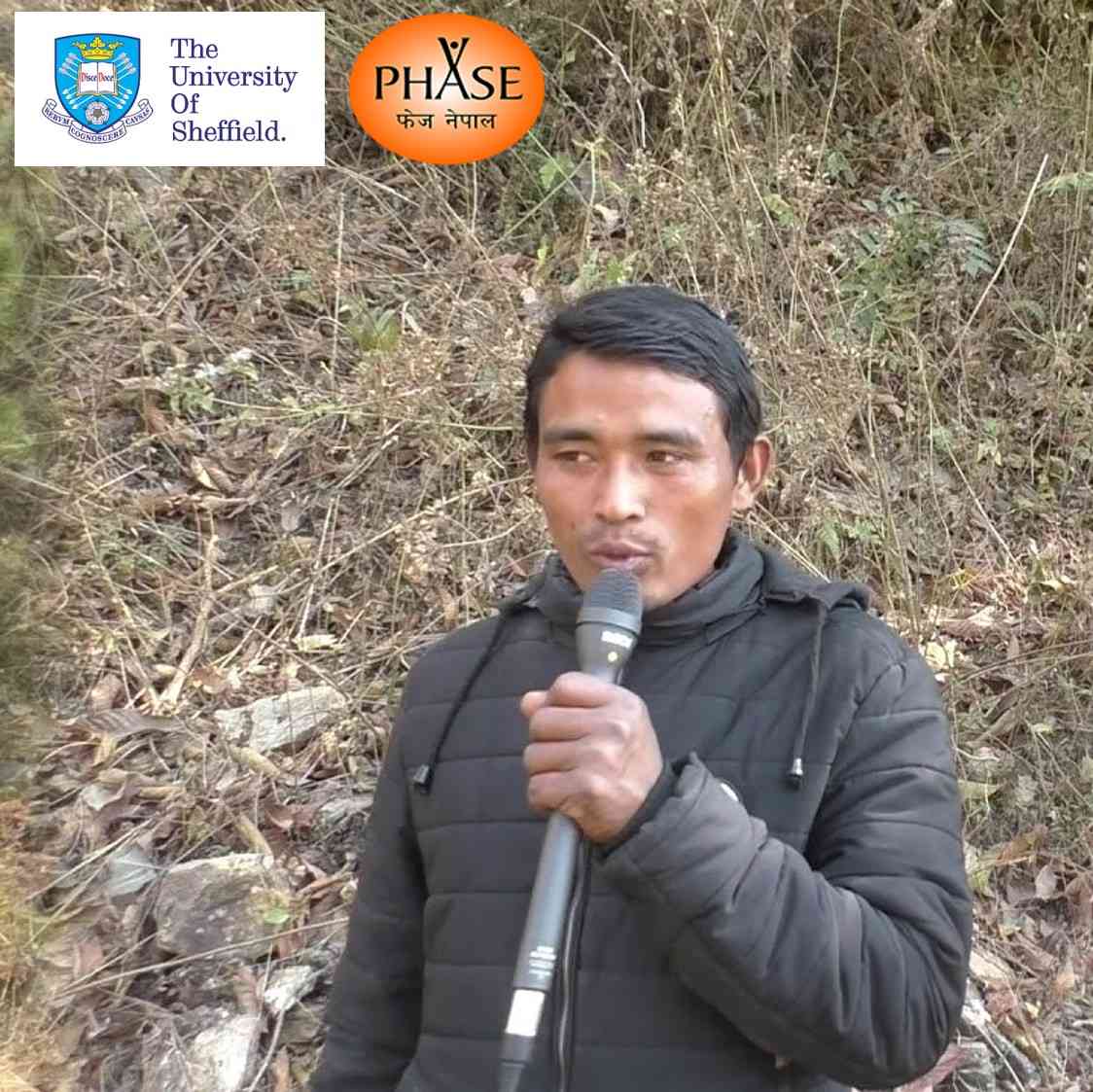
Working in three communities alongside PHASE Nepal, a well-established development NGO, small groups of residents produced short films capturing their experiences and perceptions of risk and resilience that were then shared and discussed with key audiences at the village, District, Province and national levels. Community members were trained to make short documentary films looking at the disaster risks their villages face, and what support they feel they need from government to better cope with future disasters. The videos they produced were then screened to government officials and representatives of NGOs and donors at all levels of government, from the local up to the national.
Our results suggests that there is a need for: a broader approach to Disaster Risk Reduction, including socio-technical approaches that look beyond the construction of earthquake-resistant buildings and infrastructure; improved messaging between government (at all levels) and communities, and for better managing community expectations; more fully addressing inequalities in reconstruction and resilience building; more inclusive processes, not just measures of output; and, better institutional integration across the disaster cycle (at the government level, Disaster Risk Reduction, disaster management and post-disaster reconstruction are currently dealt with through separate institutions and processes).
Did the Sendai Framework change or contribute to changes in your activities/organization? If so, how?
The Sendai Framework supports the promotion of scientific research on methodologies for risk assessments, identify research and technology gaps, set recommendations for research priority areas in disaster risk reduction, support the availability and application of science and technology to decision-making, use post-disaster reviews as opportunities to enhance learning and public policy, and disseminate studies, among others. Our project aims at contributing to this and other aspects of the Framework.
What led you to make this commitment/initiative?
What was your position before making this Voluntary Commitment / prior to the Sendai Framework?
We are motivated by the call of the Sendai Framework to promote cooperation between academic, scientific and research entities and communities, in particular those that would assist low-income countries and their specific challenges.
The participants (8 local residents from each of the three villages) have reported significant benefits from their involvement, captured at a series of debriefing meetings held at the end of the training and after each of the policy workshops. For instance, new skills in film-making and interviewing, increased understanding of disaster and resilience issues, skills and confidence development through opportunities to engage with policymakers and other stakeholders at all levels of government, increased political literacy and understanding of the policymaking process, and new informal leadership roles within their communities.
The participatory videos to sensitised policymakers to issues and perceptions in the remote villages, and to bring the voices of those communities into policy processes at all levels.
Deliverables and Progress report
Deliverables
Deliverables are the end-products of the initiative/commitment, which can include issuance of publications or knowledge products, outcomes of workshops, training programs, videos, links, photographs, etc.
In the link below, you may find a detailed list of screening events and workshops related to this project.
The videos that were produced were screened to government officials and representatives of NGOs and donors at all levels of government, from the local up to the national.
The report identifies some of the key policy lessons learned in this ESRC-DFID funded project which conducted Participatory Video projects in three rural villages in Nepal.
Social capital is widely regarded as a key element in recovery from and resilience to disasters. Yet, little attention has been paid to the specificities of what supports or undermines remote rural communities' social capital in disasters. Here, we examine how bonding, bridging, and linking social capital operated after the 2015 earthquake in three remote Nepali communities of Sindhupalchok and Gorkha Districts, which have varying degrees of access to infrastructure, relief and recovery programmes.
Sarita Panday, Simon Rushton, Jiban Karki, Julie Balen, Amy Barnes,
The role of social capital in disaster resilience in remote communities after the 2015 Nepal earthquake,
International Journal of Disaster Risk Reduction,
Volume 55, 2021, 102112, ISSN 2212-4209, https://doi.org/10.1016/j.ijdrr.2021.102112.
Organizations and focal points
Implementing Organization(s)
Focal points
Partners