Capacity Building and Scientific Research for Sendai Framework by the Japan Society of Disaster Nursing
The Japan Society of Disaster Nursing is committed to systematize the Sendai Framework for Disaster Risk Reduction and other resources so that nurses can contribute to DRR globally and beyond the discipline.
Description
The mission of the Japan Society of Disaster Nursing (JSDN) is to advance this specialized branch of nursing by systematizing the resources and practice of disaster nursing so as to contribute to the improvement of people's lives and health.
According to the seven points of Bangkok Principles (2016) for implementing the health aspects of the Sendai Framework, we developed the following strategic proposal to promote the contributions from nursing: (1) As experts of disaster nursing: build a collaboration system in an accord with related occupations and local disaster prevention organizations, and continuously evaluate how health aspects are incorporated into surveys, frameworks, plans, evaluations, etc. to propose necessary plans; (2) Develop a platform with those involved in health risk management, and routinely discuss the conditions and challenges of new health emergencies, including disasters and infectious diseases at each government level from the viewpoint of lifestyle and health; (3) Cooperate with other fields to present evidence (case studies, local risk assessments, etc.) for investing in human-centered health activities, and promote investment by visualizing the importance of prevention and process; (4) Enhance nurturing of disaster nursing specialists, training highly skilled people within graduate programs, etc., to gain a comprehensive view of multidisciplinary issues in disasters; (5) Identify those whom to care during disasters from the viewpoint of health risk management, and develop disaster risk management index; (6) Promote studies and disseminate information regarding big data, SNS, location information, and translation functions that are rapidly progressing in recent years and can be used in health and life; (7) Based on academic aspects, confirm that there is a consistent policy in each government level for not only acute phase care immediately after a disaster, but also for mid- to long-term health risks, along with necessary systems and regulations.
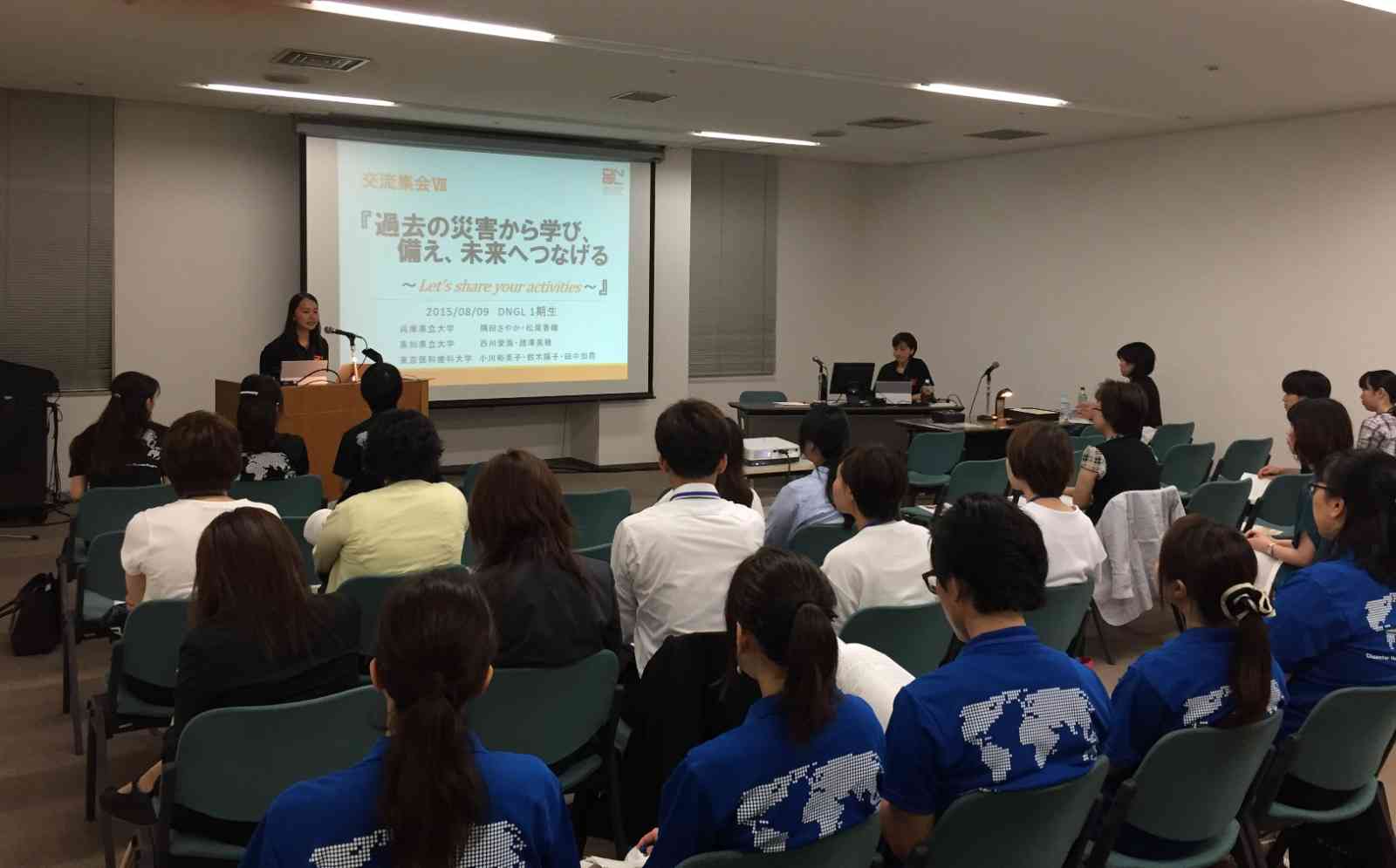
Our deliverables include organization of annual meetings; publish papers on journals and other knowledge products; develop domestic and international disaster networks; and implement other disaster nursing projects.
Did the Sendai Framework change or contribute to changes in your activities/organization? If so, how?
Yes. In order to respond effectively to disasters, nurses have developed disaster nursing education to create human resources for potential future disasters. Despite a concerted effort, lessons from previous disasters have taught us that real-time and validated information is crucial in reducing casualties and saving lives. Nurse could work with their skill independently. Health systems and health care delivery in disaster situations are only successful when nurses have the fundamental disaster competencies to rapidly and effectively respond. It seems that SFDRR has an extremely high affinity with nursing.
What led you to make this commitment/initiative?
What was your position before making this Voluntary Commitment / prior to the Sendai Framework?
Nursing practices during disasters in Japan consist of health risk reduction during normal times, getting an understanding of the situation immediately after the disaster, swift and proper deployment during rescue operations, and appropriate reconstruction. These practices have already contributed to many regional communities. Research that focuses on how the global effects of these practices can contribute to disaster mitigation in other countries and a wide variety of other fields is necessary.
After the establishment of the Sendai Framework for Disaster Risk Reduction, an international conference was held in Bangkok in March of 2016, to discuss how health sectors contribute to the Sendai Disaster Risk Reduction Framework. Seven points of Bangkok Principles were generated. According to the seven points of Bangkok Principle 2016, a strategic proposal is proposed to promote nursing contribution to the implementation of Sendai Framework for Disaster Risk Reduction.
Deliverables and Progress report
Deliverables
Deliverables are the end-products of the initiative/commitment, which can include issuance of publications or knowledge products, outcomes of workshops, training programs, videos, links, photographs, etc.
In order to achieve the commitment, in 2020, the activity will focus:
(1) to evaluate the current progress of researches and practices in disaster nursing and health;
(2) to identify the gap between researches and practices in disaster nursing and health;
(3) to provide a recommendation for further activity to Disaster Risk Reduction (DRR) society in order to strengthen the Sendai Framework and the Sustainable Development 2030.
In the end, the expected outcome of these activities is a paper of monitoring reports.
Organizations and focal points
Implementing Organization(s)
Focal points
If a VC's contact information has been hidden, the SFVC team can forward a message.