Senior Academy for Civil Protection: the active role of the elderly in DRR
This project is aimed for senior population who want to collaborate with Amadora Civil Protection. In this project, all the volunteers are trained to acquire disaster risk reduction skills and knowledge to implement and strength a safety culture in the city.
Description
Due to their characteristics, the elderly are the most vulnerable and less resilient segment of the population. The municipality of Amadora, with an area of 23.8 square kilometers and 171,454 inhabitants, has a populational density of 7,210 inhabitants/square kilometers (2021). The population over 65 years old represents about 22.2% of the population or 38,087. Amadora's Civil Protection Municipal Service (SMPC) has acknowledged the need to develop a methodology among the senior population and, in 2014, implemented a volunteering project under the designation of Senior Academy for Civil Protection, with the support of Local Volunteering Cluster (BLVA). The project is aimed at all seniors who are available to collaborate in DRR events and initiatives. Given the cross-cutting nature of issues involving civil protection, particularly in terms of adoption of self-protection measures and mechanisms to increase personal and asset protection, it was fundamental to create communication, dissemination, awareness, and training channels for this specific population group. Thus, this project, and the creation of senior agents for civil protection, was born with the objective of encouraging Amadora's elderly into acquiring a more dynamic role in sharing prevention measures, actively participating towards strengthening a safety culture in Amadora.
This project had high impact in the processes of communication of Amadora's SMPC alongside the city's elderly. Since the start, the adopted methodology allowed a close and effective access of the senior agents to its peers, contributing to spread advice and self-protection measures.
Senior agents' will and capacity to disseminate the project to other institutions by telling their story and personal example shows that this project can contribute to the promotion of active, safe and conscious-aging versus loneliness, which strengthens Amadora's safety culture. This project puts in practice the competencies of the municipality, namely the development and promotion of volunteer work in its territory, keeping close relations with the senior population.
Did the Sendai Framework change or contribute to changes in your activities/organization? If so, how?
The Sendai Framework was decisive for a broader work with the whole community in DRR. Regarding the Sendai priorities, Amadora made a lot of progress to ensure local authorities and the population a better understanding about risks and disasters in the city and how important sharing local information is on disaster losses, hazards and risks including who is exposed and who is vulnerable.
What led you to make this commitment/initiative?
What was your position before making this Voluntary Commitment / prior to the Sendai Framework?
The municipality of Amadora is working hard at local level to promote DRR issues among the most vulnerable groups. We want to do that with all the stakeholders in our community. Under the mayor´s leadership, it will be possible to improve our capacities to manage a natural hazard event. This commitment is proof that motivation and collaboration with the community can be decisive for the damages and losses reduction. Amadora will keep all the necessary efforts to make disaster risk reduction a priority in the municipality agenda.
Deliverables and Progress report
Deliverables
Deliverables are the end-products of the initiative/commitment, which can include issuance of publications or knowledge products, outcomes of workshops, training programs, videos, links, photographs, etc.
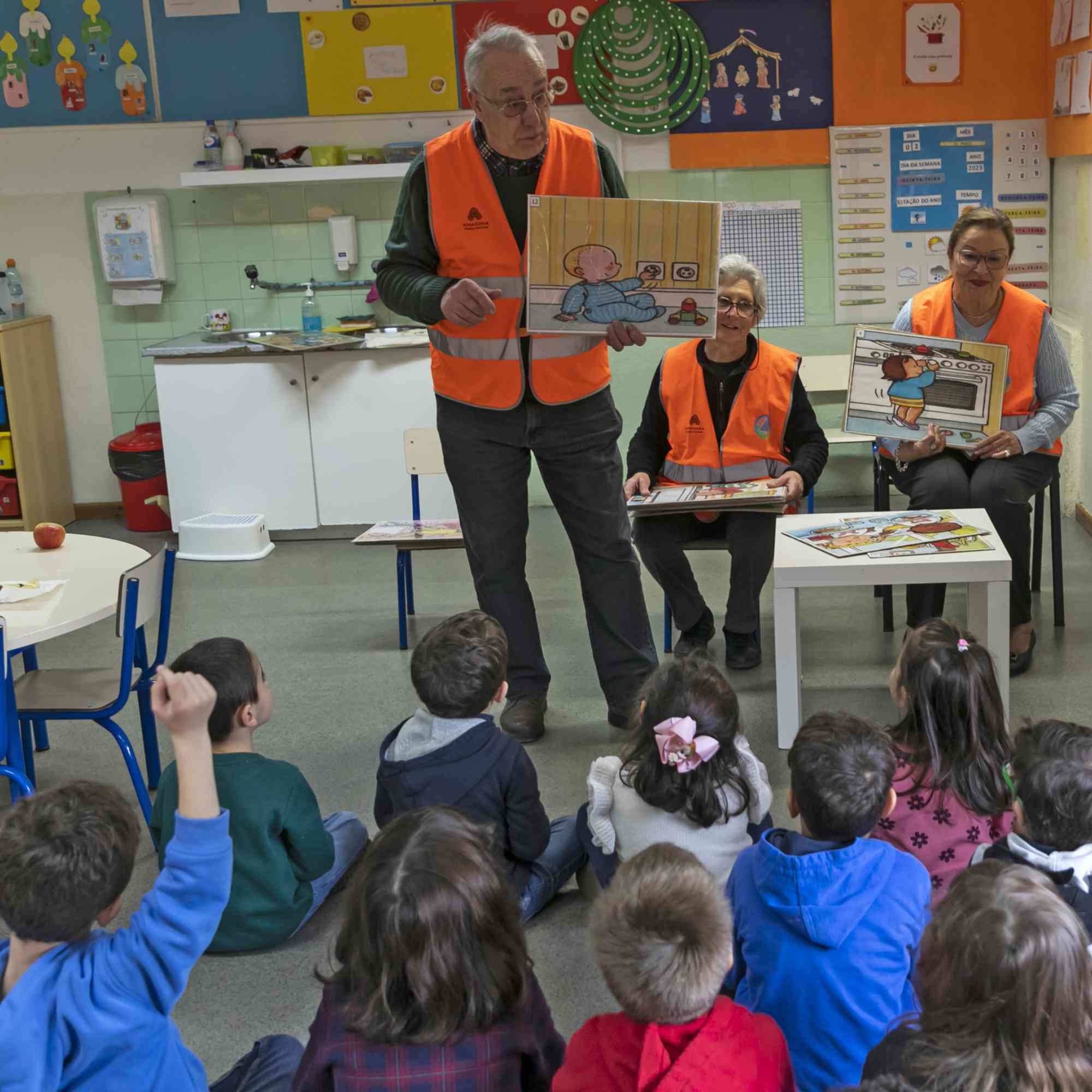
To value the knowledge acquired, as well as their life experience, Senior Academy for Civil Protection provide awareness sessions activities in kindergartens.
This sessions, called "Educate to Prevent", allows that, through posters with images and dialogue between senior agents and children, they acquire skills in terms of resilience, an awareness of the risks to which they are exposed daily and subsequently adopt measures to avoid the risk.
Senior Academy for Civil Protection participate and assist in DRR awareness-raising events and actions. In these awareness-raising actions, which take place both on the street and in public and private institutions, they talk to people about the risks and how they can protect themselves from them. To be trained on the topics of risks, civil protection and the work carried out by the various entities, these agents attend training, as soon as they join this project, given by all security and rescue entities in the Municipality of Amadora.
Since some of the members of this project are part of other volunteer institutions, they end up passing on these concepts of risk and safety to other volunteers who attend the same institution. The direct connection with other volunteers allows not only to pass the message on to more and more people, but also to help find other seniors who identify with and want to join this project.
Senior Agents provide logistical support in operational devices. In evacuation exercises or drills, they collaborate as observers. To ensure that they know which points they should focus on and how to observe what is wrong and what is right, during these exercises, they attend specific training on these topics, with the competent authorities.
Organizations and focal points
Implementing Organization(s)
Focal points