My account
Menu
Your experience on PreventionWeb

Please help us improve PreventionWeb by taking this brief survey. Your input will allow us to better serve the needs of the DRR community.

See the survey

Published on
26 July 2021
Status
Progress not updated

Business Resiliency Program in Turkey (or "Saglam KOBI" in Turkish)

Expected duration
Sep 2013 - Dec 2022
SFVC commitment ID
20210617_001
Version
1.0
Author
Ayse Altay
Upload your content

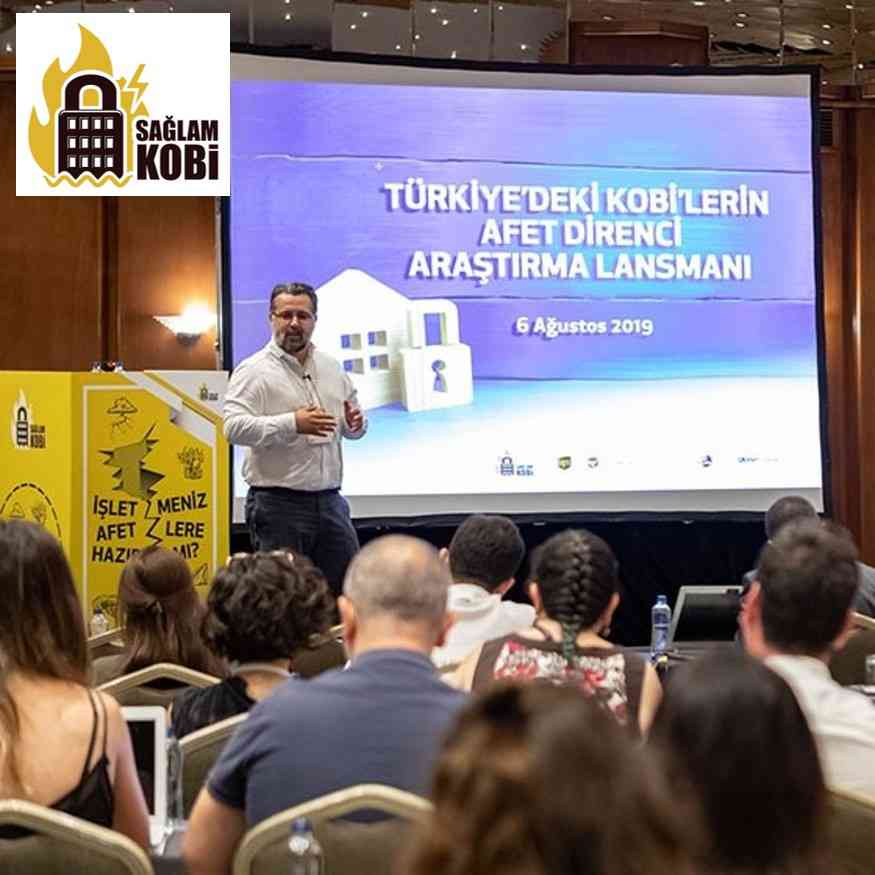
The “Business Resiliency Program in Turkey” (“Saglam KOBI” in Turkish) is committed to support the business continuity of SMEs with a holistic approach. Saglam KOBI provides a comprehensive toolkit for improving disaster and digital resiliency and also carries out training and mentorship services.

    Description

    Saglam KOBİ engages with the private and public sector, and civil society organizations to work together to identify best practices to enhance the resiliency of small and medium sized enterprises (SMEs) in Turkey since 2013. The program is run in close partnership and support with the World Economic Forum, the U.S. Chamber of Commerce Foundation, the UPS Foundation, IDEMA and UPS Turkey. Saglam KOBİ mainly offers free access to the unique toolkit available online by utilizing SMEs’ disaster preparedness. The toolkit includes a self-assessed Disaster Resistance Test, 20 Tips for Preparedness, Workbook 101 and an Emergency Action Plans. In 8 years, we have reached more than 500.000 beneficiaries to support disaster preparedness of SMEs and to sustain their rapid recovery process in the aftermath of disasters. Overall, Saglam KOBI has organized more than 100 ToT sessions in more than 25 provinces.

    After the pandemic, Saglam KOBI has adopted the “SK 2.0 vision” to develop further measures to support business continuity in a holistic manner and included a digitalisation component to its disaster preparedness support services in close partnership with Google.com and Youth Business International (YBI). During August 2020 - February 2021, digitalisation modules reached more than 160.000 business owners for providing training and mentorship to 100 SMEs through the organisation of 36 webinars. Within the program, ToT sessions facilitated access to 20 local chambers of trade and industry in cooperation with the Union of Chambers and Commodity Exchanges of Turkey (TOBB) to train them to become the Center of Excellences in business resiliency. Saglam KOBI also developed “Digital Map of SMEs”, technically supported by Allianz and Esri.

    Did the Sendai Framework change or contribute to changes in your activities/organization? If so, how?

    The Saglam KOBI project is one of the best practices within its region in terms of supporting the business resiliency of SMEs while also precisely contributing to the implementation of the main objectives and perspective of the Sendai Framework in a holistic manner. In this context, the project is a great fit for taking part in the Framework in relation to its progress and aspirations to leverage as a global best practice to foster business resiliency.

    What led you to make this commitment/initiative?

    What was your position before making this Voluntary Commitment / prior to the Sendai Framework?

    Saglam KOBI project’s new agenda, namely “Digital Map of SMEs”, set forth a vision with the partnership of Allianz, Esri, UPS and IDEMA that would establish incentive mechanisms to encourage SMEs to take initiative in the disaster preparation and to increase interaction for further cooperation among SMEs, civil society and all relevant public and private institutions. In line with our new vision, establishing partnerships with the leading actors in a global scale is a top priority for Saglam KOBI and Sendai Platform offers a leverage effect for improving innovative incentive mechanisms that has been developed by our digital platform.

    Deliverables and Progress report

    Deliverables

    Deliverables are the end-products of the initiative/commitment, which can include issuance of publications or knowledge products, outcomes of workshops, training programs, videos, links, photographs, etc.

    Business Resilience 101 Workbook
    Intended date of delivery
    31 December 2017

    In this workbook, you can learn how to protect your business before disaster strikes.

    Link
    https://www.saglamkobi.org/files/uploads/resilience-in-a-box-workbook.pdf
    Top 20 Tips for Business Preparedness
    Intended date of delivery
    31 December 2017

    Research indicates that 43% of small-to-medium businesses fail after a disaster, and another 25% of business that do re-open, will
    fail within two years because they did not have a disaster plan. Having a disaster plan can mean the difference between your business recovering after a disaster or closing forever.

    In this document 20 tips for business preparedness are provided.

    File
    Top 20 Tips for Business Preparedness (504.6 KB)
    Link
    https://www.saglamkobi.org/files/uploads/Resilience-in-a-box-top-20-tips-for-bu…
    Disaster Checklist
    Intended date of delivery
    31 December 2030

    This checklist allows SMEs to assess resilience through a simple test.

    Link
    https://www.saglamkobi.org/en/resilience-in-a-box-test
    Emergency Action Plan
    Intended date of delivery
    31 December 2030

    By logging into the system, you can prepare your Emergency Action Plan with easy steps against possible disasters and emergencies in your business and ensure the sustainability of your Disaster and Emergency Management System (available in Turkish).

    Link
    https://www.saglamkobi.org/report
    Events
    Intended date of delivery
    31 December 2030

    See a curated list of events in the link below.

    Link
    https://www.saglamkobi.org/en/events
    News
    Intended date of delivery
    31 December 2030

    See a curated list of news in the link below.

    Link
    https://www.saglamkobi.org/en/news
    Organizations and focal points

    Implementing Organization(s)

    • International Development Management

    Focal points

    Main focal point
    Ayse Altay (Project Asisstant, IDEMA International Development Management)
    Additional focal point(s)
    Berfu Copur (Senior Project Specialist , IDEMA)

    Partners

    • U.S. Chamber of Commerce Foundation
    • United Parcel Services
    • Allianz Group, Allianz SE
    • World Economic Forum (WEF)
    • Esri

    Explore further

    Sendai priorities
    Priority 1Understanding disaster risk
    Priority 2Strengthening disaster risk governance to manage disaster risk
    Priority 4Enhancing disaster preparedness for effective response, and to «Build Back Better», rehabilitation and reconstruction
    Sendai targets and indicators
    A-1 (Compound)Number of deaths and missing persons attributed to disasters, per 100,000 population
    B-1 (Compound)Number of directly affected people attributed to disasters, per 100,000 population
    C-1 (Compound)Direct economic loss attributed to disasters in relation to global gross domestic product
    E-1 (Compound)National average score for the adoption and implementation of national disaster risk reduction strategies in line with the Sendai Framework for Disaster Risk Reduction 2015-2030
    E-2 (Compound)Percentage of local governments that have adopted and implemented local disaster risk reduction strategies in line with national strategies
    F-1 (Compound)Total official international support (official development assistance (ODA) plus other official flows), for national disaster risk reduction actions
    F-2Total official international support (ODA plus other official flows) for national disaster risk reduction actions provided by multilateral agencies
    F-3Total official international support (ODA plus other official flows) for national disaster risk reduction actions provided bilaterally
    Hazards Earthquake Epidemic and Pandemic Flood Landslide Technological hazard
    Themes Capacity development Civil Society/NGOs Preparedness Gender GIS and mapping Governance Data and information management Private sector Risk identification and assessment Science-policy-practice interface Social impacts and social resilience
    Country and region Türkiye
    Sustainable Development Goals SDG5: Gender equality SDG8: Decent work and economic growth SDG9: Industry, innovation and infrastructure SDG11: Sustainable cities and communities SDG17: Partnerships for the goals
    Scope
    National (or local) - Türkiye
    Scale of beneficiaries
    More than 10,000 people
    Estimated number of beneficiaries
    500,000 people
    Secured budget size
    100%
    Donors
    UPS Foundation
    U.S. Chamber of Commerce
    Umbrella initiative(s)
    International Development Management (IDEMA)
    X (Twitter)
    https://twitter.com/SaglamKOBI
    Videos
    Related links
    Official Website
    Saglam KOBI Brief
    SAĞLAM KOBİ at IDEMA
    YouTube
    LinkedIn
    Instagram
    Facebook

    Is this page useful?

    Yes No
    Report an issue on this page

    Thank you. If you have 2 minutes, we would benefit from additional feedback (link opens in a new window).

    PreventionWeb is the global knowledge sharing platform for disaster risk reduction (DRR) and resilience.

    • Newsletter
    • Submit your content
    • Blog pitches
    • Submission and publishing policy
    • About PreventionWeb
    • Contact us

    Hazards

    • Avalanche
    • Cold Wave
    • Cyclone, Hurricane and Typhoon
    • Drought and Desertification
    • Earthquake
    • Epidemic and pandemic
    • Flood
    • Heatwave, extreme heat and heat stress
    • Insect infestation
    • Land subsidence
    • Landslide
    • Nuclear, biological, chemical (NBC)
    • Sea level rise
    • Technological hazard
    • Thunderstorm
    • Tornado
    • Tsunami
    • Volcano
    • Wildfire

    Regions

    • Africa
    • Americas
    • Asia
    • Europe
    • Oceania

    Themes

    Understanding & managing risk

    • Preparedness
    • Early warning
    • GIS and mapping
    • Data and information management
    • Risk identification and assessment
    • Small Island Developing States
    • Earth Observation

    Natural environment

    • Climate change
    • Environment and ecosystems
    • Food security and agriculture
    • Water

    Cross-cutting

    • Systemic risk
    • Recovery

    Human development

    • Capacity development
    • Children and youth
    • Civil society / NGOs
    • Community-based DRR
    • Cultural heritage
    • Gender
    • Human mobility
    • Inclusion
    • Social impacts and resilience

    Science, knowledge & advocacy

    • Disaster risk communication
    • Traditional and Indigenous knowledges
    • Science-policy-practice interface

    State, governance & economy

    • Financing DRR
    • Fragility and conflict
    • Governance
    • Insurance and risk transfer
    • Private sector

    Infrastructure & critical services

    • Critical infrastructure
    • Education and school safety
    • Health and health facilities
    • Structural safety
    • Urban risk and planning
    Loading