My account
Menu
Your experience on PreventionWeb

Please help us improve PreventionWeb by taking this brief survey. Your input will allow us to better serve the needs of the DRR community.

See the survey

Published on
8 December 2023
Status
Completed

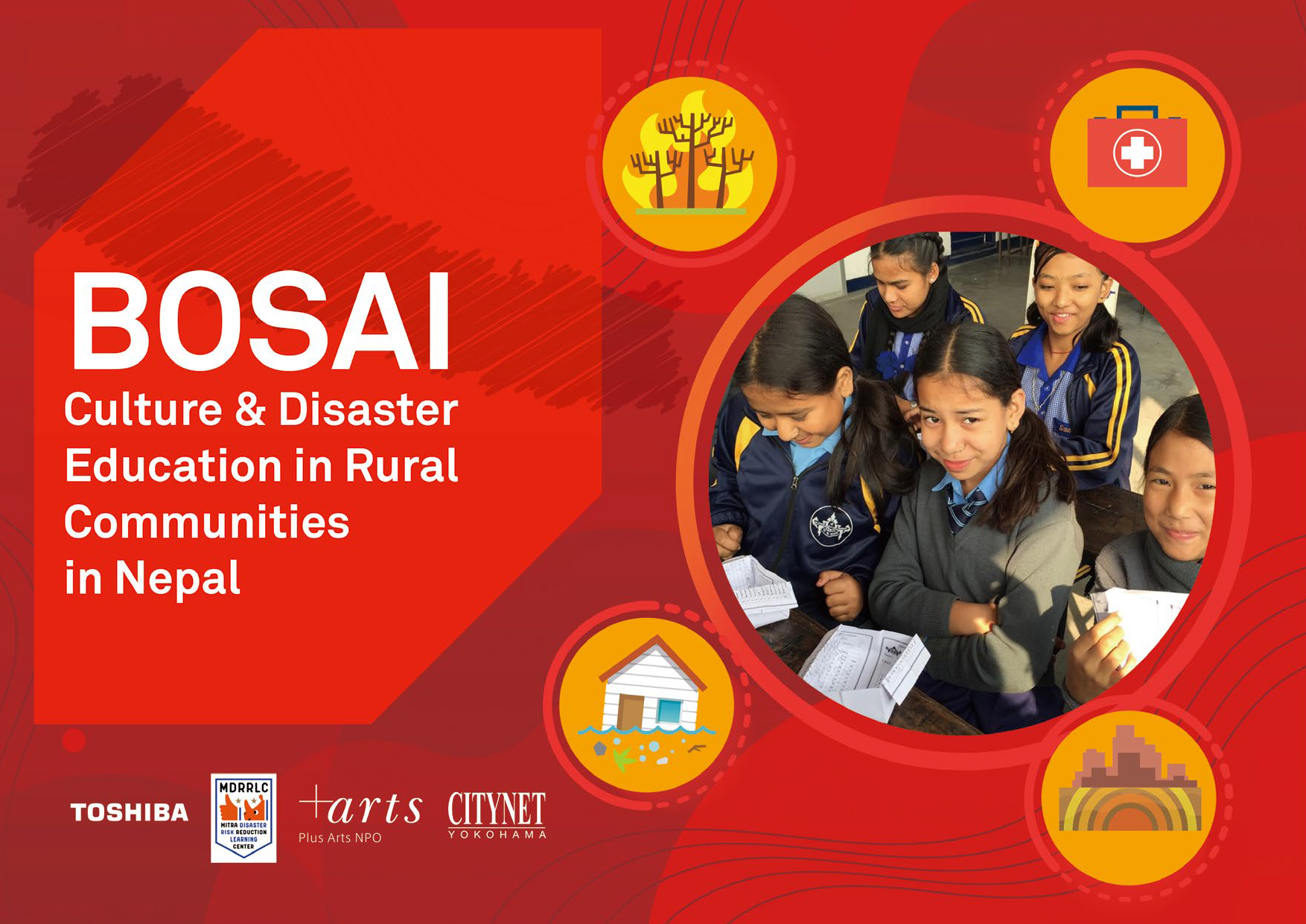
Bosai Culture and Disaster Education in Nepal

Expected duration
Apr 2020 - Mar 2021
SFVC commitment ID
20210505_001
Version
2.1
Author
Kendra Hirata
Upload your content

This project is a replication of the previous project conducted by CityNet Yokohama Project Office to train teachers on DRR education and utilization of DRR educational kit. This project targeted rural municipalities in Nepal and was conducted online due to the ongoing pandemic.

    Description

    This project targeted four rural municipalities in Nepal - Biratnagar, Bhimdatta, Dharan and Hetauda - where 18 teachers from 10 public school participated in the training aimed at building capacity to disseminate localized DRR education using the educational tools developed during the previous project conducted in Kathmandu valley. The core training included understanding Bosai culture of Japan, practicing the utilization of the DRR education kits and planning the implementation of the activities through scheduled DRR club activities.
    While the training was conducted online due to the pandemic, teachers were very excited to receive the training as such opportunities, particularly at the public schools were rare in Nepal.
    The training also included thee teachers from the first batch of trainees from Kathmandu valley based schools where they acted as peer teachers for the new group. This training of trainers (ToT) is essential to enhance further skills to disseminate knowledge on localized Bosai activities.

    Did the Sendai Framework change or contribute to changes in your activities/organization? If so, how?

    Yes. The activities undertaken through CityNet Yokohama Project Office under its Disaster Cluster aims at supporting CityNet members reach the targets under the Sendai Framework. The schools are selected through the local governments who are a member of CityNet and the activities link with the overall goal of the local authority as well as the national government to raise awareness of the people on DRR and to increase community resiliency.

    What led you to make this commitment/initiative?

    What was your position before making this Voluntary Commitment / prior to the Sendai Framework?

    CityNet Yokohama Project Office has been conducting teacher training programs on DRR education for the schools in Kathmandu valley since 2015. As such the initiative is now being expanded to rural areas where outreach on DRR education is not common. Since all training programs are activity based, it does not require text books and is easily applicable in any school or level thus making it easier to replicate in any region. CityNet Yokohama Project Office continues to support dissemination of Japanese DRR experience and knowledge to its members.

    Deliverables and Progress report

    Deliverables

    Deliverables are the end-products of the initiative/commitment, which can include issuance of publications or knowledge products, outcomes of workshops, training programs, videos, links, photographs, etc.

    Training of teachers in rural municipalities in Nepal
    Intended date of delivery
    31 March 2021

    The trainings for 18 teachers concluded successfully using online tools. 3 peer teachers from the past project supported in the learning process to train the new teachers. The training was conducted through Mitra Disaster Risk Reduction Learning Center established in Nepal in 2019 which was also a part of the initiative launched through CityNet Yokohama Project Office.
    The teachers were trained on using 10 different DRR educational tools which were demonstrated and practiced online. Details of the games and trainings can be viewed in the final report as attached.

    File
    Toshibaprojectweb (1).pdf (3.56 MB)

    Porgress report

    Progress date
    1 March 2022
    Summary

    A total of six online trainings were conducted for the teachers of four target municipalities (Bhimdatta, Biratnagar, Dharan, Hetauda) which included orienting the teachers on the basics of disaster education, utilizing tool kits and promoting awareness raising on DRR. The schools were selected through the municipalities and all of them are public schools. Each participating school was given a tool kit containing games to learn about disasters as well as prevention techniques. The teachers have been given responsibility to conduct DRR activities in their classrooms on a regular basis.

    Achievements at a glance

    1. ToT has been completed to utilize DRR education tool kits in schools.
    2. Localized toolkits have been provided to each school upon completion of the training.
    3. Teachers are conducting DRR related activities in their schools utilizing toolkits.

    Supporting documents
    Toshibaprojectweb-FINAL.pdf (3.56 MB)
    Organizations and focal points

    Implementing Organization(s)

    • CITYNET Yokohama Project Office

    Focal points

    Main focal point
    Kendra Hirata (Executive Director, CityNet-Plus Arts Center for Creative Partnerships)
    Additional focal point(s)
    Kendra Hirata (Executive Director, CityNet-Plus Arts Center for Creative Partnerships)

    Partners

    • Mitra Disaster Risk Reduction Learning Center
    • Plus Arts NPO

    Explore further

    Sendai priorities
    Priority 1Understanding disaster risk
    Priority 4Enhancing disaster preparedness for effective response, and to «Build Back Better», rehabilitation and reconstruction
    Sendai targets and indicators
    E-2 (Compound)Percentage of local governments that have adopted and implemented local disaster risk reduction strategies in line with national strategies
    F-5Number of international, regional and bilateral programmes and initiatives for the transfer and exchange of science, technology and innovation in disaster risk reduction for developing countries
    F-7Number of international, regional and bilateral programmes and initiatives for disaster risk reduction-related capacity-building in developing countries
    Hazards Drought and Desertification Earthquake Epidemic and Pandemic Flood Heatwave and Extreme Heat Landslide Tornado Wildfire
    Themes Capacity development Civil Society/NGOs Community-based DRR Preparedness Education and school safety
    Country and region Nepal
    Sustainable Development Goals SDG3: Good health and well-being SDG4: Quality education SDG6: Clean water and sanitation SDG11: Sustainable cities and communities SDG13: Climate action SDG17: Partnerships for the goals
    Budget scale
    USD 5,000 to < 10,000
    Scope
    National (or local) - Nepal
    Scale of beneficiaries
    Less than 50 people
    Secured budget size
    100%
    Donors
    Toshiba International Foundation
    Umbrella initiative(s)
    CityNet Disaster Cluster
    Related links
    MDRRLC Facebook

    Is this page useful?

    Yes No
    Report an issue on this page

    Thank you. If you have 2 minutes, we would benefit from additional feedback (link opens in a new window).

    PreventionWeb is the global knowledge sharing platform for disaster risk reduction (DRR) and resilience.

    • Newsletter
    • Submit your content
    • Blog pitches
    • Submission and publishing policy
    • About PreventionWeb
    • Contact us

    Hazards

    • Avalanche
    • Cold Wave
    • Cyclone, Hurricane and Typhoon
    • Drought and Desertification
    • Earthquake
    • Epidemic and pandemic
    • Flood
    • Heatwave, extreme heat and heat stress
    • Insect infestation
    • Land subsidence
    • Landslide
    • Nuclear, biological, chemical (NBC)
    • Sea level rise
    • Technological hazard
    • Thunderstorm
    • Tornado
    • Tsunami
    • Volcano
    • Wildfire

    Regions

    • Africa
    • Americas
    • Asia
    • Europe
    • Oceania

    Themes

    Understanding & managing risk

    • Preparedness
    • Early warning
    • GIS and mapping
    • Data and information management
    • Risk identification and assessment
    • Small Island Developing States
    • Earth Observation

    Natural environment

    • Climate change
    • Environment and ecosystems
    • Food security and agriculture
    • Water

    Cross-cutting

    • Systemic risk
    • Recovery

    Human development

    • Capacity development
    • Children and youth
    • Civil society / NGOs
    • Community-based DRR
    • Cultural heritage
    • Gender
    • Human mobility
    • Inclusion
    • Social impacts and resilience

    Science, knowledge & advocacy

    • Disaster risk communication
    • Traditional and Indigenous knowledges
    • Science-policy-practice interface

    State, governance & economy

    • Financing DRR
    • Fragility and conflict
    • Governance
    • Insurance and risk transfer
    • Private sector

    Infrastructure & critical services

    • Critical infrastructure
    • Education and school safety
    • Health and health facilities
    • Structural safety
    • Urban risk and planning
    Loading