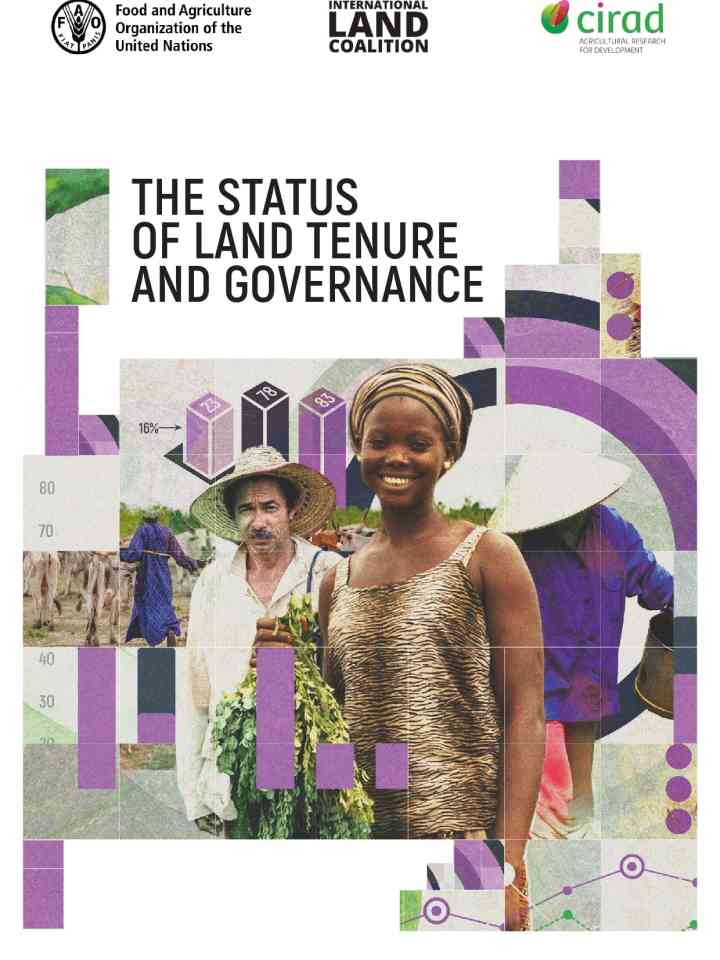
Status of land tenure and governance
The report provides innovative, disaggregated data and analysis on land tenure systems, land distribution, governance frameworks, women’s land rights, and the role of customary tenure in addressing climate change and biodiversity loss. Drawing on evidence from governments, civil society, and academia at local to global levels, it establishes a robust evidence base to inform policy, support the achievement of land-related Sustainable Development Goals (SDGs), and advance the implementation of the Voluntary Guidelines on the Responsible Governance of Tenure of Land, Fisheries and Forests in the Context of National Food Security (VGGT) and other relevant international frameworks.
Globally, Indigenous Peoples, and other customary communities, are considered among the most effective stewards of forests, grasslands, and wetlands. Their lands and territories, often governed through customary systems, are crucial for adapting to the impacts of climate change. Chapter 5 synthesizes evidence and presents new geospatial analyses to highlight the extent, conditions, and vital contributions of customarily managed lands. Ultimately, it argues that communities must be empowered to exercise their rights in practice to ensure justice, equity, and resilience in climate action.
Explore further