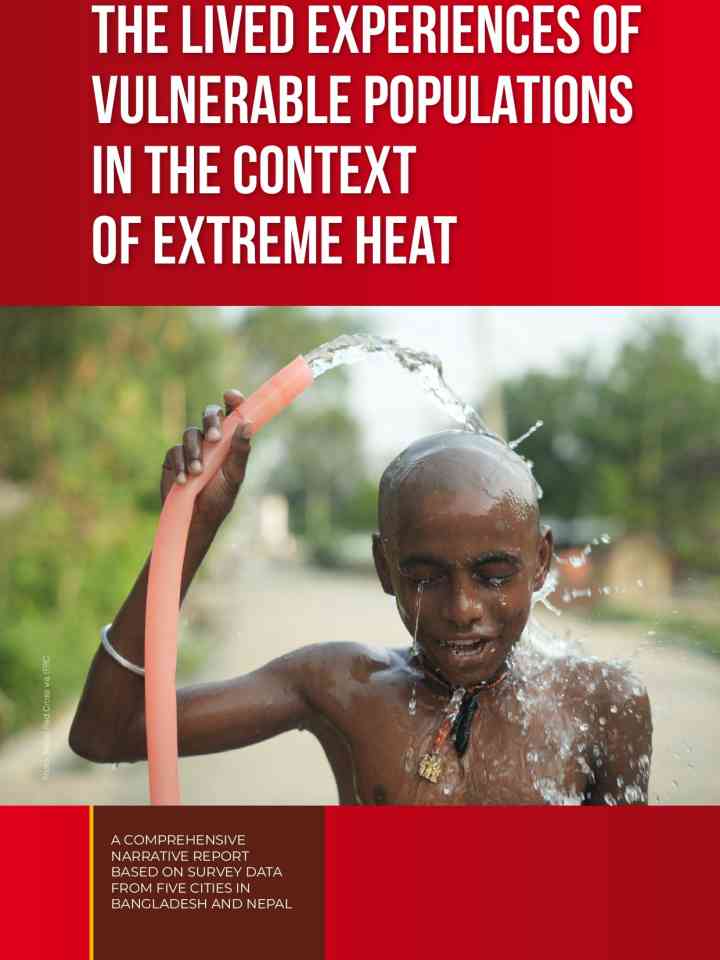
The lived experiences of vulnerable populations in the context of extreme heat
This study surveyed over 2,000 respondents from five cities in Nepal and Bangladesh to understand the experiences and perceptions of residents living under extreme heat and inform inclusive, responsive and effective heat risk policies. The survey confirms that extreme heat is a pervasive and escalating risk, significantly degrading public health, livelihoods and well-being. Nearly all respondents (94 per cent) reported experiencing dangerous heat and an overwhelming majority perceived themselves as vulnerable. Respondents with exposure to heat interventions in Bangladesh were over twice as likely to have changed their behaviour as survey participants from control wards. Crucially, the positive effect was most substantial for the least educated populations, suggesting that efforts to better tailor programmes to this population can lead to the significant uptake of protective measures.
Overall, this study provides evidence for increasing investment in heat interventions. While the evidence indicates that interventions are effective, there is also an opportunity to improve them for vulnerable populations, requiring practitioners and policy-makers to listen to and act on the lived experiences of vulnerable people. Lastly, it opens the door to more research on the effectiveness of particular interventions to better protect those most exposed and vulnerable to extreme heat. Authors provide a list of specific actions policy-makers can take to protect the health, well being and productivity of their communities from extreme heat:
- Prioritize financial protection during heatwaves:
- Expand cooling infrastructure
- Scale inclusive communication
- Institutionalize heat resilience in city planning
- Reach the most vulnerable by delivering heat support directly into people’s daily routines and the spaces they already occupy.
Explore further