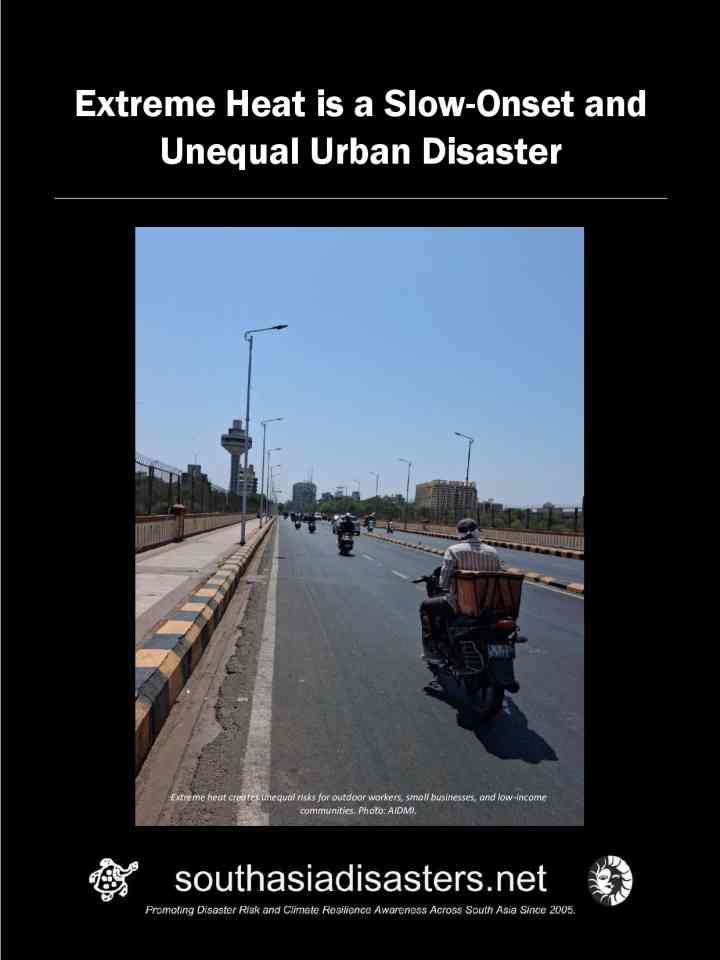
Extreme heat is a slow-onset and unequal urban disaster
This report examines extreme heat as a slow-onset, unequal urban disaster, drawing from research, participatory studies, and programme experiences across India and Asia. Methodologies include community surveys, participatory research with women domestic workers, mental health data from mobility workers in Ahmedabad, case studies in Mumbai slums, and documentation by the AVPN Climate x Health Community of Practice, Martha Farrell Foundation, SEWA, ADRA India, and HeatWatch. The scope covers major cities and vulnerable populations such as informal workers, migrants, women, and the urban poor, using local evidence, worker-centric data, and pilot anticipatory action initiatives.
Key findings show that extreme heat disproportionately affects informal workers, women, small businesses, and the urban poor through income loss, heightened health risks, mental strain, and increased household expenses. Authors recommend shifting urban heat response from reactive to preventive measures prioritising equity and worker protection. This includes early warning systems, community cooling infrastructure, targeted occupational safeguards, wage-loss protection, accessible cooling centres, improved water supply, and integration of heat resilience into urban planning and social protection systems. Community-led monitoring, participatory research, and people-centred action plans are essential to make invisible risks visible and ensure the most exposed populations can live and work safely as extreme heat intensifies.
Explore further