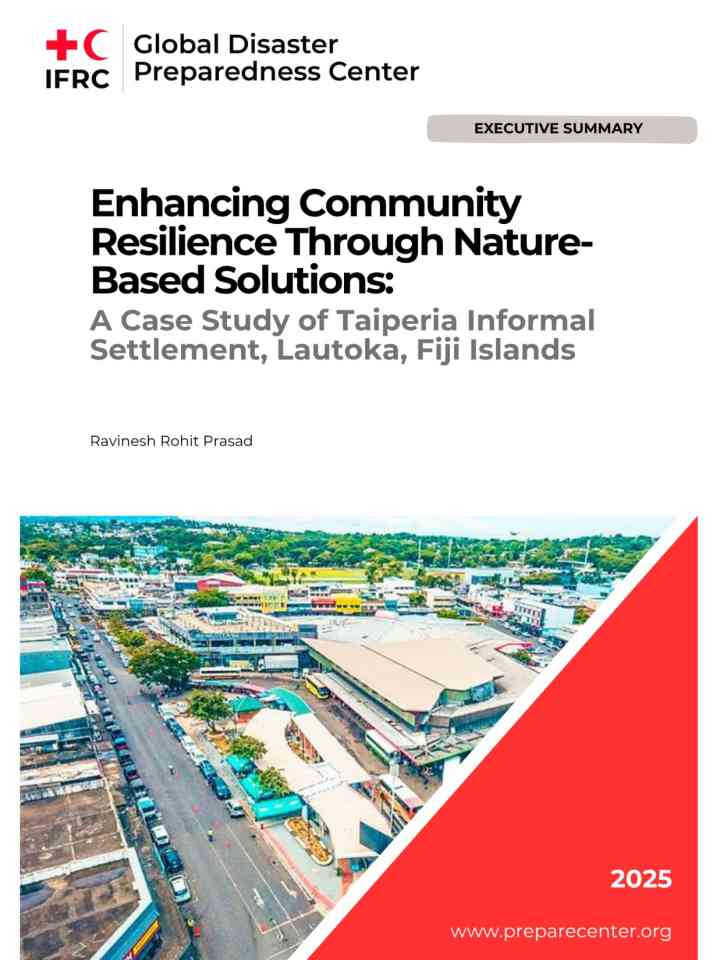
Enhancing community resilience through nature-based solutions: A case study of Taiperia informal settlement, Lautoka, Fiji Islands
This study examines how nature-based solutions (NbS) are helping residents of the Taiperia informal settlement in Lautoka, Fiji adapt to growing climate risks. Located in a low-lying coastal area, the community faces recurring flooding, sea-level rise, coastal erosion, extreme heat, saltwater intrusion, and increasingly variable rainfall. Through interviews with community members, the research explores how locally driven adaptation efforts are strengthening resilience despite limited formal support and persistent socioeconomic challenges.
The findings reveal a community experiencing frequent and significant climate-related impacts. Most residents reported repeated flooding over the past five years, with many households suffering property damage, health impacts, and economic losses. Flooding was primarily linked to river overflow, coastal inundation, and inadequate drainage infrastructure. Respondents also described increasing heat stress, declining soil quality, changing rainfall patterns, and reduced agricultural productivity, all of which are affecting livelihoods, food security, and overall well-being. Despite these challenges, residents have developed a range of practical nature-based and community-led adaptation measures. The most widely adopted initiatives include backyard gardening, crop diversification, cultivation of salt-tolerant crops, mangrove restoration, and the continued use of Indigenous knowledge and customary resource management practices. A notable finding is the important role of Indigenous knowledge in climate resilience. Traditional practices such as teitei (home gardening) and tabu (temporary restrictions on harvesting natural resources) continue to influence community decision-making and environmental stewardship.
Explore further