1. Home
  2. Knowledge Base | PreventionWeb
  3. Hazards

Insect infestation

An insect pest infestation is a recently detected insect pest population, including an incursion, or a sudden significant increase of an established insect, disease agents or weed population in an area leading to damage to plants in production fields, forests or natural habitats and causing substantial damage to productivity, biodiversity or natural resources (adapted from FAO, 2019).

This planting technique reduces crop losses and improves food security.

Risk factors

Higher temperature, severe and extreme weather events and drought stress can all result in reduced vigour of trees, making them more vulnerable to outbreaks of native and introduced pests and diseases. For example, the dieback of millions of hectares of pine forests caused by outbreaks of native bark beetles in Central America, Europe and North America is associated with climate change, impacts of extreme weather events, and, in some cases, inadequate forest management practices (FAO, 2020b).

Favourable climatic conditions, disruption of ecosystems and negligence of crop/forest hygiene contribute to growth in insect populations which can cause substantial damage regularly. In many cases, long distance spread of insects results from transportation of infested goods.

Risk reduction measures

Following principles of sustainable plant production, sustainable forest management and integrated pest management practices are the best approach for control, focusing on diversified production systems, regular surveillance, preparedness before potential outbreaks, and a rapid response to prevent escalation to unmanageable scales (Guzewich et al., 1997). Post disaster needs assessment (PDNA) is designed to evaluate immediate needs for recovery and restoration for better disaster response (HIP).
Latest Insect infestation additions in the Knowledge Base

Uploaded on
Research briefs

Nematodes, small roundworms, cause billions of dollars in crop losses nationwide every year. Since expensive pesticides are the only option to manage infestations, researchers are developing plants that are toxic to nematodes using a special type of fatty acid, saving the agriculture industry from infestations and the expensive cost of pesticides.

Washington State University
Policies and plans
Policy type
National policies and plans

This document outlines China's national plan for the sustainable management of locust disasters.

People's Republic of China - government
Update

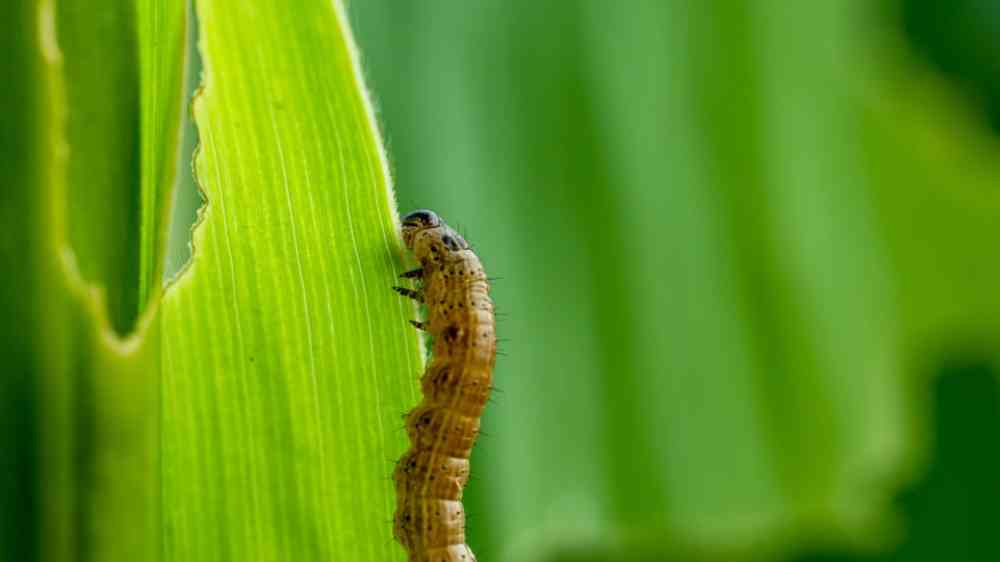
Fall Armyworm keeps spreading to larger areas within countries in sub-Saharan Africa and becomes more destructive as it feeds on more and different parts of crops. The pest could spread to Northern Africa, Southern Europe and the Near East, so massive scaling up of the Fall Armyworm campaign to train more than 500,000 farmers is needed.

Food and Agriculture Organization of the United Nations (FAO)
Update

The FAO and Pennsylvania State University have launched a talking app, Nuru, to help African farmers recognize fall armyworm so that they can take immediate steps to destroy it and curb its spread. An important feature on the new tool is that it can work offline so farmers can use it whenever they want it, with even more features still to come.

Food and Agriculture Organization of the United Nations (FAO)
Update

Latin American countries are working with the IAEA to prevent the re-introduction of the New World screwworm into Central and North America. The new project will focus on strengthening surveillance systems for early detection of the pest, emergency response to pest outbreaks in screwworm-free areas and the development of capacity for progressive pest suppression.

International Atomic Energy Agency
Update

Despite proactive efforts from many African countries, five invasive insect pests cost the continent $1.1 billion every year. Recent research predicts that the threat from invasive insects will continue to increase with African countries expected to be the most vulnerable, but stronger plant regulatory systems and an emergency fund will improve the situation.

Science and Development Network
Update

The Vietnamese government and the CGIAR have implemented the Climate-Smart Maps and Adaptation Plans (CS MAP) project, which provides real-time monitoring of rice production progress and alerts for climate risks, disasters, and pests at different development stages of the crop development.

CGIAR Research Program on Climate Change, Agriculture and Food Security
Update

Cereal farmers across Sub-Saharan Africa are experiencing heavy losses due to the devastation by the Fall army worm. Various tactics – both old and new – are being tested to try and control the invasive pest in Africa. These include the use of inter-cropping technology, natural enemies, early warning systems and use of biopesticides.

Conversation Media Group, the
Uploaded on