1. Home
  2. Knowledge Base | PreventionWeb
  3. Hazards

The World Meteorological Organization guidelines on the definition and monitoring of extreme weather and climate events advise the following (WMO, 2020):

  • Index: Daily values of Tmax, Tmin, and /or average temperature. Another index could be computed using temperature change in the 24 hours prior to the onset of the event.
  • Threshold: Determined based on historical values of the index.
  • Temporal: Station-level information on starting date, ending date, and duration of the event. Persistence of conditions for a cold wave are two days.
  • Spatial: Calculate the area affected, by providing the percentage of stations where the threshold was surpassed; locate the coordinates of the impacted stations and the centre with the highest/lowest values of the indices; and optional, but recommended if resources are available, to use a geographical information system (GIS) to calculate the area affected by the event, the magnitude, and severity.

This hazard category also includes Dzud which is a cold-season disaster in which anomalous climatic (i.e., heavy snow and severe cold) and/or land-surface (snow/ ice cover and lack of pasture) conditions lead to reduced accessibility and/or availability of forage/pastures, and ultimately to high livestock mortality during winter–spring. This page also contains content on Blizzard which is a severe snow storm characterised by poor visibility, usually occurring at high-latitude and in mountainous regions.

Vulnerability

Human health impacts from cold waves include mortality from ischaemic heart disease and cerebrovascular disease, both of which increase in cold weather.

Living in a cold house can affect health at any age, not just in old age, for a variety of reasons. Although the extra deaths in elderly people are caused mainly by cardiovascular and respiratory disease, far greater numbers have minor ailments that lead to a huge burden of disease, costs to the health system, and misery.

Compared with those who live in a warmer house, respiratory problems are roughly doubled in children, arthritis and rheumatism increase, and mental health can be impaired at any age. Adolescents who live in a cold house have a five-fold increased risk of multiple health problems (Dear and McMichael, 2011).

Risk reduction measures

To reduce impacts related to cold waves, countries have used national alerting parameters for cold wave warning or cold weather plans, which help prevent major avoidable effects on health (HIP, 2021).
Latest Cold Wave additions in the Knowledge Base

Uploaded on
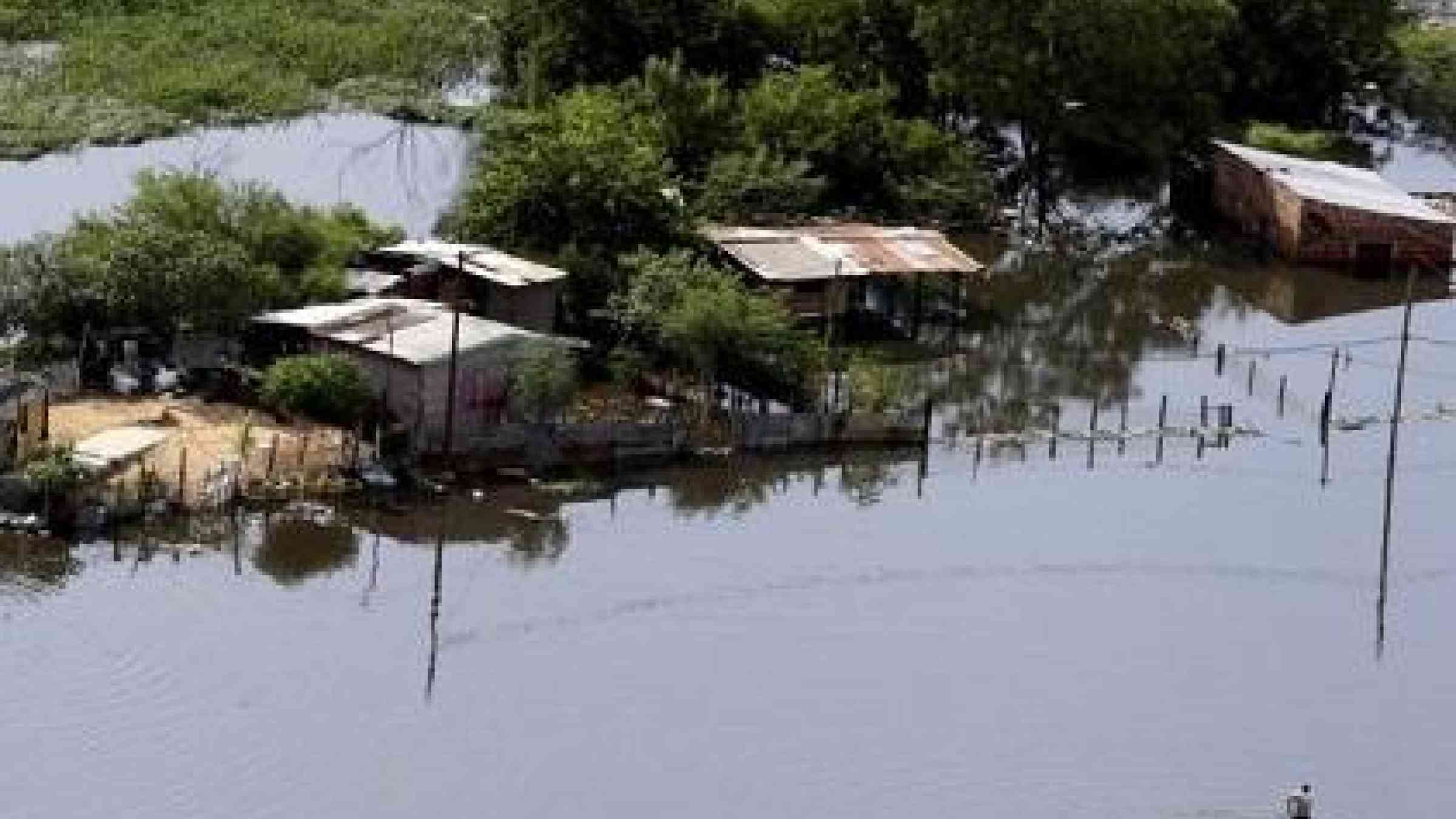
The River Paraguay has swollen to over 7.38 metres, forcing more than 49,000 families to evacuate (Photo: Diario Hoy)
Update

In the wake of the extreme tornadoes that struck the United States over Christmas, freak snowfalls in Mexico and heavy flooding in South America and the United Kingdom, Ms. Margareta Wahlström, head of the UN Office for Disaster Risk Reduction today urged governments to take more prevention actions to reduce human and economic losses caused by weather related disasters.

United Nations Office for Disaster Risk Reduction (UNDRR)
Update

'Make no mistake, climate change is the greatest long-term threat to human health. Heat stress, extreme cold, human conflict and mosquito and water-borne infections are the biggest dangers of a warmer world.' writes Nobel Laureate Professor Peter Doherty. However he argues that 'climate change fatigue is a real and growing problem. People are sick of hearing about it'...

University of Melbourne
Global annual average temperatures anomalies (relative to 1961-1990) based on an average of three global temperature data sets (HadCRUT.4.4.0.0, GISTEMP and NOAAGlobalTemp) from 1950 to 2014. The 2015 average is based on data from January to October. Bars are coloured according to whether the year was classified as an El Niño year (red), a La Niña year (blue) or an ENSO-neutral year (grey). Note uncertainty ranges are not shown, but are around 0.1°C (Credit: WMO)
Update

The Americas are paying a high price as one of the worst El Niños on record continues to strengthen. The World Meteorological Organization this week singled out “considerable concern” about the impact of El Niño on the Amazon basin in the context of long-term climate change.

United Nations Office for Disaster Risk Reduction – Regional Office for the Americas and the Caribbean
Documents and publications

This publication provides a sober and revealing analysis of weather-related disaster trends over a twenty year time-frame which coincides with a period which has seen the UN Framework Convention on Climate Change Conference of the Parties become an

Centre for Research on the Epidemiology of Disasters (CRED)
United Nations Office for Disaster Risk Reduction (UNDRR)
Photo by Flickr user Nick Hobgood CC BY 2.0 https://www.flickr.com/photos/globalvoyager/9851243676
Update

Millions of people in the Pacific are affected by the consequences of a powerful El Niño - the climate phenomenon that develops in the tropical Pacific and brings extreme weather to several regions of the world. Papua New Guinea is currently the worst hit country in the region with below average rainfall for almost a year...

Oxfam International Secretariat
Update

Every year, the United States foots a multi-billion dollar bill for the economic and insured losses incurred from natural disasters, reports the New York Times. In 2014, the costs reached $25-billion with certain regions of the country more prone to calamity than others. So what disasters are the most common and how much do they cost? These videos breaks down the natural disasters by region...

New York Times, the
Update

Hong Kong tops Asia’s ranks as the city with the highest natural disasters risk, according to the recently released inaugural Sustainable Cities Index from ARCADIS, the leading global natural and built asset design and consultancy firm.

ARCADIS
Documents and publications

This map shows the worldwide distribution of natural catastrophes that occurred between 1980 and 2014, based on the data from NatCatSERVICE, and gives overviews of overall and insured losses.

With more than 25,000 entries, NatCatSERVICE is one of the

Münchener Rückversicherungs-Gesellschaft (Munich Re)
Uploaded on