1. Home
  2. Knowledge Base | PreventionWeb
  3. Hazards

The World Meteorological Organization guidelines on the definition and monitoring of extreme weather and climate events advise the following (WMO, 2020):

  • Index: Daily values of Tmax, Tmin, and /or average temperature. Another index could be computed using temperature change in the 24 hours prior to the onset of the event.
  • Threshold: Determined based on historical values of the index.
  • Temporal: Station-level information on starting date, ending date, and duration of the event. Persistence of conditions for a cold wave are two days.
  • Spatial: Calculate the area affected, by providing the percentage of stations where the threshold was surpassed; locate the coordinates of the impacted stations and the centre with the highest/lowest values of the indices; and optional, but recommended if resources are available, to use a geographical information system (GIS) to calculate the area affected by the event, the magnitude, and severity.

This hazard category also includes Dzud which is a cold-season disaster in which anomalous climatic (i.e., heavy snow and severe cold) and/or land-surface (snow/ ice cover and lack of pasture) conditions lead to reduced accessibility and/or availability of forage/pastures, and ultimately to high livestock mortality during winter–spring. This page also contains content on Blizzard which is a severe snow storm characterised by poor visibility, usually occurring at high-latitude and in mountainous regions.

Vulnerability

Human health impacts from cold waves include mortality from ischaemic heart disease and cerebrovascular disease, both of which increase in cold weather.

Living in a cold house can affect health at any age, not just in old age, for a variety of reasons. Although the extra deaths in elderly people are caused mainly by cardiovascular and respiratory disease, far greater numbers have minor ailments that lead to a huge burden of disease, costs to the health system, and misery.

Compared with those who live in a warmer house, respiratory problems are roughly doubled in children, arthritis and rheumatism increase, and mental health can be impaired at any age. Adolescents who live in a cold house have a five-fold increased risk of multiple health problems (Dear and McMichael, 2011).

Risk reduction measures

To reduce impacts related to cold waves, countries have used national alerting parameters for cold wave warning or cold weather plans, which help prevent major avoidable effects on health (HIP, 2021).

Latest Cold Wave additions in the Knowledge Base

Uploaded on
The Deputy Prime Minister of Mongolia, Mr. Khurelsukh Ukhnaa (right) and Mr. Robert Glasser, Special Representative of the UN Secretary-General for Disaster Risk Reduction, sign the Statement of Cooperation to co-organize the Asian Ministerial Conference on Disaster Risk Reduction in Ulaanbaatar in 2018 (Photo: UNISDR)
Update

Mongolia has pledged to lead by example and inspire countries across Asia to meet the most pressing target of the Sendai Framework for Disaster Risk Reduction, a global blueprint for tackling natural and human-induced hazards.

United Nations Office for Disaster Risk Reduction - Regional Office for Asia and Pacific
Update

Weather shocks can have long-lasting effects on children’s health and education. While most research on the impact of extreme weather events focuses on droughts or rainfall shocks in tropical or dry regions, recent studies show that cold shocks in the form of extremely harsh winters can also be damaging for children.

United Nations Children's Fund (UNICEF)
Update

The Asian Development Bank and the Government of Mongolia today signed a $3 million grant to pilot community-based approaches to disaster risk management to increase herders’ resilience to dzuds, fires, and other disasters. The project responds to the government’s need to shift towards a holistic approach emphasizing disaster risk reduction and community engagement.

Asian Development Bank (ADB)
Mr. Sanjaya Bhatia (left), Head of UNISDR ONEA-GETI, receives the signing certificate of Ulaanbaatar, Darkhan and Erdenet cities  from Mr. Ukhnaa Khurelsukh, Deputy Prime Minister of Mongolia, in the presence of Ms. Beate Trankmann, UN Resident Coordinator and UNDP Resident Representative in Mongolia.
Update

Curbing deaths from disasters requires local authorities and other community partners to raise their capacity to manage risks and thereby ensure safe and sustainable development for their citizens. In Mongolia, the government has committed not only to national action but also to fostering cities’ capacity.

United Nations Office for Disaster Risk Reduction - Office in Incheon for Northeast Asia and Global Education and Training Institute for Disaster Risk Reduction
Meteoalarm uses simple colour coding and jargon-free explanations to help the public understanding real-time weather risks (Photo: Meteoalarm)
Update

Rolled out in the wake of one of the deadliest storms to strike Europe in decades, the continent-wide weather information service Meteoalarm plays a life-saving role by raising public awareness of how to curb risks, and fosters international cooperation into the bargain.

United Nations Office for Disaster Risk Reduction - Regional Office for Europe & Central Asia
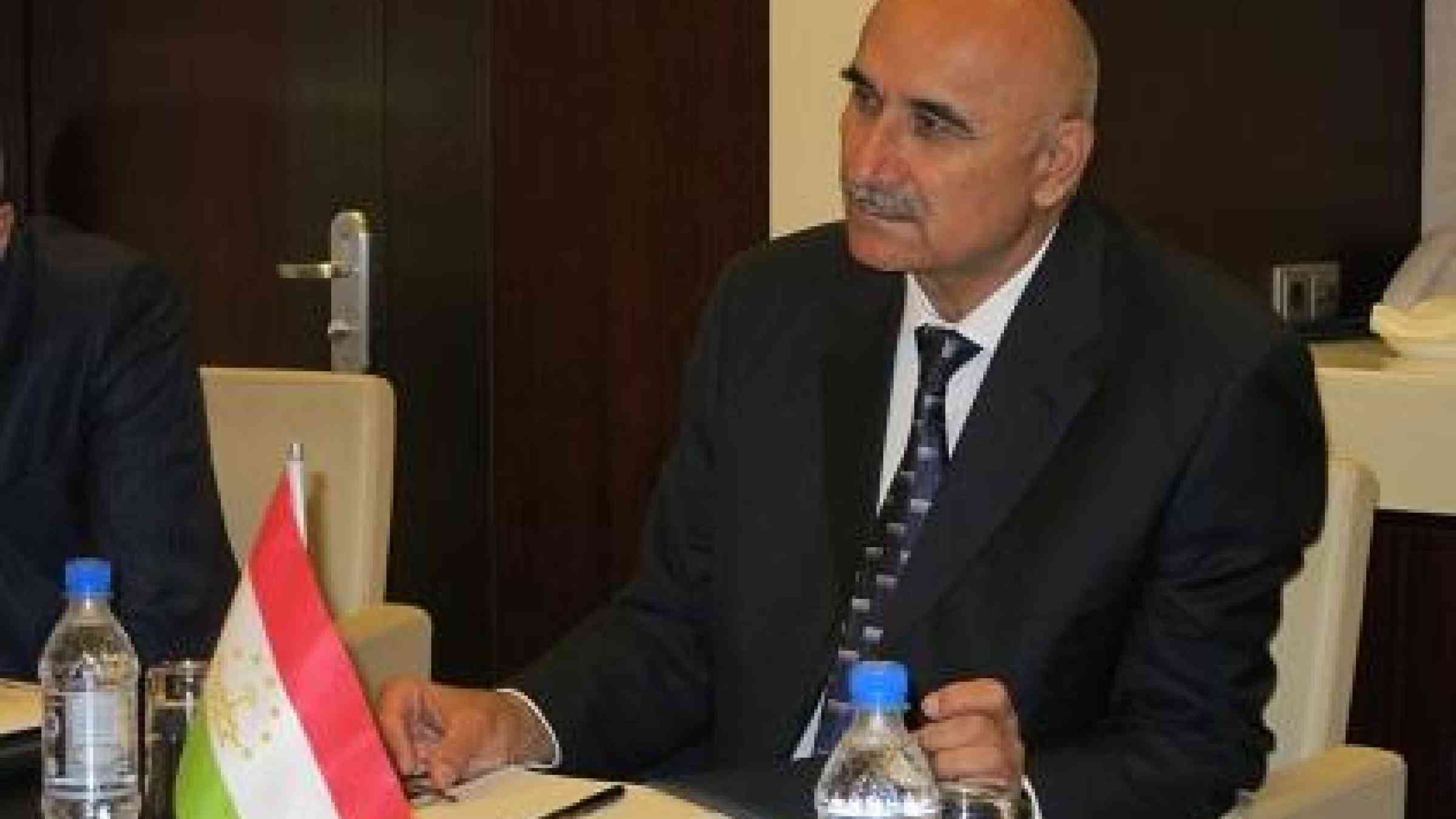
The Deputy Prime Minister of Tajikistan,  Mr. Zokirzoda Mahmadtoir Zoir, reaffirmed the importance of the Sendai Framework in guiding sustainable development in the country. (Photo: UNISDR)
Update

The Deputy Prime Minister of Tajikistan said today his country was committed to a path of sustainable and resilient social and economic development, with the Sendai Framework for Disaster Risk Reduction at the heart of this driving ambition.

United Nations Office for Disaster Risk Reduction - Regional Office for Asia and Pacific
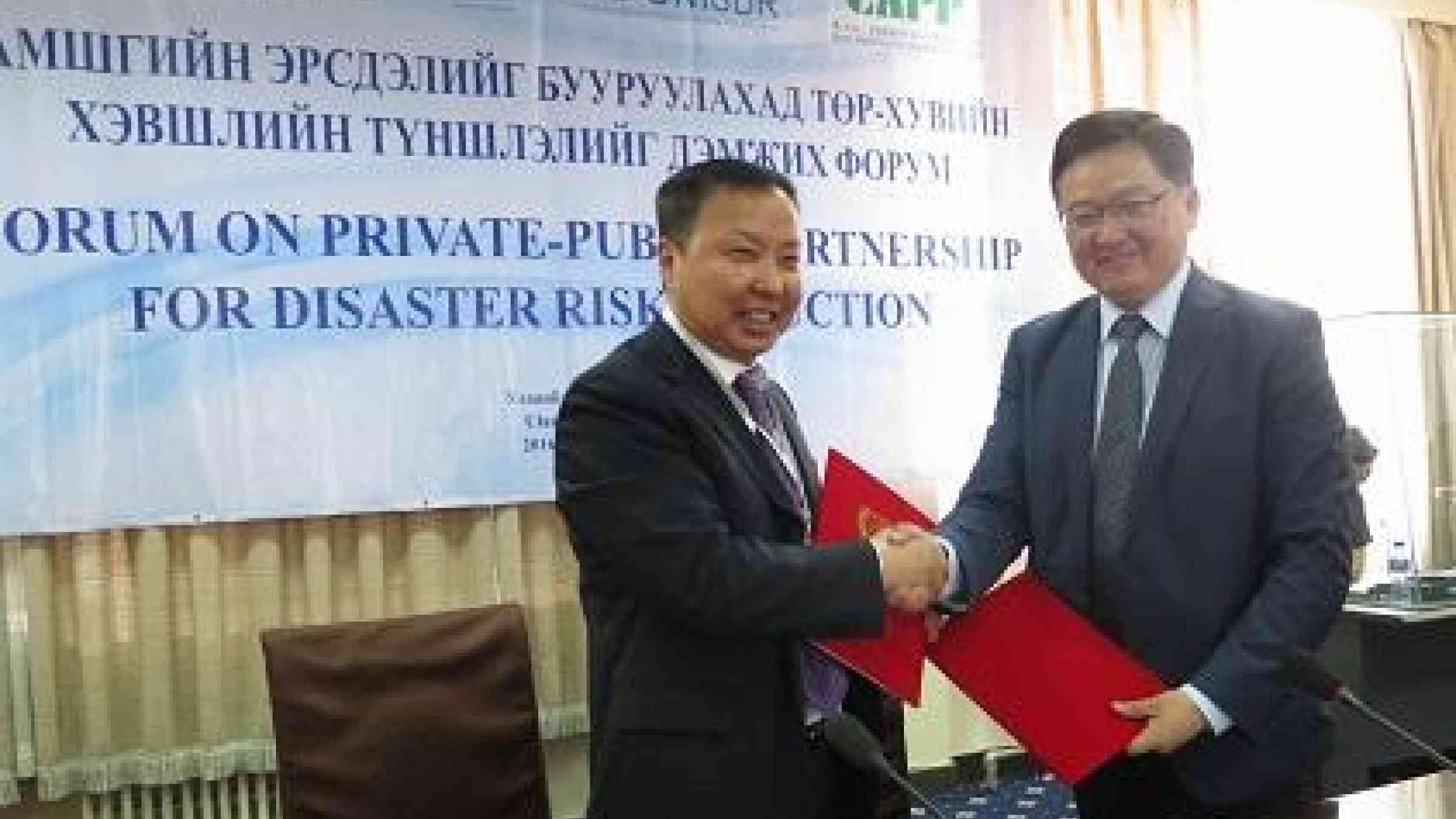
The Deputy Chief of the National Emergency Management Agency, Colonel Gombojav Ariunbuyan (left), and the President of the Mongolian National Chamber of Commerce and Industry, Mr Baatarjav Lkhagvajav, exchange copies of the agreement between the two sides. (Photo: UNISDR)
Update

Mongolia has launched a new partnership between the public and private sectors to prevent and reduce disaster risks, as the country looks to protect its economic growth and address its changing hazard profile.

United Nations Office for Disaster Risk Reduction - Regional Office for Asia and Pacific
Update

The weatherman warned Ugandans that the El Niño rain was going to ravage the country up to February, reports the Daily Monitor. However, the script has been changing with the early 'January heat wave' and lately, the cold wave. Many citizens are now questioning the accuracy of the weather forecasts while others are thankful that they have been spared the destruction that comes with the rains....

Monitor Publications Ltd, Nation Media Group
Uploaded on