Understanding Vulnerability, Risk and Impacts for Climate Resilience (Book project)
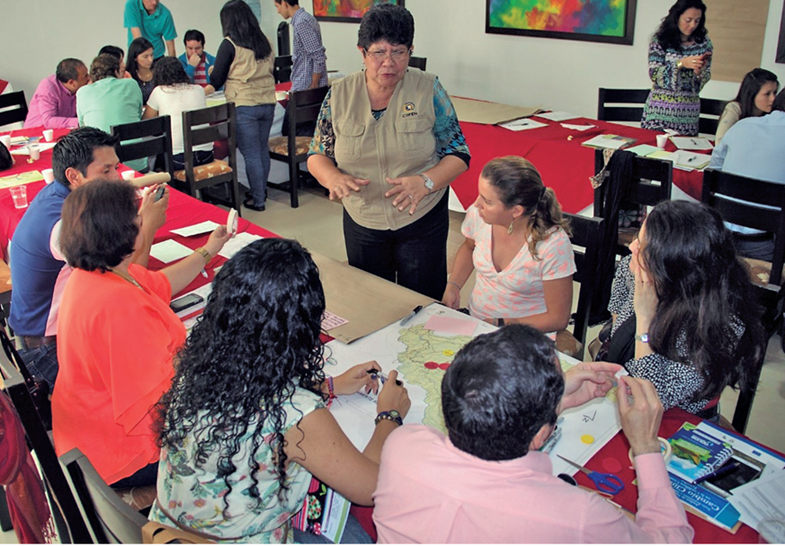
The project involves systematizing and applying a comprehensive methodology to assess climate vulnerability, based on historical and geospatial data, emphasizing local participation, adaptation, and multisectoral governance, drawing on CIIFEN’s 10 years of experience
Description
Our mission is to strengthen research, information services, and science-policy interaction to assess climate vulnerability and build resilience in communities, ecosystems, and livelihoods in developing countries. We integrate historical data, geospatial analysis, and participatory methodologies to identify critical areas and design adaptation and mitigation strategies. The project aligns with international frameworks such as the Sendai Framework, promoting risk understanding, inclusive governance, and evidence-based decision-making.
A comprehensive methodology was implemented to assess climate vulnerability in critical territories, considering extreme event hazards, as well as socioeconomic, environmental, and technical indicators. The project enhanced communities' adaptive capacity through training and active participation. Detailed analysis of historical and current data, combined with geospatial tools, provided strategic inputs for public policies.
A vulnerability analysis model was developed, integrating climate, socioeconomic, and environmental indicators across five critical areas. The project generated thematic maps and technical reports with 90% accuracy. It leveraged technical and human resources, strategic partnerships, and international funding for successful implementation.
The project concluded with the publication of results, vulnerability maps, and training programs for local actors and decision-makers. A technological platform was also developed to consolidate historical data, field observations, and geospatial analysis, facilitating data access and updates, and providing technical documentation and guidelines for model replication in other regions.
This initiative represents a comprehensive strategy that combines scientific rigor, technological innovation, and community engagement to strengthen climate resilience. Its alignment with international frameworks and SMART objectives ensures an evidence-based approach to risk management, capacity building, and adaptive policy development—supporting sustainable and resilient development.
Did the Sendai Framework change or contribute to changes in your activities/organization? If so, how?
The Sendai Framework has driven CIIFEN to strengthen its work in the development and implementation of Early Warning Systems (EWS), recognizing that anticipating risk is key to saving lives and protecting livelihoods. This led CIIFEN to design methodologies that integrate climate analysis with the study of community vulnerability, enabling alerts to not only warn of a hazard but also promote preparedness and effective response. This approach has fostered close collaboration with communities, strengthening their capacities and ensuring that information is clear, accessible, and useful for decision-making.
What led you to make this commitment/initiative?
What was your position before making this Voluntary Commitment / prior to the Sendai Framework?
CIIFEN’s experience in vulnerable regions, especially facing extreme climate events like El Niño, highlighted the need for tools to anticipate and mitigate their impacts. This led CIIFEN to develop Early Warning Systems tailored to the social, economic, and environmental characteristics of each territory. Direct work with communities, along with collaboration with local actors, has been key to ensuring these tools not only provide information but also promote concrete actions to protect lives and strengthen community resilience.
Deliverables and Progress report
Deliverables
Deliverables are the end-products of the initiative/commitment, which can include issuance of publications or knowledge products, outcomes of workshops, training programs, videos, links, photographs, etc.
This publication, titled "Understanding Vulnerability, Risk and Impacts for Climate Resilience", is the main deliverable of a broader process led by CIIFEN to support the implementation of the Sendai Framework. It compiles methodologies, findings, and lessons learned from the development of climate vulnerability assessments and community-based resilience strategies in highly exposed regions. The document reflects CIIFEN’s commitment to advancing early warning systems, risk knowledge, and inclusive governance through scientific evidence and participatory approaches.
Organizations and focal points
Implementing Organization(s)
Focal points