Nature Protects People Project
The Nature Protects People Project is a USAID-funded initiative implemented by The Nature Conservancy (TNC). The aim is to build the capacity of planners and communities on Disaster Risk Reduction (DRR) and climate change adaptation globally.
Description
The Nature Conservancy is a global environmental nonprofit working to create a world where people and nature can thrive. More than 600 million people live in climate vulnerable low-lying coastal areas. Intense storms, high tides, and flooding exacerbated by climate change and sea level rise threaten their lives, livelihoods, and property.
The Nature Protects People Project is a USAID-funded initiative implemented by The Nature Conservancy (TNC). The project aims to build the capacity of disaster risk reduction (DRR) planners and communities to incorporate climate change adaptation into coastal resource planning and management. DRR planners and other project beneficiaries will learn how to integrate nature-based solutions into community resilience planning and implement relevant risk-reduction activities. Examples of nature-based solutions may include rehabilitating mangroves and reef ecosystems to buffer the effects of strong winds and waves, subsequently improving resilience.
Products developed for the project will have global application. This includes the “Blue Guide,” which is a compendium of guidance and tools on using nature-based solutions to reduce climate risks along coastal areas. The Blue Guide will be available on an online knowledge sharing platform where visitors will access scientific guidance, videos, and a larger suite of tools that promote use of nature-based solutions. A mobile app also will be developed to ensure those living in coastal communities have access to relevant information. These knowledge sharing products will be developed in partnership with humanitarian organizations, such as the International Federation of Red Cross and Red Crescent.
Did the Sendai Framework change or contribute to changes in your activities/organization? If so, how?
The Sendai Framework states that addressing climate change as one of the drivers of disaster risk represents an opportunity to reduce disaster risk. Specifically, it underlines the role of policies, plans, practices and mechanisms on climate change and environmental management for disaster risk reduction to achieve sustainable development. Furthermore, the Sendai framework also raise awareness on how disasters can disproportionately affect small island developing States, owing to their unique and particular vulnerabilities. Finally, we also find support in the call to develop the knowledge, capacities, and motivation for disaster risk reduction at all levels considering the increasing global interdependence of nature and risk.
What led you to make this commitment/initiative?
What was your position before making this Voluntary Commitment / prior to the Sendai Framework?
The mission of our organization is to conserve the lands and waters on which all life depends. 37% of humans live along the coast (United Nations Ocean Conference fact sheet 2017) benefiting from shipping, tourism, and commercial and subsistence fishing. Intense storms, high tides, and flooding exacerbated by climate change and sea level rise threaten their lives, livelihoods, and property. Healthy coastal ecosystems such as mangroves, reefs, dunes, and swamps help protect people and assets from damaging forces. Yet for numerous reasons, these valuable ecosystems remain unprotected and continue to be destroyed. Nature-based solutions (NbS) are actions that address societal challenges (such as climate change and disaster risk) by protecting, sustainably managing, and restoring natural or modified ecosystems (IUCN 2016). We want to enable DRR practitioners to learn about how NbS can protect people and property in coastal areas.
Deliverables and Progress report
Deliverables
Deliverables are the end-products of the initiative/commitment, which can include issuance of publications or knowledge products, outcomes of workshops, training programs, videos, links, photographs, etc.
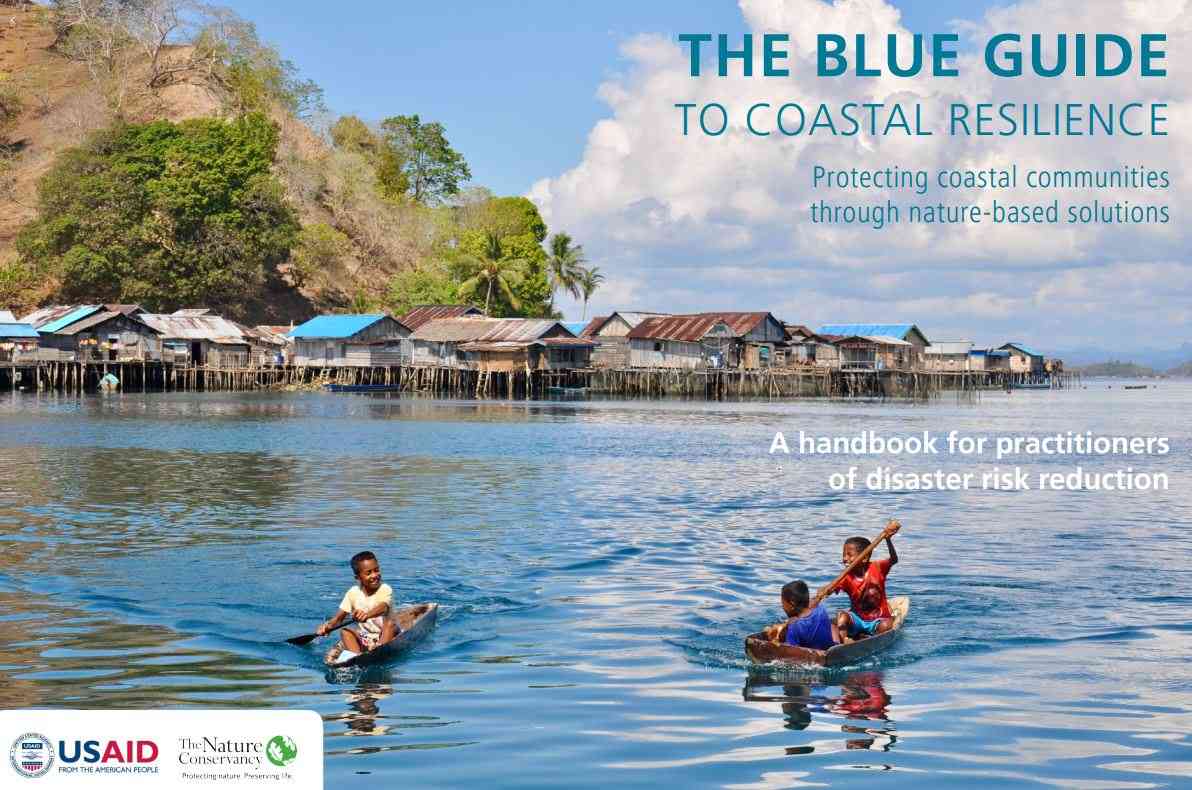
Protecting coastal communities through nature-based solutions. A handbook for practitioners of disaster risk reduction.
The Nature Conservancy. 2021. The Blue Guide to coastal resilience. Protecting coastal communities through nature-based solutions. A handbook for practitioners of disaster risk reduction. The Nature Conservancy. Arlington, VA.
The Nature Protects People Learning Platform provides guides and tools to DRR practioners and humanitarian actors to implement nature-based solutions to reduce risks to coastal disasters.
Organizations and focal points
Implementing Organization(s)
Focal points
Partners