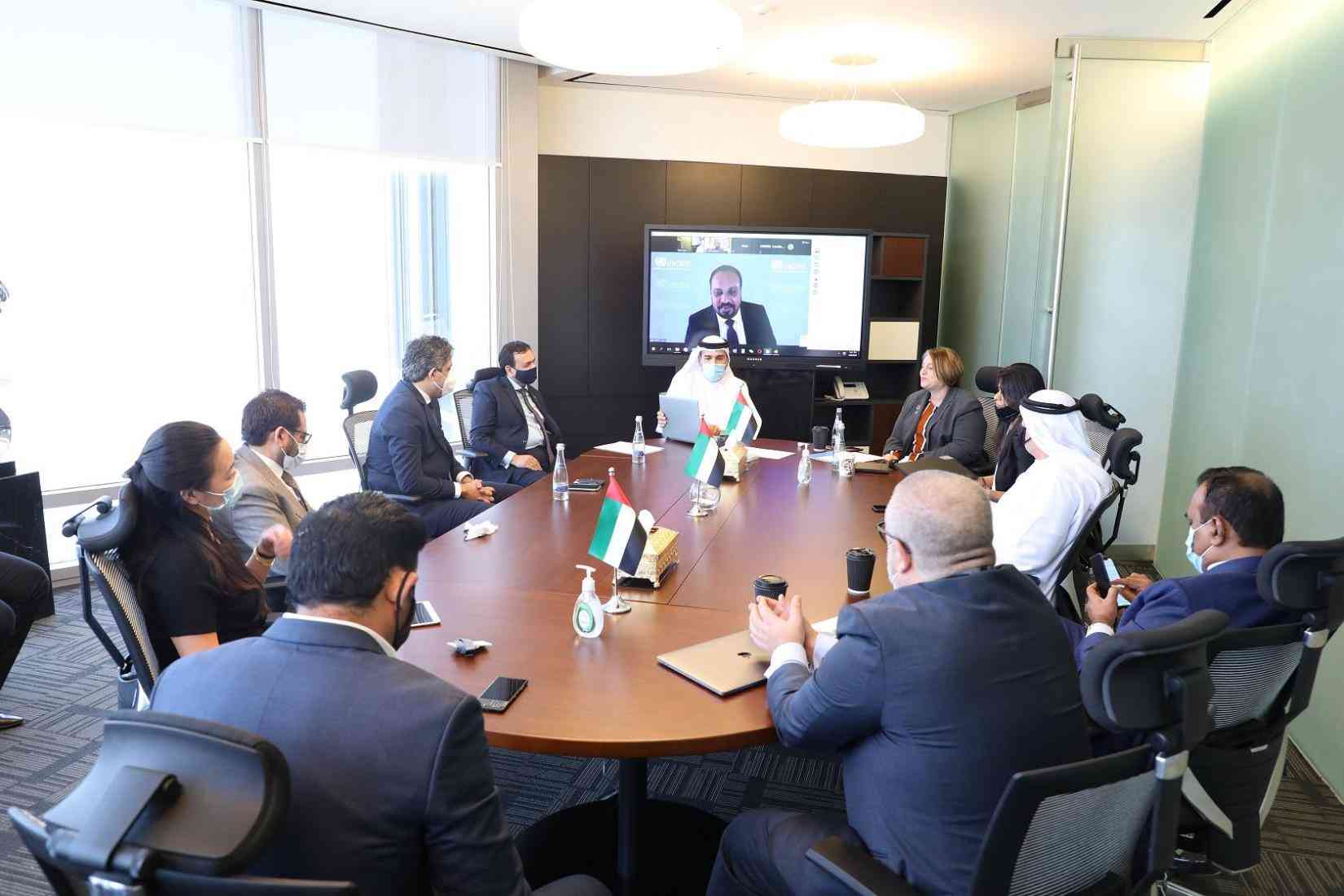
The Arab Private Sector Stakeholder Group for Disaster Risk Reduction (2021 – 2024)
Acknowledging the critical role of the private sector in any given country and community, as employer, producer, exporter or investor. The group will work to integrate disaster risk disaster into business models and practices.
Description
In alignment with the goals, vision and mission of ARISE, the UNDRR Private Sector Alliance for Disaster Risk Resilient Societies, the Arab Private Sector Stakeholder Group for Disaster Risk Reduction, will work to:
1. Raise Awareness: Awareness raising with respect to disaster risk and mobilization of the private sector.
2. Influence: Exercising influence in respective spheres of expertise.
3. Share Knowledge: Share knowledge, experience and good practices amongst the private sector.
4. Catalyze: Be a catalyst to generate innovation and collaboration.
5. Implement: Implement projects and activities to achieve the targets of the Sendai Framework.
The Arab Private Sector Stakeholder Group for Disaster Risk Reduction is committed to:
1) Engagement in regional and national advocacy for, including in key regional United Nations meetings:
o Enhancing the resilience of SME’s;
o Integrating disaster and climate risk into investment decisions by the financial sector;
o Incentivizing disaster risk reduction and enhanced data for risk-informed decision-making through engagement with the insurance industry as global risk manager;
o Supporting resilient infrastructure development.
2) Organize the ARISE Annual Regional Meeting (ARM) with network leads for information exchange and monitoring of progress
3) Promote membership in ARISE amongst peers and constituencies, World Economic Forum, UN Global Compact and other relevant initiatives;
4) As appropriate, facilitate the establishment and development of ARISE National Networks and provide them with advice and guidance;
5) Represent the Private Sector in the Arab region in the UNDRR Stakeholder Engagement Mechanism (SEM) to ensure cross-fertilization with other UNDRR Advisory Groups and stakeholders;
6) Support the implementation of UNDRR MCR2030 campaign in the Arab region.
This voluntary commitment will cover the planned activities of the Arab Private Sector Stakeholder Group for three years from 2021 – 2024.
Did the Sendai Framework change or contribute to changes in your activities/organization? If so, how?
• Noting that the Sendai Framework recognizes that the State has the primary responsibility to reduce disaster risk, but it also underlines that this responsibility is shared with other stakeholders including local governments, the private sector, academia and civil society, among others.
o point 36 paragraph (c) encourages the private sector to integrate disaster risk management into business models and practices through disaster-risk-informed investments and the dissemination of knowledge
• Recognizing the critical role of the private sector in any given country and community, as employer, producer, exporter or investor, the Sendai Framework specifically ask Governments to work closely with business and private sector financial instit
What led you to make this commitment/initiative?
What was your position before making this Voluntary Commitment / prior to the Sendai Framework?
• Recognizing the critical role of the private sector in any given country and community, as employer, producer, exporter or investor, the Sendai Framework specifically ask Governments to work closely with business and private sector financial institutions, including insurance and financial regulators and accounting bodies.
• Recognizing the significant lasting impact that climate change and disasters will have on economic growth, community wellbeing, and related financial and economic systems is rapidly growing. For companies, big and small, to survive and even prosper in this environment, they need to adapt fast.
Deliverables and Progress report
Deliverables
Deliverables are the end-products of the initiative/commitment, which can include issuance of publications or knowledge products, outcomes of workshops, training programs, videos, links, photographs, etc.
Support on the organization of an event to promote the Real Estate Resilience Tool.
Organizations and focal points
Implementing Organization(s)
- IKEN
- Mitchell JR. Misr for Shipping & Investment
- Egyptian Businessmen’s Association
- CEO Clubs Network
- Estmrarya Consulting
Focal points