
Niger: Integrated resilience programming turns degraded Sahel land into food-secure futures
This case study was collected through a Call for Good Practices on Reducing Risk across SDG Transitions, launched by the UN DRR Focal Points Group in 2024.
SDGs addressed: 2 | 13 | 1
Niger's rural communities face chronic food insecurity, climate shocks and land degradation. Since 2014 the World Food Programme (WFP), in partnership with FAO, IFAD, UNEP, UNCCD and UNICEF, has run an Integrated Resilience Programme (IRP) across 2,000 villages. Using the Three-Pronged Approach (ICA → SLP → CBPP), communities co-design land-restoration and livelihood plans that combine zai pits, half-moons and composting with cash-for-assets, school feeding, nutrition packages and smallholder market support. National systems are strengthened through government adoption of CBPP planning and Food Security Climate Resilience Facility (FoodSECuRE) anticipatory finance.
Innovation and Success Factors
- Community co-design through institutionalised CBPP workshops ensures local ownership.
- Integrated package mixes land rehab, nutrition, school feeding & market support for systemic impact.
- Anticipatory finance via FoodSECuRE releases funds using seasonal forecasts.
- Cost-benefit proof (UNU-EHS 2024) shows a 3.3-3.5× return versus repeated humanitarian aid.
Key impacts
- 80 % of 2,000 villages needed no lean-season food aid in 2022-23-saving US $54 m annually.
- 400,000 additional people in vulnerable communes avoided emergency classification in 2024.
- Land restored & yields up: farmers report maize yields rising from 0.2 t/ha → 1 t/ha after zai pits.
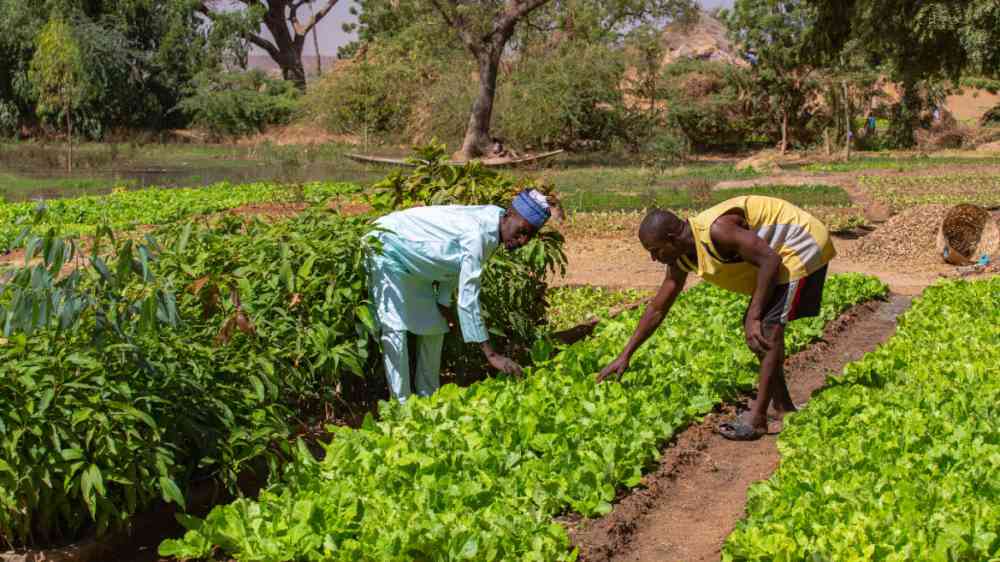
- Diversified livelihoods: beekeeping, poultry and market gardens boost incomes, cut migration.
- Policy uptake: government is integrating ICA & SLP tools into Regional Development Plans.
Lessons learned for replication or adaptation
- Long-term, multi-component funding (5-10 yrs) is vital for transformative impact.
- Participatory planning builds trust and matches interventions to agro-ecological niches.
- Combine traditional & modern techniques-zai pits plus climate-forecast financing.
- Capacity-building at three levels (community, local authority, national) underpins scale-up.
- Rigorous CBA evidence persuades donors and government to shift from relief to resilience.
Other resources / Explore further
Organisations involved
- UN agencies: WFP (lead), FAO, IFAD, UNEP, UNCCD, UNICEF
- Government: Ministry of Agriculture & Livestock, regional councils
- Regional bodies: ECOWAS, CILSS, Great Green Wall Agency
- Technical & finance partners: GIZ, UNU-EHS, FoodSECuRE facility
- Civil society: Local NGOs & community-based organisations