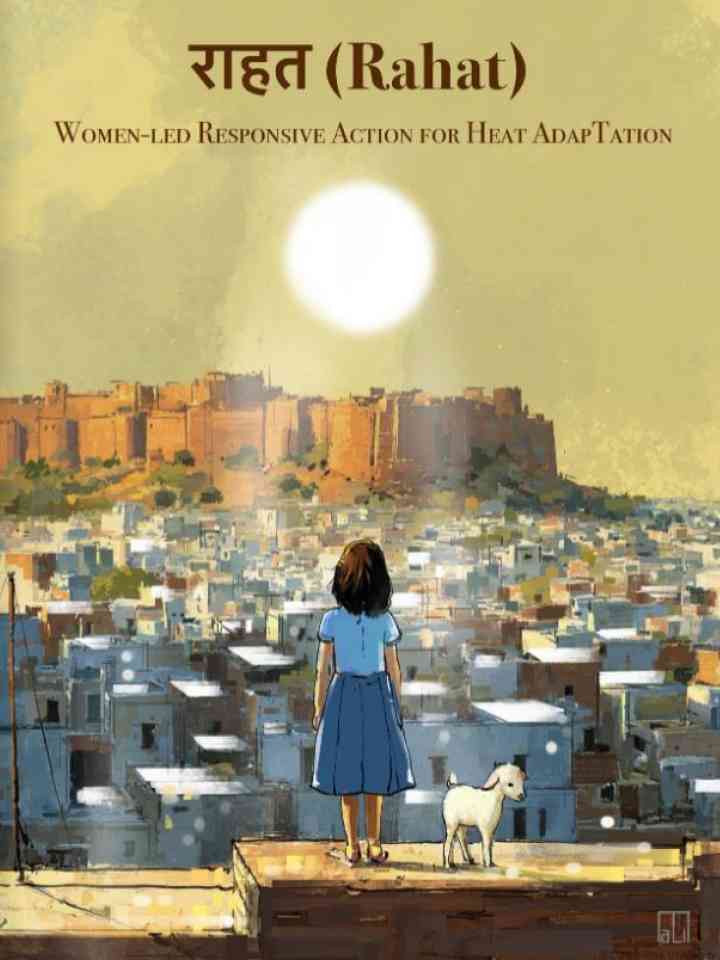
This education booklet was produced in the context of the RAHAT project which focuses on extreme heat vulnerability in informal housing in Jodhpur, western India, where climate change is intensifying temperature extremes. It aims to co-design passive cooling housing solutions that are affordable, context-appropriate, and socially acceptable in low-income communities. Using a randomised control trial (RCT) and participatory methods, the project places women at the center of the process as key actors in identifying problems, designing interventions, and implementing adaptation strategies.
The project shows that simple, low-cost housing design interventions can reduce indoor heat exposure and improve thermal safety in informal homes. It also highlights that women’s participation is critical for effective and socially accepted adaptation, revealing gendered patterns of heat vulnerability while demonstrating that women can play a leading role in implementing climate resilience solutions at the household and community level.
Explore further