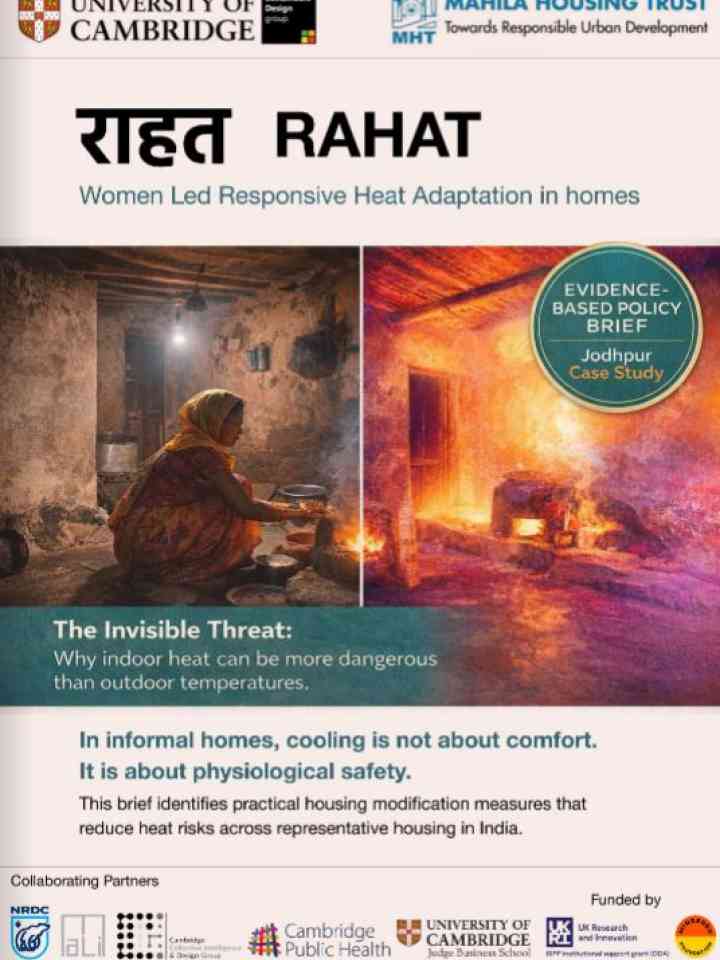
The invisible threat: why indoor heat can be more dangerous than outside temperatures
The policy brief examines the risks of extreme indoor heat exposure in informal housing in India, focusing on a case study in Jodhpur. It investigates how housing design, materials, and ventilation affect indoor thermal conditions and highlights how women—who spend significant time indoors due to domestic activities such as cooking—are disproportionately exposed to heat stress. The study evaluates typical informal housing layouts and explores low-cost, women-led household adaptation strategies to improve thermal safety.
The findings show that indoor heat in informal homes can exceed safe physiological thresholds, particularly in poorly ventilated houses and kitchens. Simple structural interventions, such as white reflective roof paint, improved ventilation (cross-ventilation), shading systems, and wall insulation, can significantly reduce indoor temperatures and heat-health risks. The study demonstrates that housing design plays a critical role in heat resilience, and that low-cost housing upgrades combined with women’s participation in adaptation decisions can effectively reduce exposure to extreme indoor heat.
Explore further