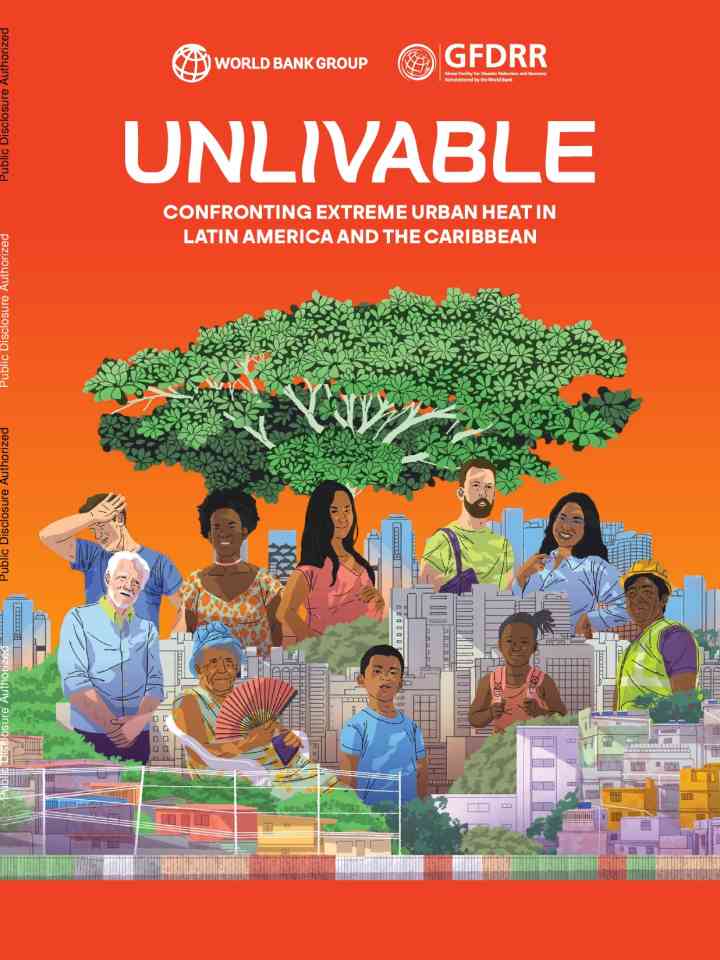
Unlivable: Confronting extreme urban heat in Latin America and the Caribbean
This report examines the growing threat of heat in cities across Latin America and the Caribbean, including the outlook for the coming decades; the implications for urban infrastructure and for human health, well-being, and prosperity; and what urban leaders and national governments can do to mitigate the risks, particularly for the most vulnerable people.
The report states that cities cannot stop climate change on their own, but by mitigating the Urban Heat Island (UHI) effect, they can slow overall heating. A wide range of adaptation measures can also help: from strategies to keep buildings cooler, to urban greening and design improvements, early warning systems and public health campaigns, programs to support the most vulnerable people, and comprehensive efforts to mainstream heat resilience into city strategies, operations, and budgets. The World Bank calls this a “Places, People, and Institutions” approach
Explore further