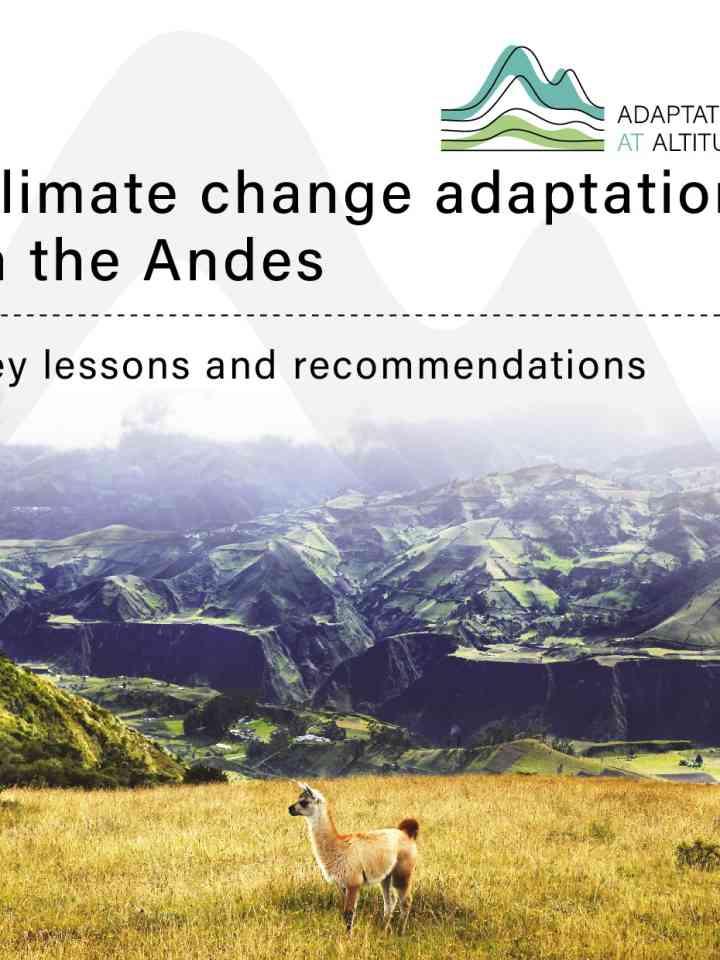
Climate change adaptation in the Andes: Key lessons and recommendations
This report evaluates five climate change adaptation solutions implemented in the Andes, specifically in Argentina, Chile, Colombia, Ecuador, and Peru. Using a common analytical framework, it assessed effectiveness—measured by achievement of objectives, vulnerability reduction, resilience strengthening, and prevention of maladaptation—and sustainability, including community ownership and capacity for continuation. The initiatives covered sectors such as tourism, agriculture, disaster risk management, land use, and wetland restoration and were at different maturity stages and geographical contexts.
The report finds that adaptation is a long-term process, with sustainability dependent on the alignment between context and implementation factors. Community-focused solutions with visible, near-term benefits showed strongest continuity post-project, while more complex, public-agency-targeted initiatives faced institutional and coordination challenges. Recommendations include addressing factors for sustainability at the design stage, developing robust monitoring systems, empowering local organizations to continue and expand activities, planning for long-term financing, providing maintenance mechanisms, and reinforcing foundational design principles before scaling. The authors stress that lasting adaptation requires local ownership, resources, and mechanisms to track benefits and challenges over time.
Explore further