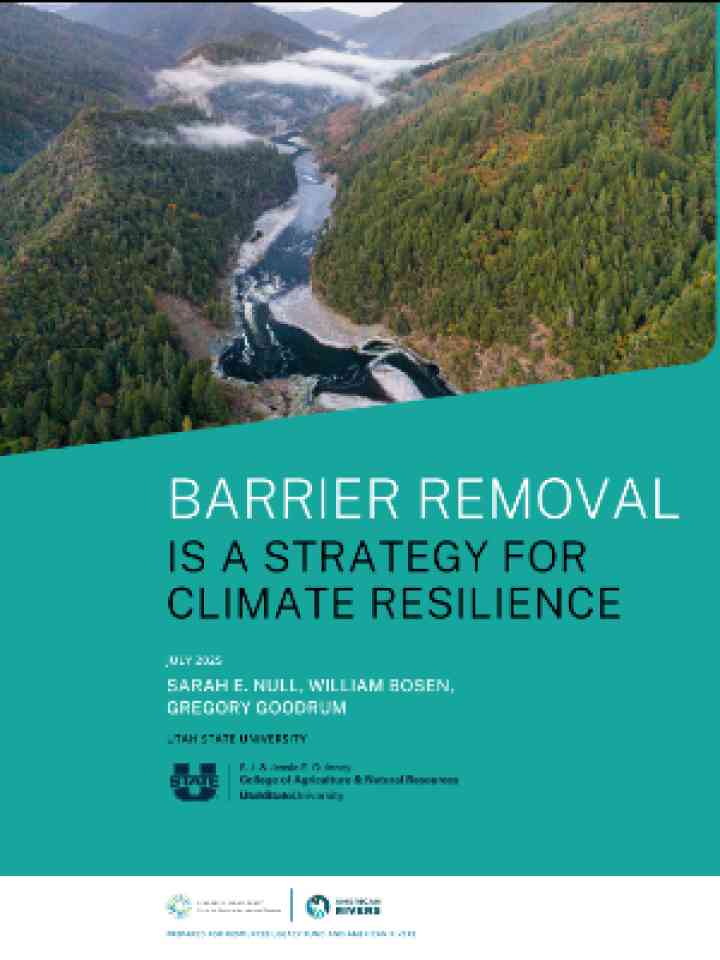
Barrier removal is a strategy for climate resilience
Millions of dams and in-stream barriers have been built worldwide to manage water supply, reduce flood risk, generate hydropower, and support recreation, navigation, and road infrastructure. Dams that present safety concerns due to their age and deferred maintenance, should be considered candidates for removal as a strategy for climate resilience and to help communities prepare for and respond to increasingly volatile weather.
Most dam construction in the United States occurred prior to 1980. These aging dams were designed and constructed to withstand the largest predicted storm flows in the dam’s watershed at the date of construction. As a result of changing precipitation patterns, many of these dams cannot withstand current and expected storm conditions, affecting water management and dam safety. Such dams must be modified to avoid failure or will risk harm to downstream communities. Needed retrofits are often expensive, with dam removal costing approximately 30-40% of the retrofit price tag. In many instances, dam owners are unable to generate funding for the necessary safety modifications, as dam utility (e.g., revenue from hydropower generation and water sales) decreases.
Explore further